

Gingerbread Christmas Decor That Looks Warm, Not Wacky
Brown and beige alone won’t get a room there, and that’s the first thing gingerbread christmas decor has to get right. The real thing is deep molasses brown, crisp white piping, and one hit of red, and a room needs all three in the right proportions.
What follows is 22 defining elements, from bulb temperature to tree layers, plus how to combine them and where people go wrong.
Key Takeaways
- Roughly 60 percent molasses brown, 30 percent cream or white, and 10 percent muted red keeps the palette balanced.
- Bulbs between 2200K and 2700K make brown glow like spiced loaf instead of looking flat and gray.
- Real gingerbread pieces last one season, so wood, felt, salt dough, and stoneware carry the look year after year.
- Clusters of three with breathing room beat rows of identical ornaments on every mantel, table, and tree.
Understanding the gingerbread christmas decor look
Gingerbread christmas decor rests on three colors: molasses brown, icing white, and a muted red. Brown covers most of what you see, white draws the outlines, and red shows up in small doses.
Picture a builder-beige living room with a gray sofa, a bare 60-inch mantel, and 4000K bulbs that make everything feel like a clinic waiting area. After the makeover, the same room has amber light, a brown-and-cream mantel, and one rust velvet pillow.
The sofa never moved.
The lessons from that kind of change are below, one element at a time.
Amber bulbs at 2200 to 2700K
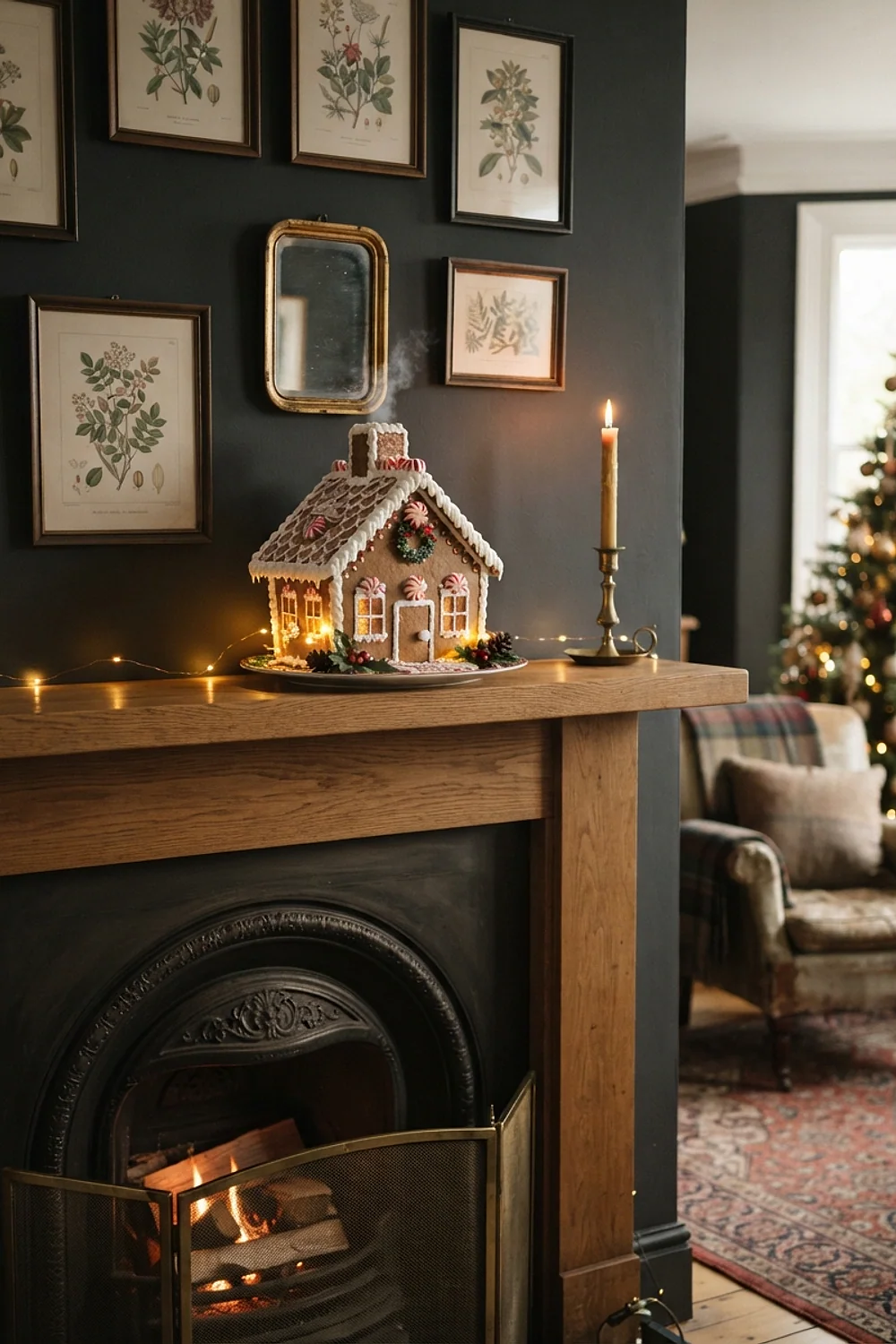
A 2200K filament bulb turns flat brown into molasses. At 4000K the same brown reads gray and muddy, which is the counterintuitive part: the paint or garland stays identical, and only the light changes it.
This suits living rooms and dens where lamps sit at eye level. Swap bulbs in two or three lamps and leave the overhead off after sunset. Don’t go below about 2000K, though, because cream walls start to turn peach.
A three-cluster mantel
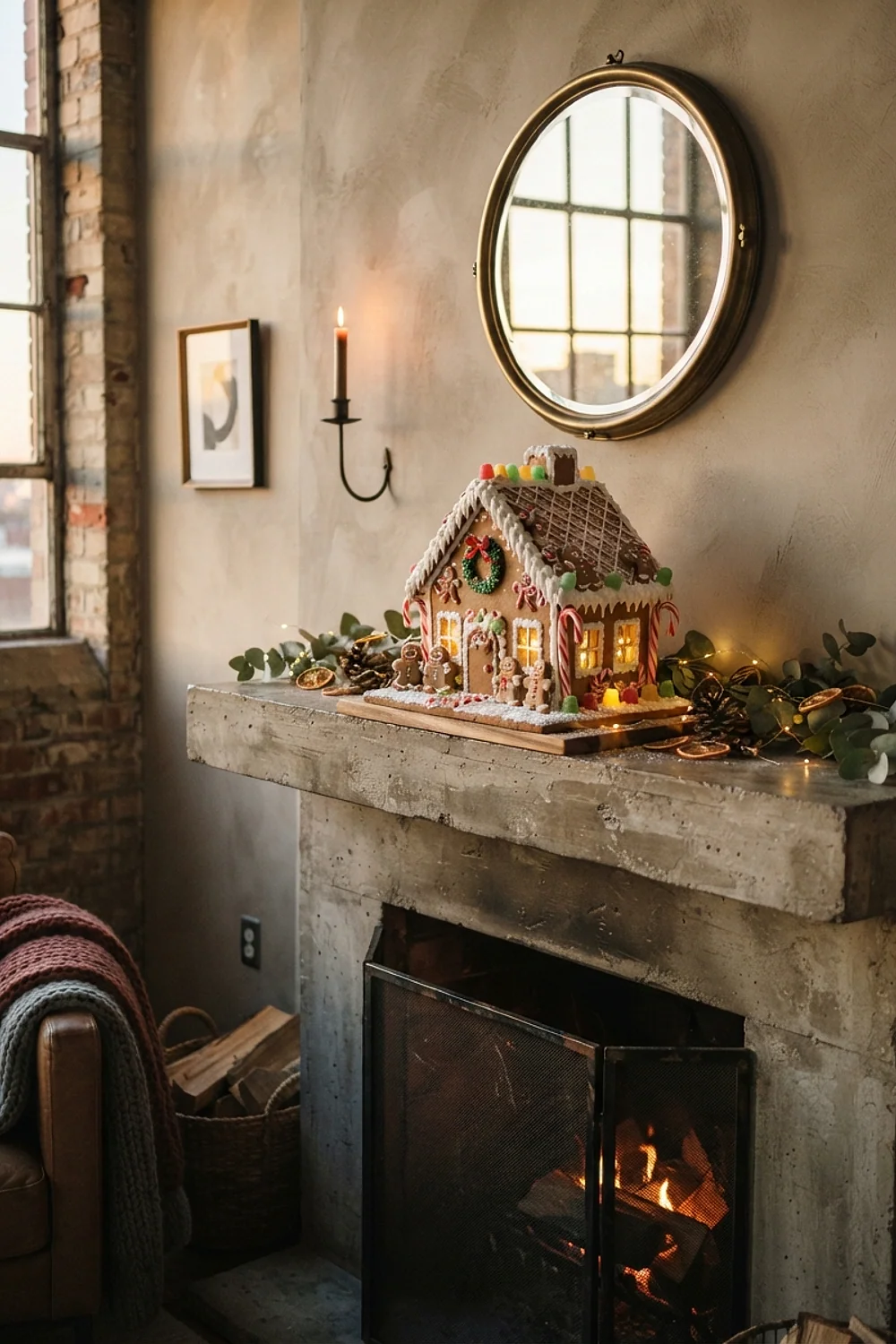
Three clusters on a 60-inch mantel beat seven scattered pieces. Put a gingerbread house in the center, drape garland off both ends, and tuck small pieces at the edges.
Leave at least 4 inches of bare wood between groups so the eye has somewhere to rest. On a narrow 36-inch shelf, drop to two clusters, and don’t line pieces up shoulder to shoulder.
An oversized wooden gingerbread man by the door
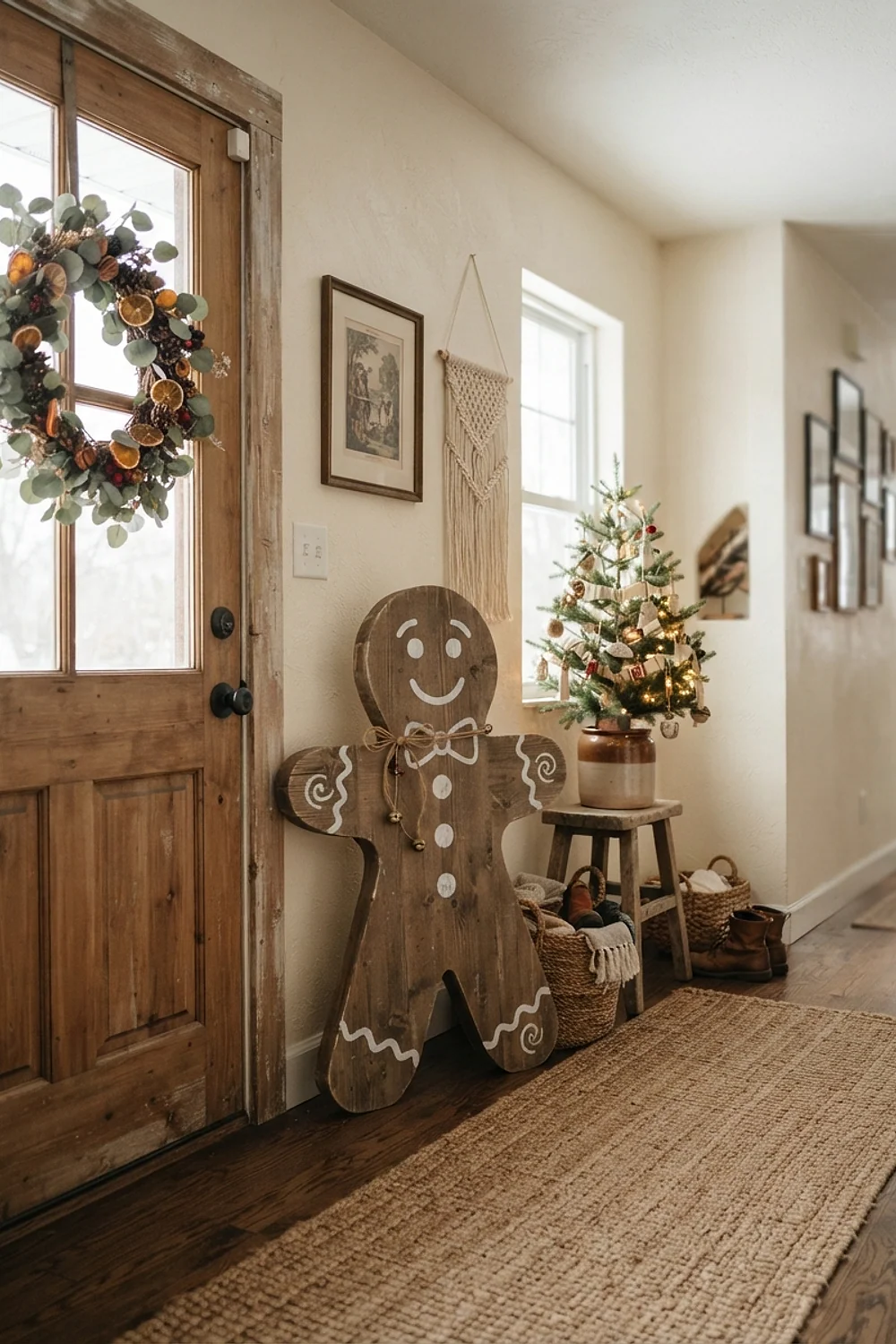
A 24-inch cutout leaning beside the front door tells the street the house is dressed. Unfinished plywood versions run about $30 to $40, and a coat of brown stain plus a white paint pen handles the piping.
Big pieces belong on porches and in wide entries. In a small hallway, stay under 18 inches or the figure crowds the coat hooks.
Salt dough, wood, and felt ornaments
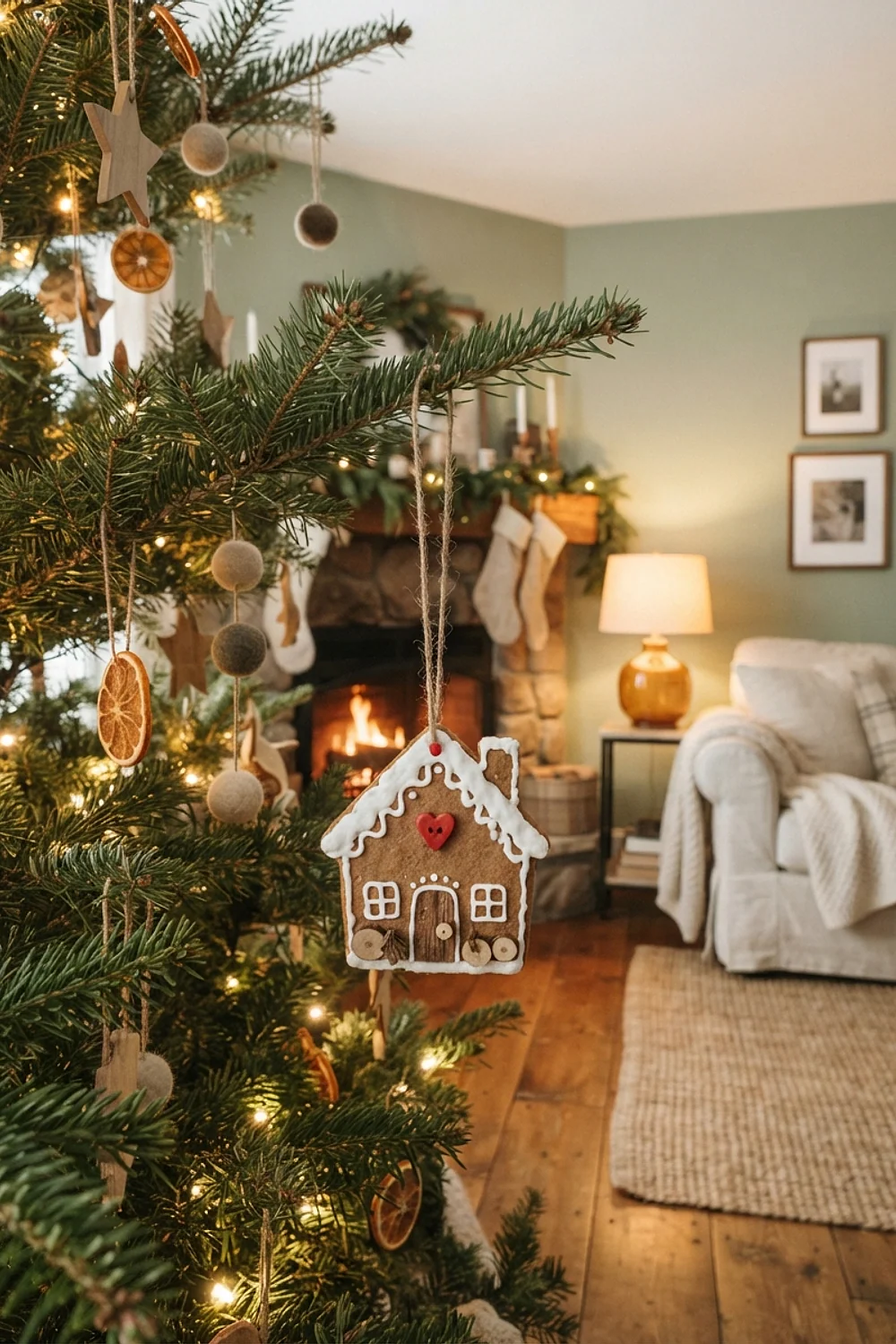
Salt dough sealed with matte varnish, painted wood, and wool felt survive for decades, while real gingerbread ornaments last one season at best. Humidity softens the cookies, pests find them, and they crumble in storage. Stable materials also keep the brown-and-white look intact year after year.
Families who want kid-made cookies on the tree can hang the real ones and toss them in January. Avoid hanging the real ones near a heating vent or in a damp room, where they soften within days.
A gridded storage bin
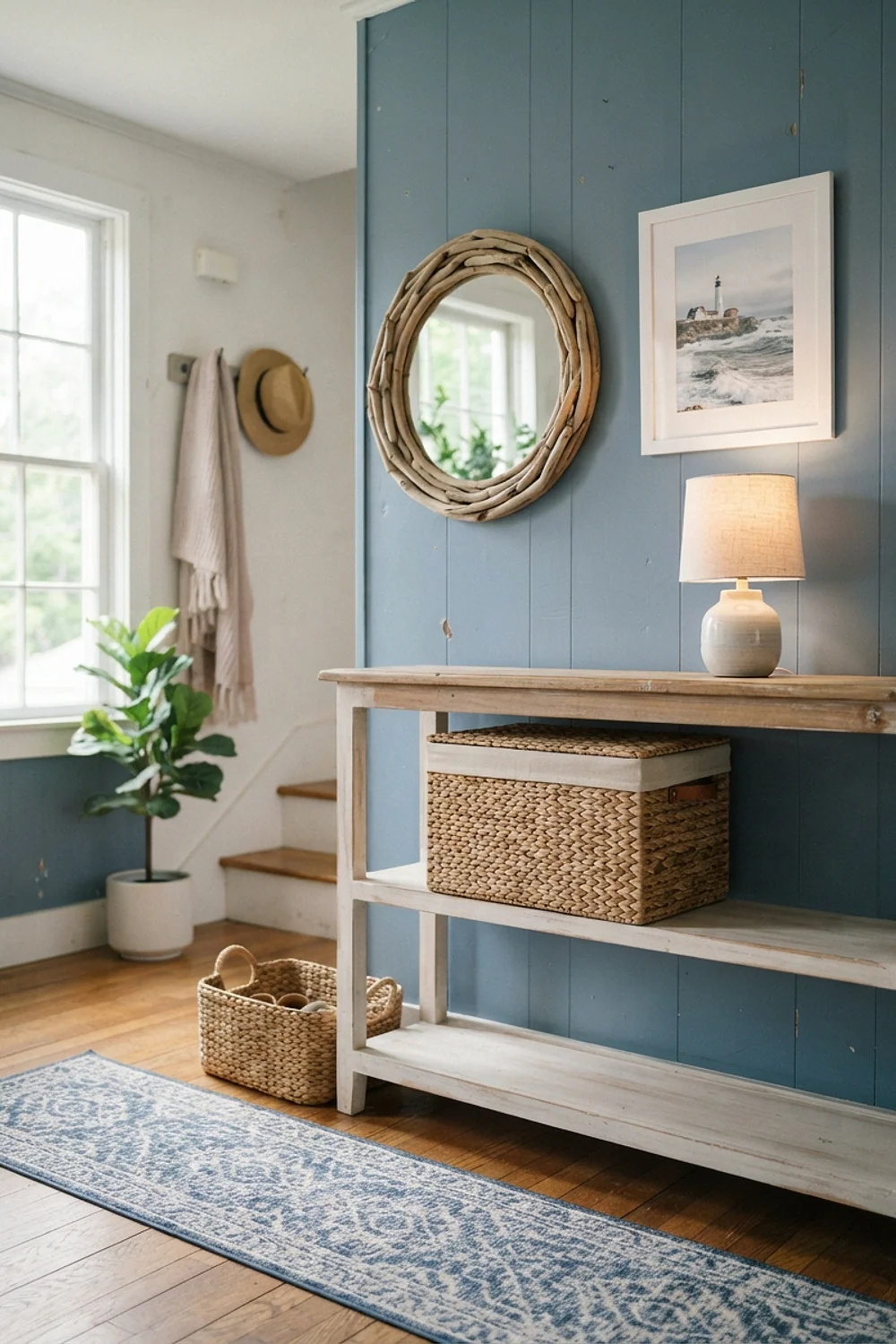
A shallow 12-quart bin with a cardboard grid keeps painted ornaments from chipping against each other, since every piece gets its own cell instead of rubbing against a neighbor. Wrap each piece in tissue and label the lid by room.
Small closets benefit most, since an under-bed bin about 6 inches tall holds a whole set. Avoid tall, deep bins, which tempt stacking and crush the bottom layer. The extra five minutes in January means the white piping is still crisp next December.
Materials and textures that read as gingerbread
Gingerbread christmas decor relies on matte, slightly rough surfaces. Glossy plastic and shiny foil fight the look from across the room, while wood, wool, and unglazed ceramic agree with it.
A lidded seagrass basket for throws
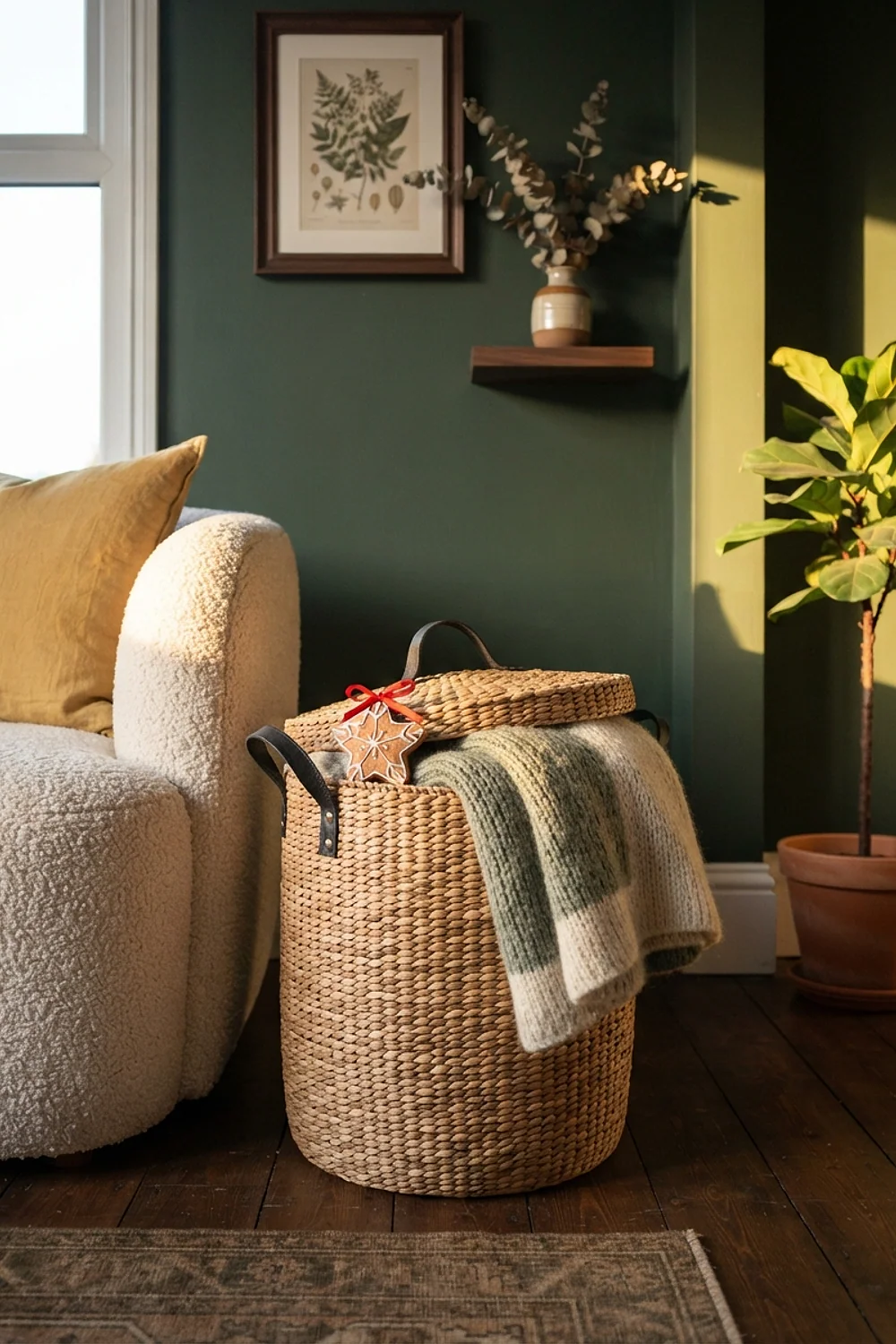
A 16-inch lidded seagrass basket beside the sofa hides two folded throws and adds a woven brown note. It earns its spot because the lid keeps the blankets from looking like clutter, and a closed basket reads as furniture rather than storage overflow.
This works best in rooms where seating is used nightly, so the throws stay within arm’s reach. Check that the weave is tight, since loose seagrass snags knit fabric. Run a hand along the inside before buying, and skip any basket with sharp, splintering ends.
White scalloped trim
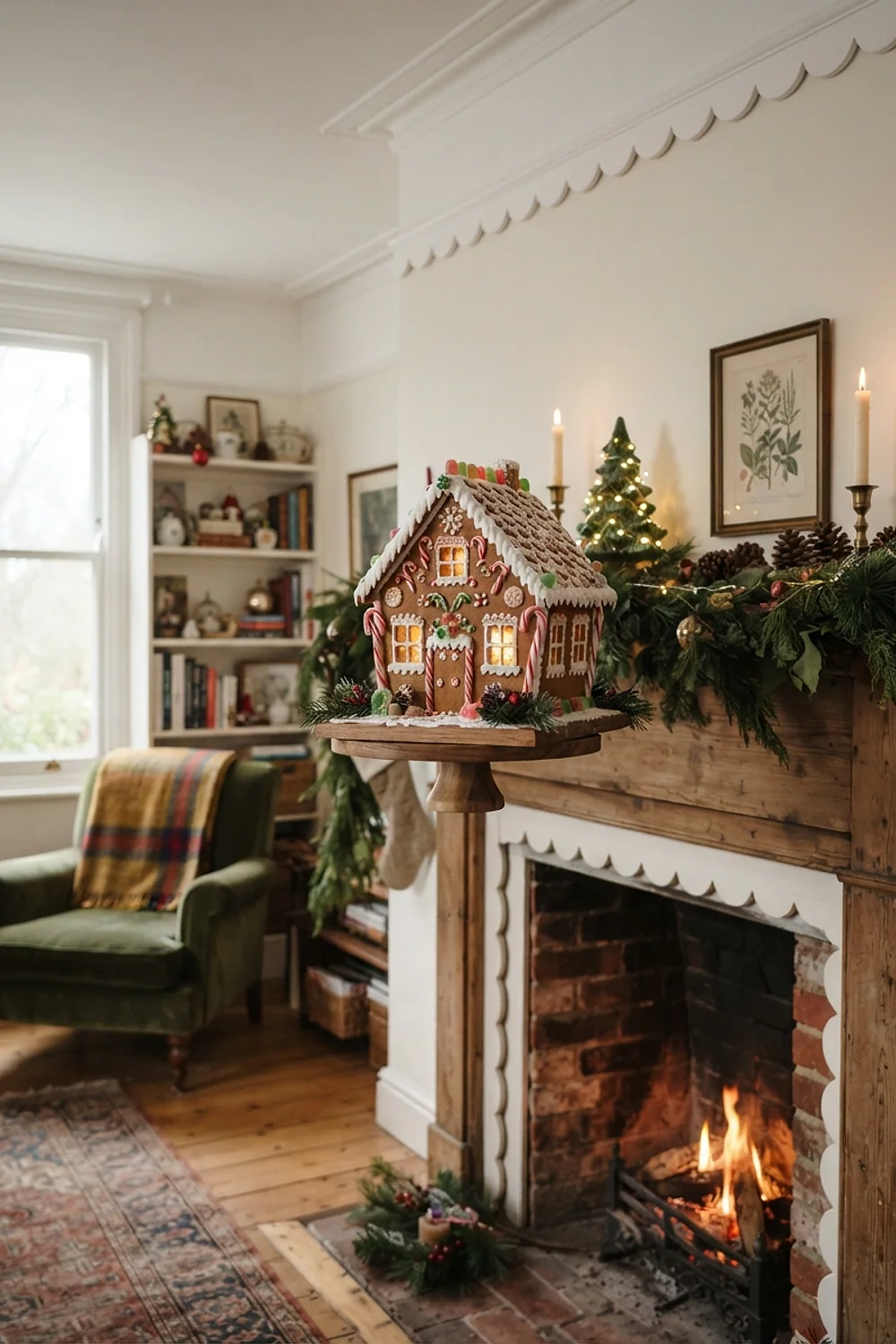
A 6-foot roll of white scalloped felt trim, about $10, copies the piped icing edge. Staple or tape it along a shelf edge, a cabinet front, or the bottom of a mantel.
Cream beats stark white because bright white looks like printer paper against brown. Trim is the single fastest way to make a plain brown surface read as gingerbread.
A chunky knit throw in oatmeal or camel
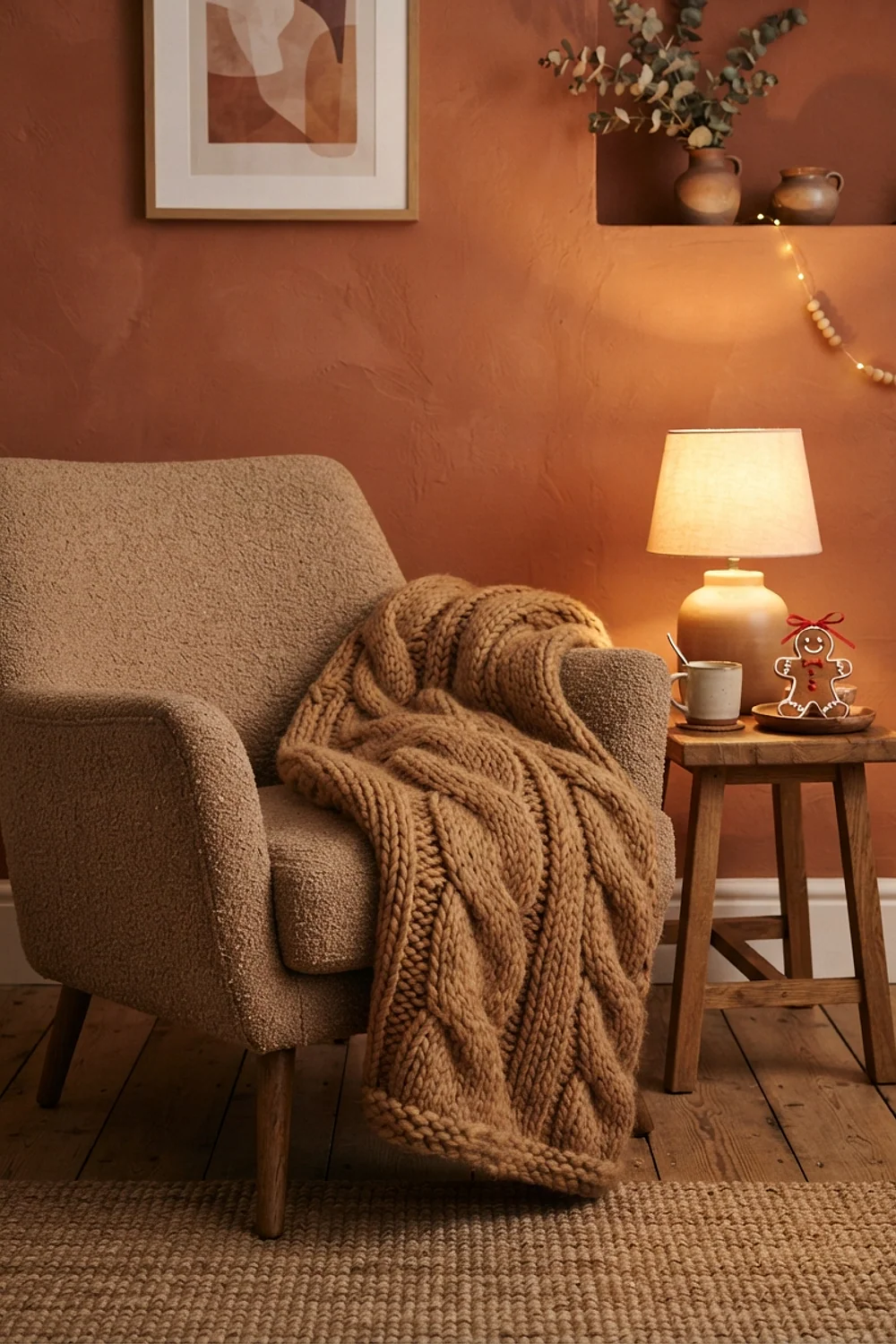
Under your hand, a wool-blend throw about 50 by 60 inches feels like the soft center of a spiced loaf, and the oatmeal or camel color repeats the crumb tone of the gingerbread palette. Drape it over a sofa arm rather than folding it neatly, so the texture shows.
For households with pets, choose tight knits. Open chunky weaves catch claws within a week. Avoid pure acrylic in a bright room, where it can look shiny and flat next to matte brown surfaces.
Cinnamon stick bundles
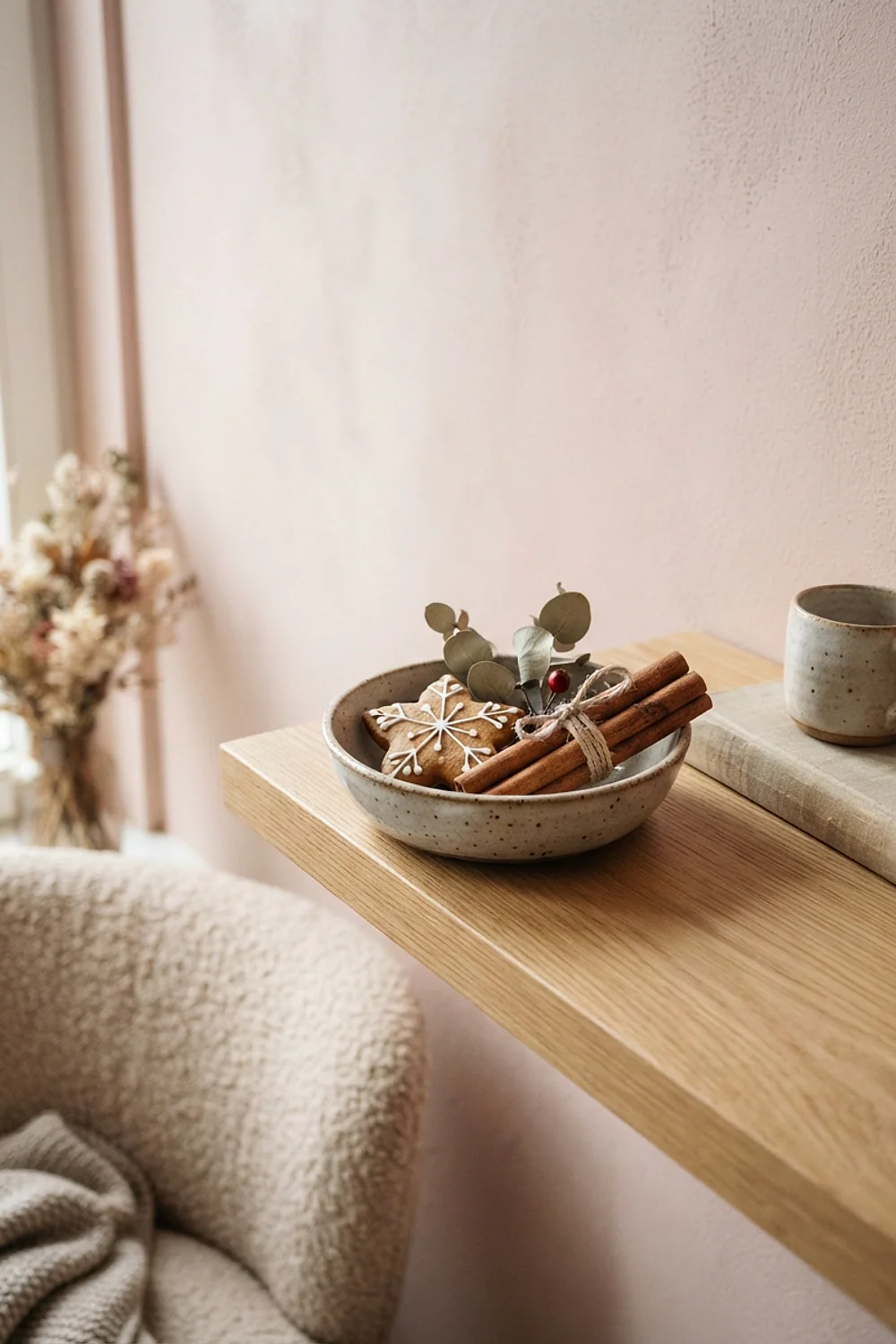
Twelve cinnamon sticks tied with red baker’s twine make a bundle that smells right and looks right. Set one on a candle tray, tuck one into a garland, or tie one to a napkin.
The scent fades after about three weeks, so rotate in fresh sticks near New Year’s. Skip them in rooms with open flames close by, since the bark is dry.
Unfinished pine and matte stoneware
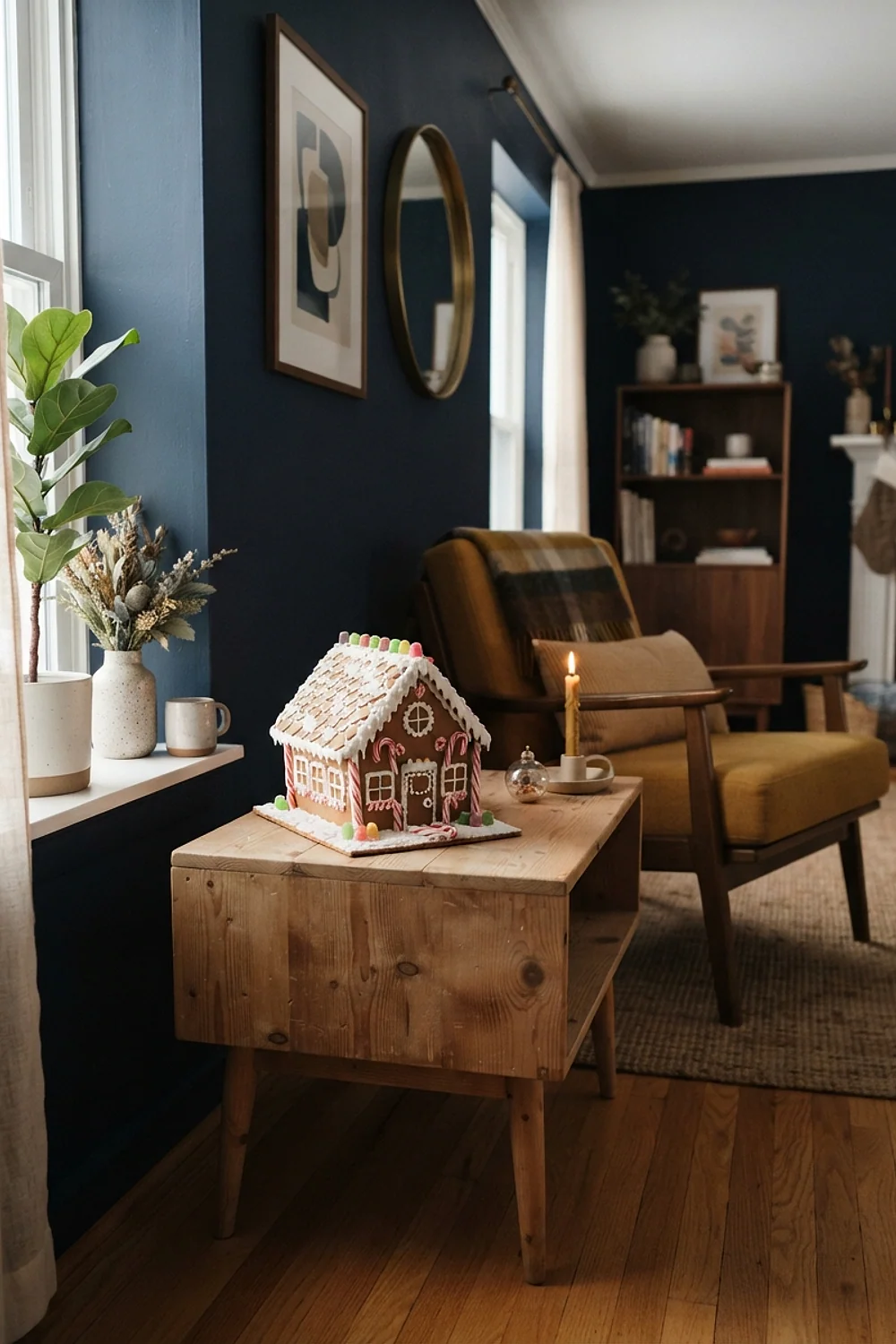
Unfinished pine and unglazed stoneware give you brown without a single shiny surface, so the whole color field stays calm and warm. A matte stoneware gingerbread house with a 5-inch base holds up to a thousand dustings and never needs repainting, which suits shelves and mantels that get handled and wiped often.
Avoid glossy glazes, which reflect lamps and break up the soft color field. Stain pine in a mid-brown rather than a reddish one, to keep undertones consistent, especially when several pieces sit side by side.
Gingerbread christmas decor for the mantel, table, and entry
Gingerbread christmas decor on a table or console has to hold up at close range, where people see the paint edges and sniff the candles. Here the choices are about restraint and proportion.
Candlelight on tapers

Two 10-inch tapers in cream, set into brass or wood holders, add flicker that no bulb matches, and the moving light makes brown surfaces look deeper. Battery tapers with a warm flame effect work in homes with toddlers or cats.
Place them at different heights, with one candle roughly a third taller than the other, so the pair looks arranged rather than matched. And keep them 12 inches clear of any garland, since dry greenery ignites fast.
A runner laid for the table’s width

A 14-inch-wide runner centered on a 36-inch-wide table leaves 11 inches of bare wood on each side, which is enough for plates and glasses. Pick a cream linen or a brown-and-white check, which frame the wood without competing with the centerpiece.
The runner should hang 6 to 10 inches past each end. Anything shorter looks like a mistake, and anything longer gets stepped on. This suits a standard dining table; on a table under 30 inches wide, choose a narrower strip.
A tall tabletop gingerbread house
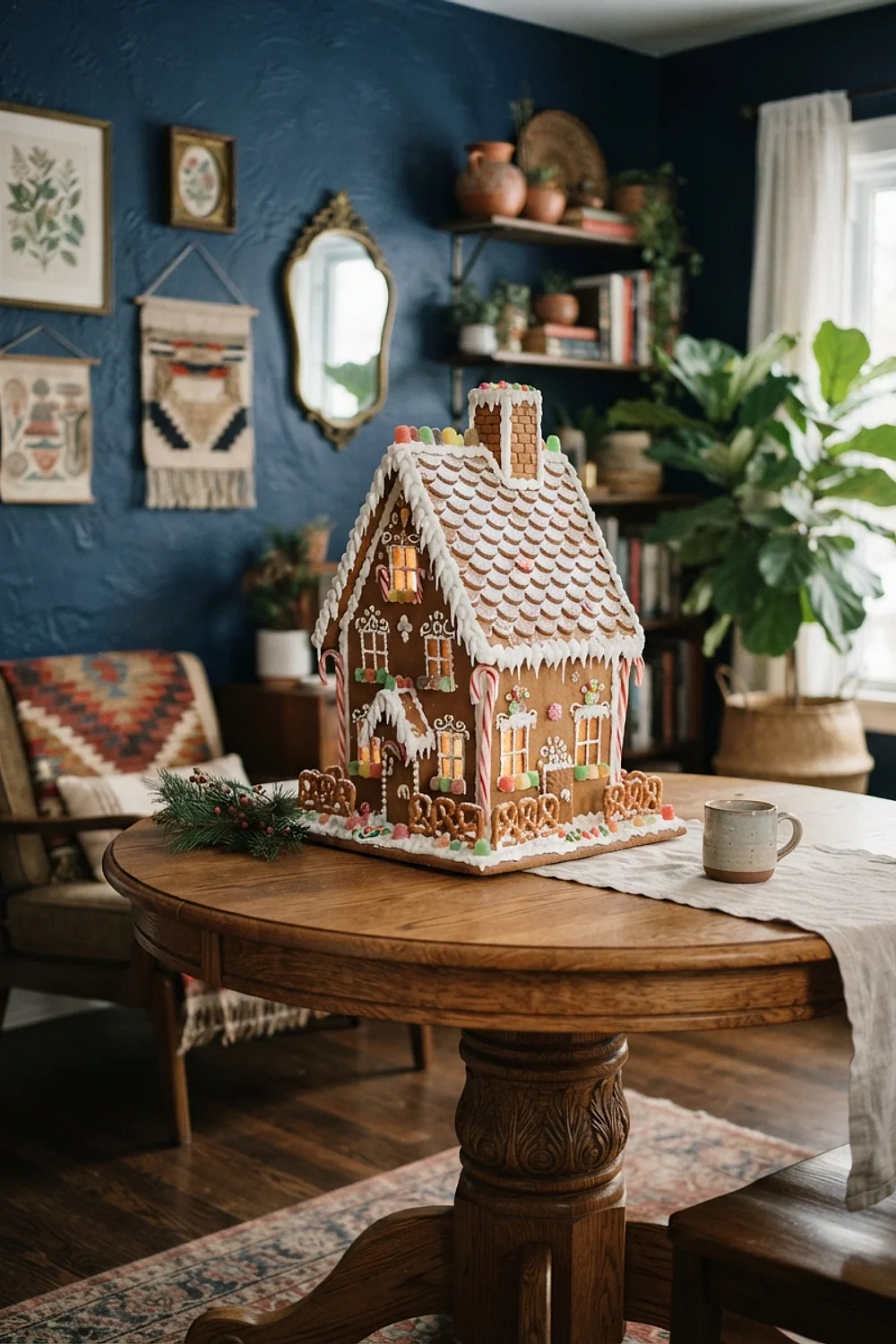
A 12-inch ceramic gingerbread house, around $40, anchors a dining table without crowding it. At that height it clears the candle flames and still lets people across the table see each other. Ceramic also gives enough weight that the house will not tip when someone bumps the table.
Anything over 14 inches blocks conversation on a table narrower than 40 inches. Smaller rounds suit a 9-inch house better. Measure the table’s center line before buying, and leave a hand’s width on either side for serving dishes.
Real candy, fake red

People pile on fire-engine red and kelly green next to brown, then wonder why the room looks like a candy shop. Fully saturated primary colors fight molasses brown and win, and the whole room turns loud.
Use brick or rust red, in small doses, and swap green for deep olive or leave it out. If the red jumps out before the brown, tone it down by one shade.
A garland wound on a cardboard tube

A garland wound around the cardboard tube from a wrapping paper roll keeps its shape for years, because the tube gives the strand a gentle curve instead of a fold. Slide it into a 27-gallon tote with the lid taped shut.
Loose garland tangles and loses its needles, and stuffed boxes crush the shape. This matters most for faux pine with wired branches, which kink and don’t bounce back. Skip the tube only for short garlands under a few feet, which can lie flat.
Small details, big impact
Gingerbread christmas decor shows up in small, repeated details more than in big gestures. Hooks, pillows, candles, and place cards carry the idea into the corners that people actually touch.
A peg rail that holds coats and a garland
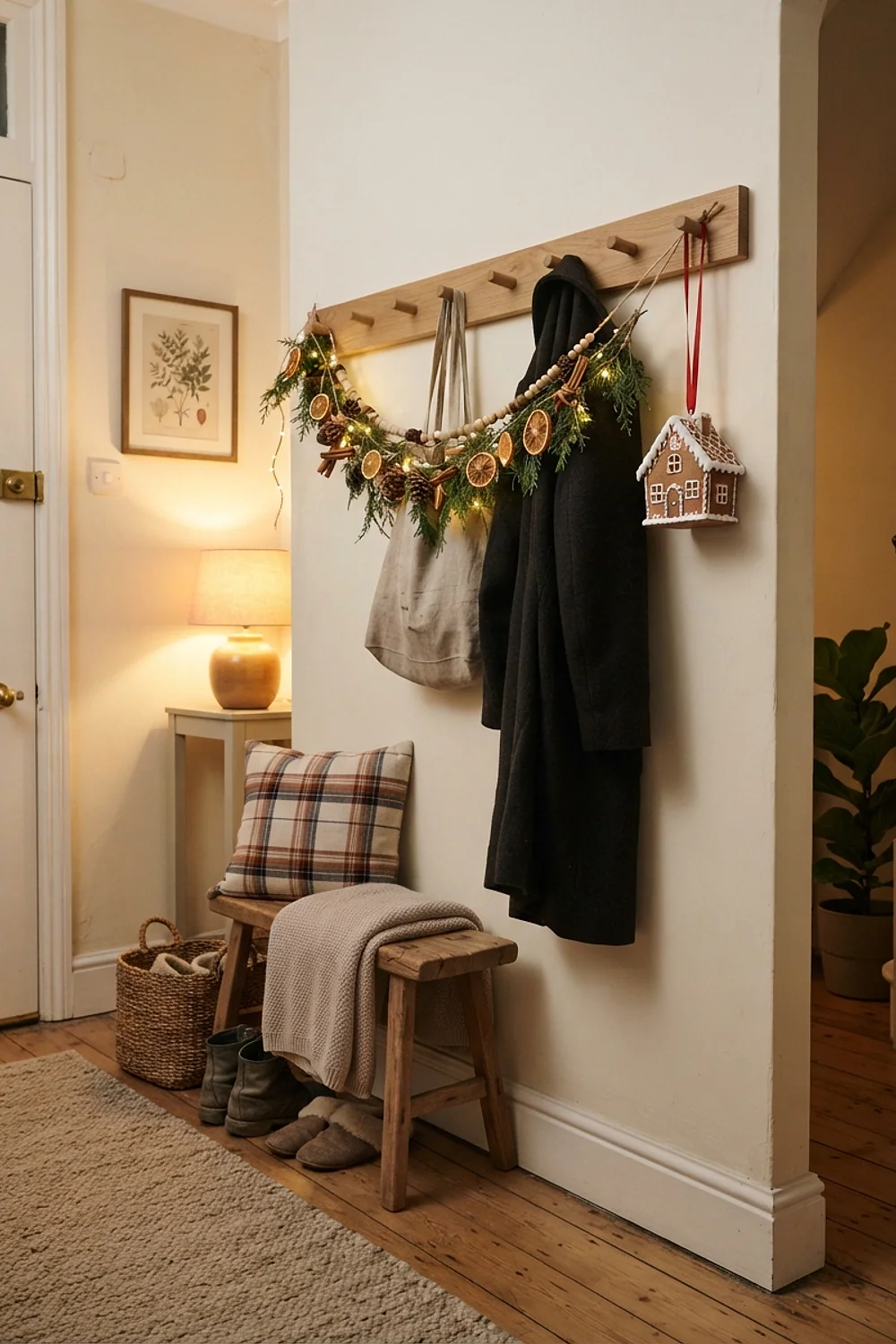
A wooden peg rail by the front door can hold a garland and still take coats. Mount it at about 60 inches from the floor and hang small cutouts from the unused pegs.
This suits tight entries where a console table won’t fit. The trade-off is that heavy coats pull the garland out of line, so pin it at both ends.
One rust velvet pillow
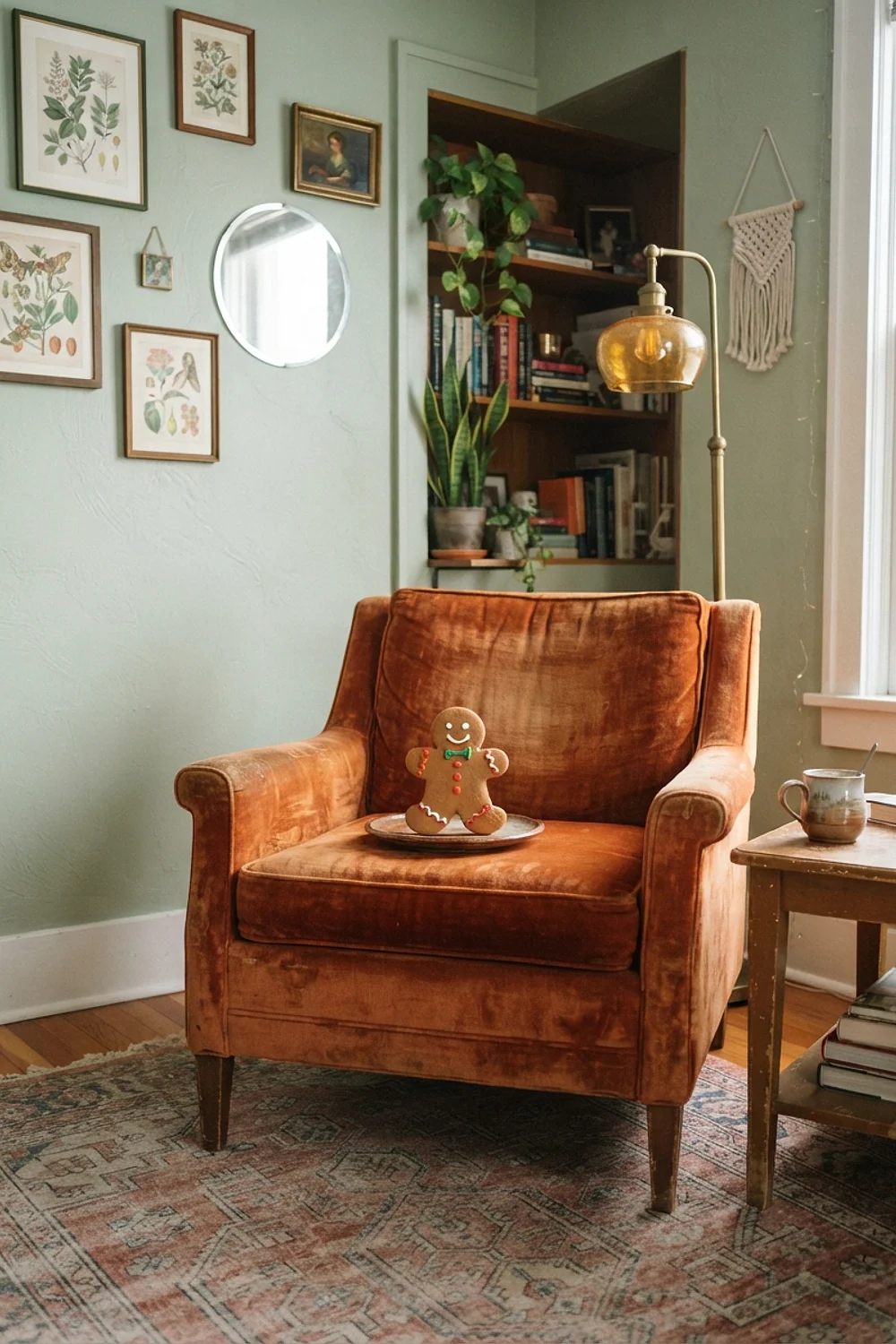
An 18-inch rust velvet pillow, around $25, brings in the 10 percent of red a gingerbread room needs. Velvet reads richer than cotton because it holds light in the pile, so a single pillow looks deliberate against brown and cream.
Use one or two per sofa, not five. On a brown leather couch, go lighter, with cream or oatmeal, so the red doesn’t disappear. Avoid buying several rust pieces in different fabrics, which compete instead of accent.
A spiced soy candle
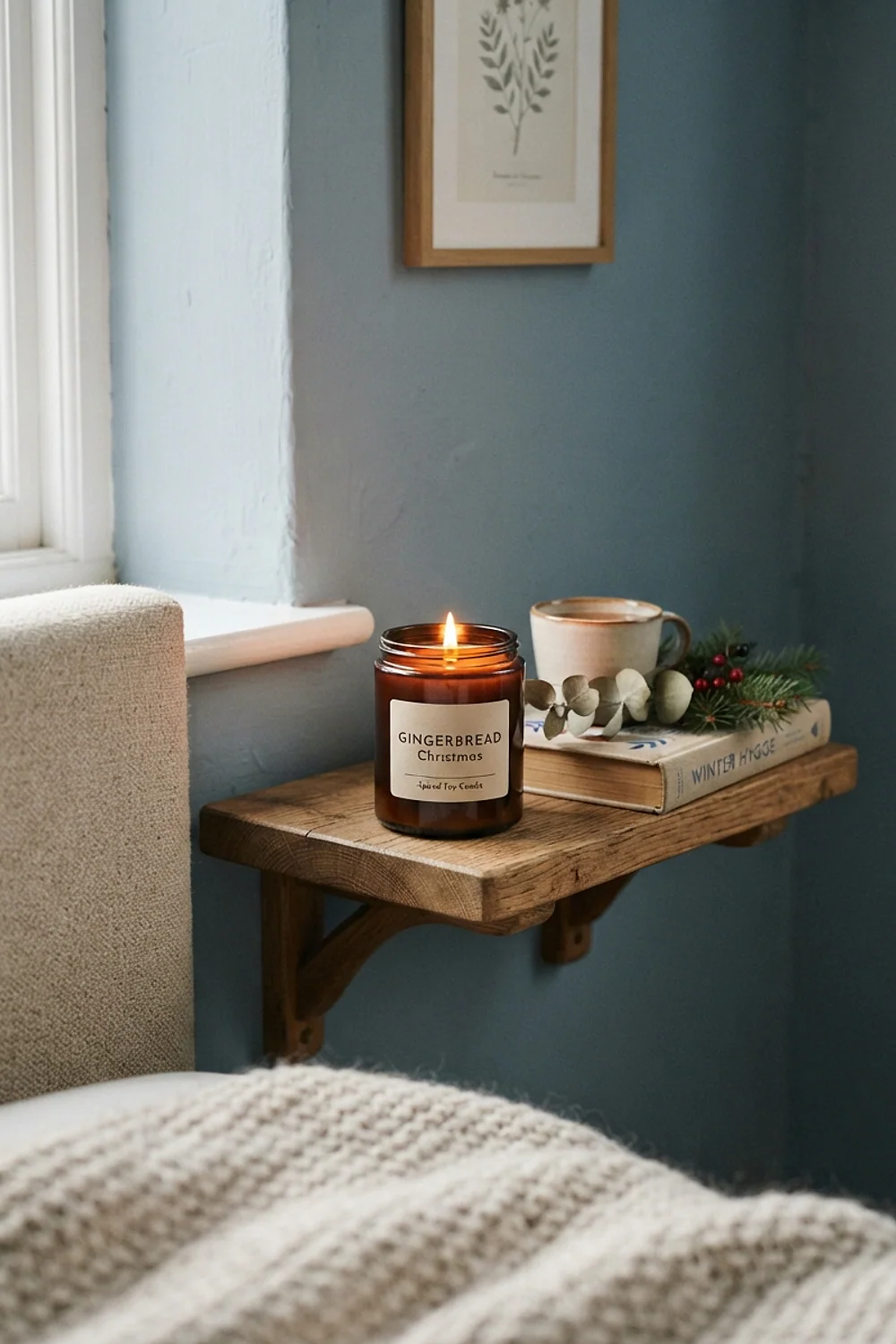
An 8-ounce soy candle with ginger, clove, and molasses notes burns about 40 hours and fills a 150-square-foot room fast, so the room smells like baking without any oven time. In a smaller room, one wick is plenty.
Don’t stack scented candles in the same room, because competing spices turn muddy. And snuff it before bed; it’s a seasonal room scent, not an all-night one. Trim the wick to a quarter inch before each burn to limit soot.
Gingerbread place cards
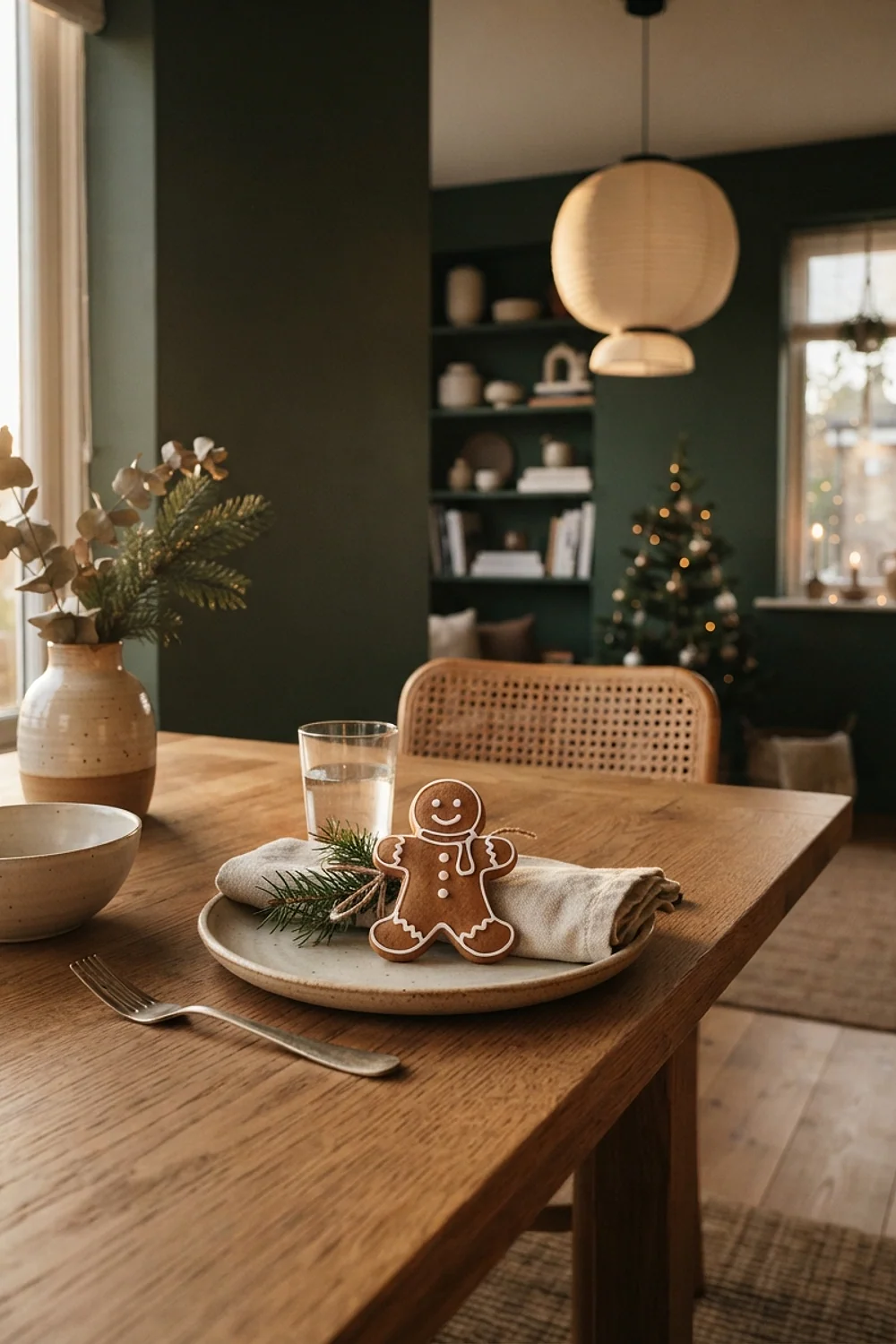
A cutout on each plate, with a name in white paint pen, doubles as décor and seating chart, so guests find their seats and the table gets a focal detail without extra objects. Use 3-inch wood or thick cardstock, and write names in block letters. Block letters stay readable in dim candlelight.
This suits dinners for six to twelve, where there’s time to hand-letter. For bigger crowds, pre-print and glue. Avoid thin paper, which curls under a warm plate and will not stand up.
Things that elevate the room
The last three pieces face outward and upward, so they decide what the house looks like from the street and from the sofa at dusk.
A grapevine wreath with dried orange slices
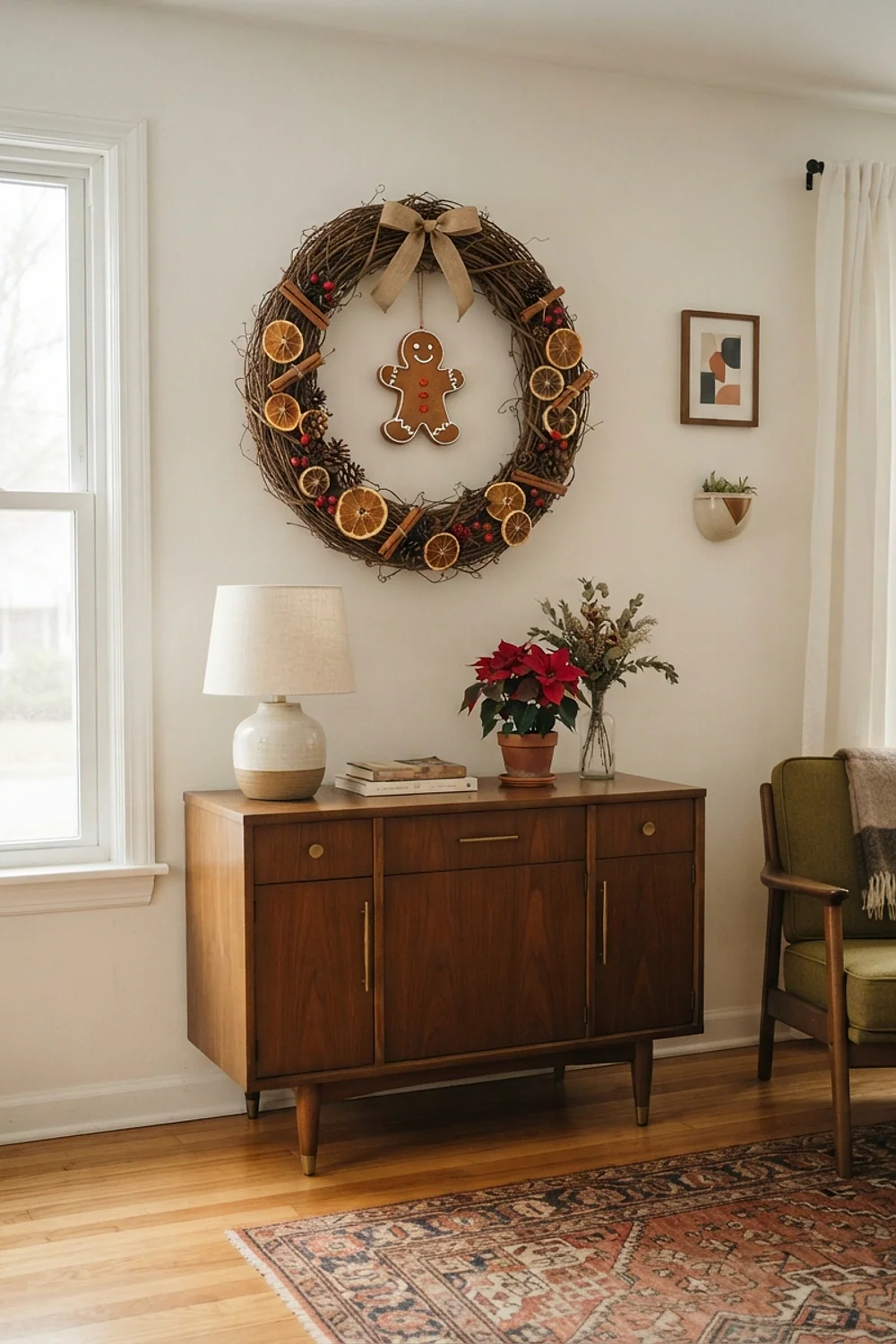
Wired with dried orange slices and short cinnamon sticks, this 24-inch grapevine wreath looks like gingerbread without a single cutout. The rough vine texture is the point, so leave gaps rather than fill it solid.
It suits a covered porch better than an exposed door, since rain turns dried fruit mushy. Wire pieces on rather than glue them, so a slice can be replaced.
Window candles at dusk
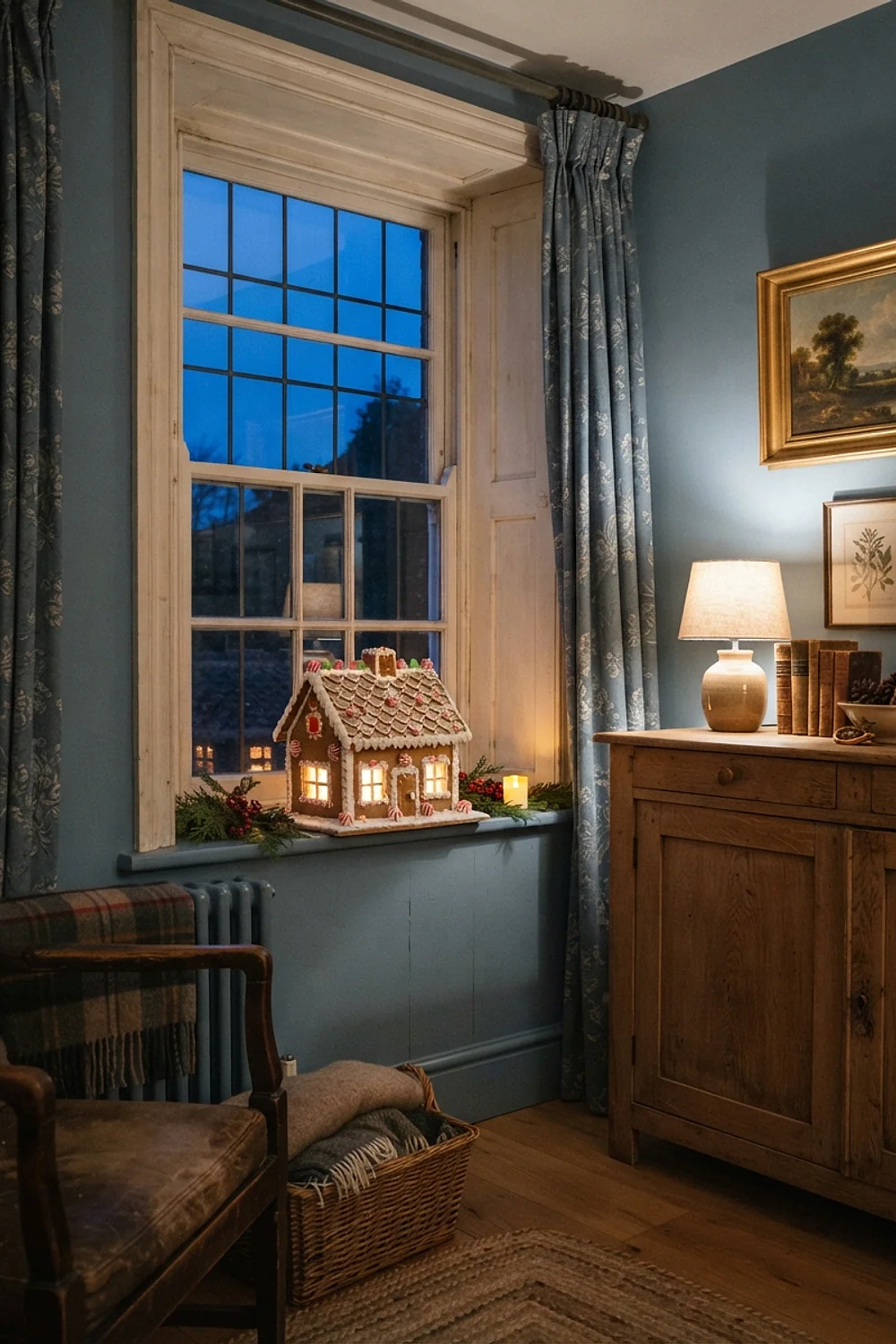
At 4pm in December, a plug-in window candle glows against a gray sky, which makes the house look warm from the street before anyone is inside. A single electric candle runs about $15, and one per pane lines up neatly with cream curtains.
Choose bulbs near 2200K so the window glows amber, not blue-white. And put them on a timer, so they come on at dusk without anyone remembering. Check that the cord reaches an outlet, since long cords draped across a sill look messy.
Layered tree ornaments

A tree set 30 inches from the wall, with large ornaments of 4 to 5 inches near the trunk and small ones at the branch tips, reads as full from every angle. Gingerbread men, hearts, and stars are the main cast, with brown wooden beads as filler.
Choose cream ribbon over red for the tree, and keep the topper simple, like a wooden star. In a small apartment, a 5-foot tree with fewer, larger ornaments avoids a crowded look.
Walking through the setup
Start with the light, then the palette, then the objects. That order matters, because the wrong bulb undoes every other choice in the room.
- Swap the bulbs in your main lamps to 2200 to 2700K.
- Decide the ratio: about 60 percent brown, 30 percent cream, 10 percent muted red.
- Place the largest piece first, such as the tree or mantel house.
- Add texture next: wool, wood, grapevine.
- Finish with scent and candlelight.
On a gray December afternoon, stand in the doorway and squint. If one color pops, move it or swap it, and if nothing pops, you’ve probably got the ratio right.
Mixing in your own pieces is fine, as long as the undertones match. Hold a new item against the old ones in daylight before buying. It’s not foolproof. But it works.
More small details, big impact
Most gingerbread rooms fail in predictable ways, and almost all of them come from too much of one thing.
- Plastic candy props in bright pink and lime, which make the room look like a toy shop.
- Mixed brown undertones, such as orange-brown wood next to gray-brown fabric.
- Cold white bulbs that turn molasses into mud.
- Stacked scented candles that blend into a sticky haze.
- Real gingerbread left out for weeks, which gets stale, sticky, or buggy.
- Every surface filled, so nothing stands out.
The fix for most of these is subtraction. Remove a third of what’s on display, and the pieces left start to look intentional.
Quick refresh and storage after the holidays
A dusting every few days keeps matte surfaces from looking dull, since felt and wood show lint quickly. A soft brush works better than a damp cloth on painted cutouts.
When January arrives, pack pieces by category: ornaments in gridded bins, garland on tubes, and textiles in a sealed tote. Add a cedar block to the wool tote to keep moths away.
Touch up chipped white paint before storing. It takes ten minutes, and next year the set looks new.
Ready to start
Gingerbread christmas decor works because it relies on a tight palette, honest materials, and soft light. Start with the bulbs, add one textured throw, and the rest falls into place.
Save or pin this list so it’s handy when the boxes come out, then try the amber bulb swap first, and measure your mantel before buying a single piece.