
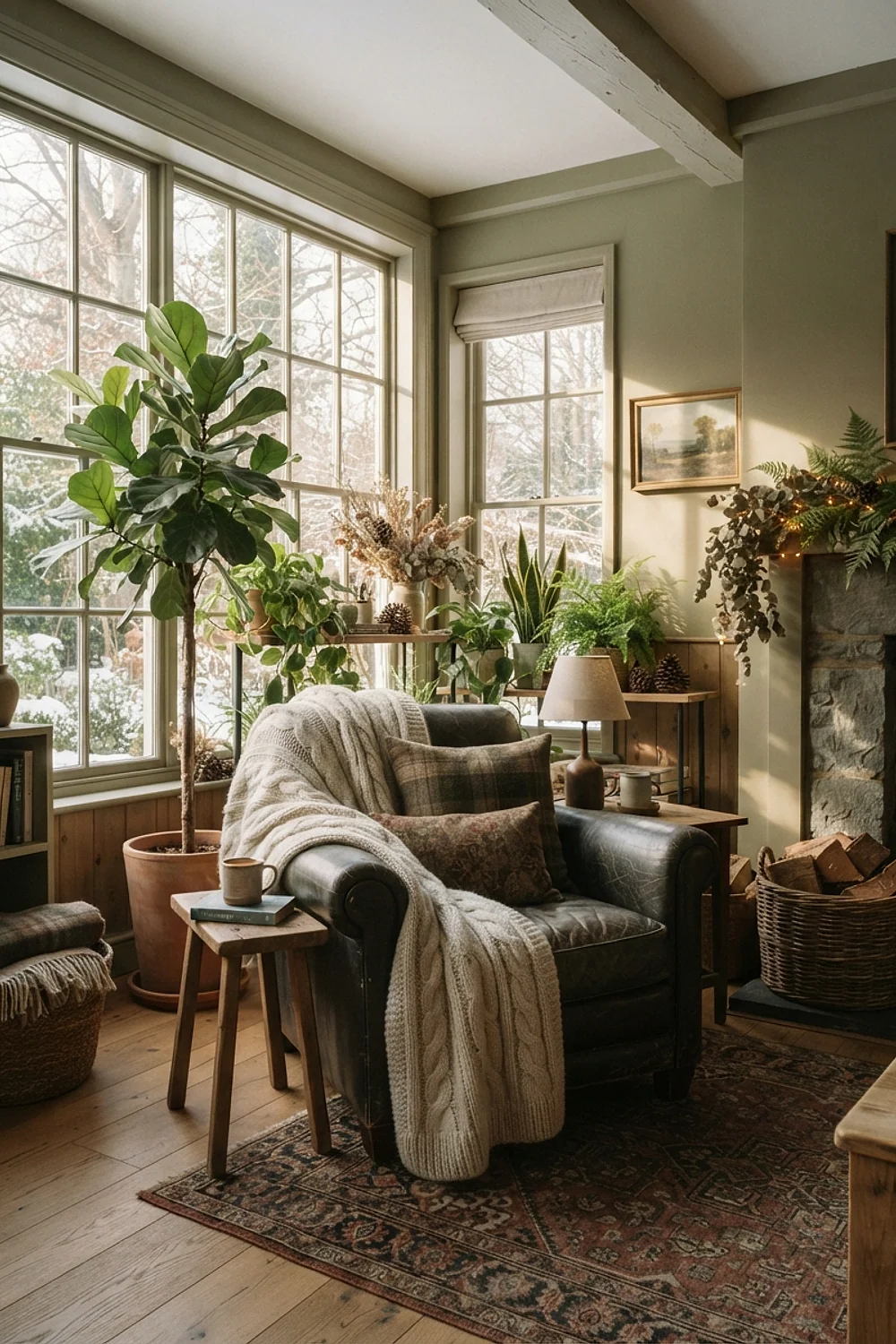
40 Winter Decor That’s Not Christmas Ideas for Cozy Homes
Snowflake garlands and plaid everything are a lazy shortcut, and January rooms deserve better. Winter decor that’s not christmas starts with heavier textures, lower light, and a palette pulled from frost, slate, and woodsmoke.
This list covers 40 swaps, each sized and explained so it can go up the week after the holidays and stay until the first crocus. Pick five. Leave the rest for next year.
Key Takeaways
- Texture, lighting temperature, and heavy fabrics do more for winter rooms than any seasonal motif.
- Bulbs at 2200K to 2700K and a dimmer switch change a room faster than new furniture.
- Measure before buying: rugs, curtains, mirrors, and art all fail when they are a few inches off.
- Store winter pieces cleanly in spring so the same swaps come out fresh next November.
Refreshing your winter decor that’s not christmas this season
The short answer: drop the holiday motifs and lean on what winter actually feels like. Dense wool, matte ceramics, bare branches, amber light, and colors with a little frost in them.
Each idea below is a swap, not a renovation. Most take under 20 minutes and nothing needs a drill.
A chunky merino throw on the sofa arm

A throw around 50 by 60 inches in thick merino changes a sofa on a gray Tuesday in late January. Merino holds heat without the scratch of cheaper wool, and the big loops give your hands something to do while you read. Expect to pay $90 to $140 for the real thing.
Drape it over the arm instead of folding it on the seat cushion. Acrylic knockoffs pill within one season, and wool grabs pet hair, so skip it if a shedding dog owns the couch.
Boiled wool pillow covers over oversized inserts

Boiled wool is felted until it’s dense and slightly springy, and it doesn’t crush the way velvet does, so a pillow keeps its shape through a whole season of leaning and napping. Cover 22-inch inserts with 20-inch covers so the corners stay full and square instead of sagging.
This suits households with kids because the dense surface hides fingerprints and small smudges between washes. Choose hidden zippers, since an exposed metal zip scratches a wood floor when a cushion slides off. Spot clean rather than machine wash, because agitation shrinks wool further.
Pulling the seating closer together

Move two armchairs so they sit about 7 feet from the sofa instead of 10. Winter evenings are spent huddled, and a tighter circle makes a big living room feel intentional. Keep the coffee table 16 to 18 inches from the sofa edge.
This works best in rooms larger than 14 by 18 feet. Just don’t let the shuffle choke a walkway, which should stay at least 34 inches wide.
A boot tray that earns its footprint by the door

A rubber tray about 30 by 15 inches with a raised lip catches slush and salt before it reaches the floorboards. Pair it with a lidded basket for wet gloves, and the entry stops looking like a laundromat.
Choose rubber or powder-coated steel. Untreated wood trays warp within one wet season and leave a gray ring on the floor underneath.
Bare branches in a heavy ceramic vase

Three birch or curly willow stems cut to 36 to 48 inches look best in a vase that’s at least 10 inches tall. A bundle runs about $15 from a florist, or free from a yard if pruning is due anyway.
Weigh the base with a handful of river stones. Tall, light stems in a light vase tip over the first time a door slams.
A floor cushion large enough to be furniture
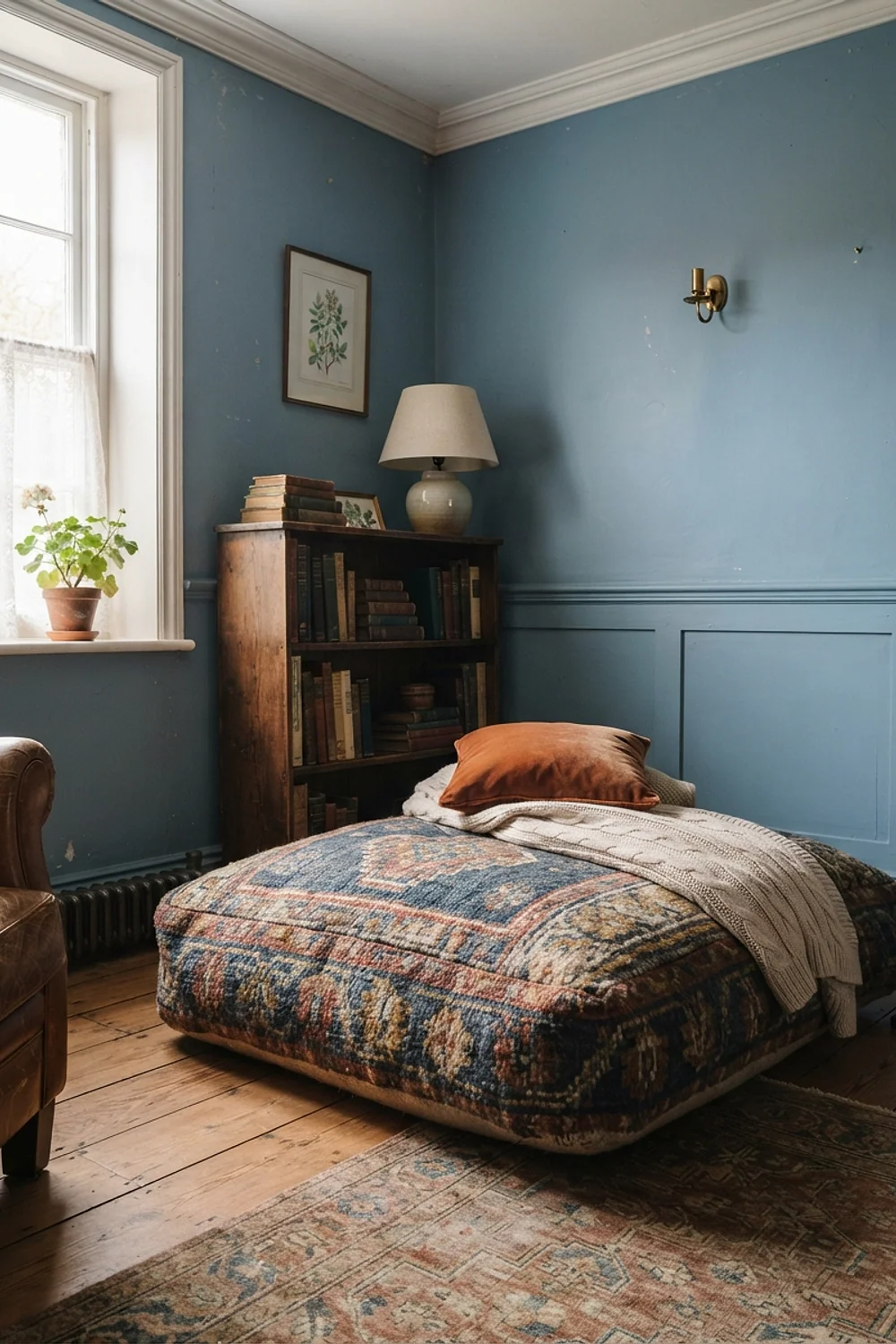
A 30-inch square floor cushion in bouclé fills the dead corner beside a fireplace or radiator and gives guests an extra seat. Larger cushions get used; anything under 24 inches looks like a throw pillow that fell off the sofa.
It suits living rooms and bedrooms with a bare corner. Pick a cover with a removable zip, because corners near heaters collect dust fast.
Ink blue in three small doses

A deep, dark blue in the family of Farrow & Ball Hague Blue reads richer under lamplight than any red does. Use it on three objects: a pillow, a vase, a book spine stack. Walls are optional.
Dark tones look best in rooms with plenty of lamps. In a north-facing room with one overhead fixture, go for slate instead, since ink blue can turn flat and black.
Filament bulbs at 2200K
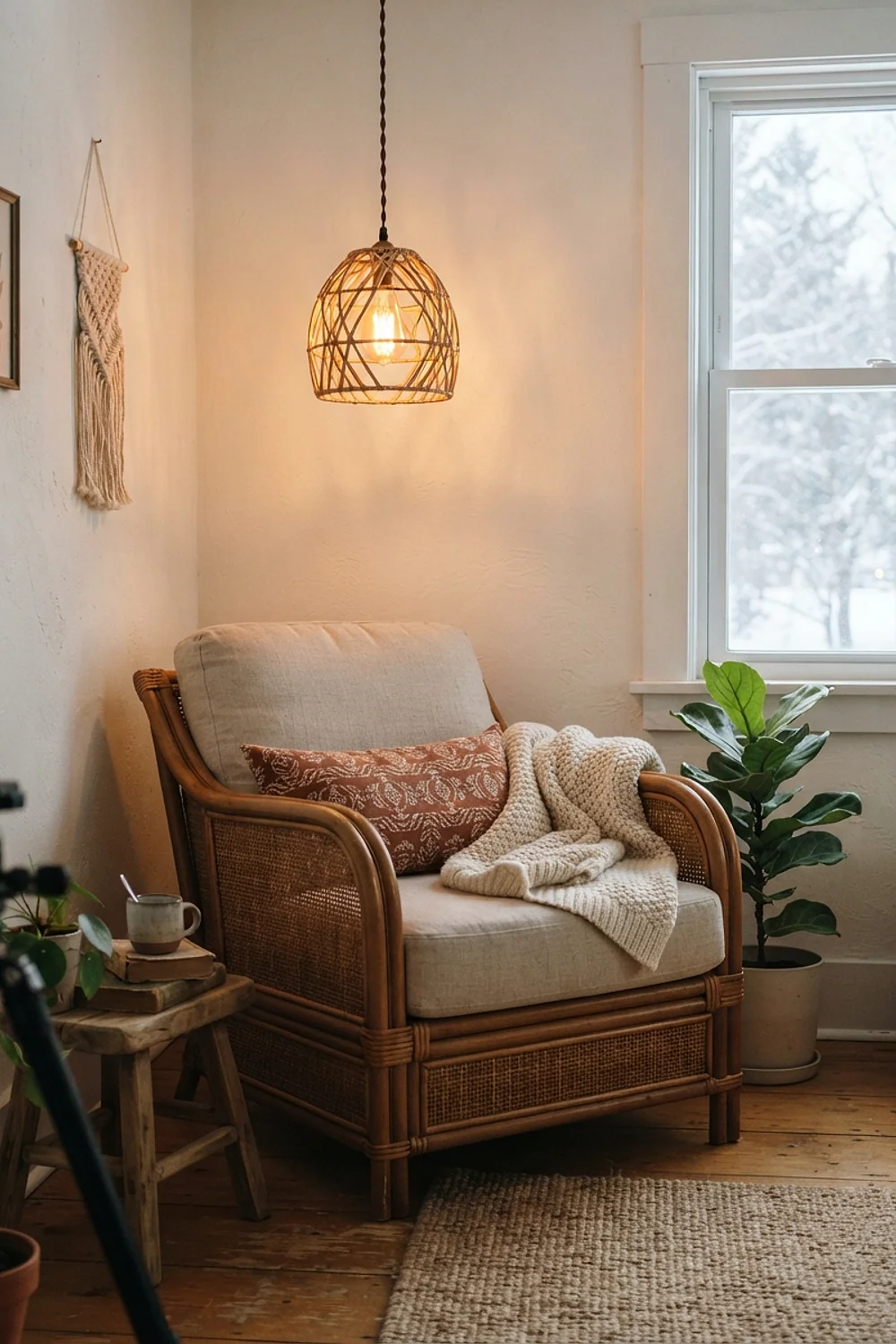
Swapping a 3000K bulb for a 2200K one turns the room amber right when the sun sets, around 4:45 in December. The effect is close to candlelight, minus the wax drips on a bookshelf.
Use them in table and floor lamps, where the glow is seen directly. Keep every bulb in one room within about 300K of each other, because mismatched temperatures make a room look patched together.
A log rack, even without a fireplace

A steel rack 24 inches wide and 30 inches tall holds roughly a dozen split logs and looks like sculpture beside a sofa, even when the hearth is missing. The vertical lines also break up a long, flat wall.
It suits apartments and renters, since it needs no chimney, no installation, and only a small patch of floor. Bring in only a three-day supply of wood. Logs stored indoors longer than that can release insects into the house, so refill from a covered pile outside.
@@ITEM 14@Faux snow, and why it dates a room fast
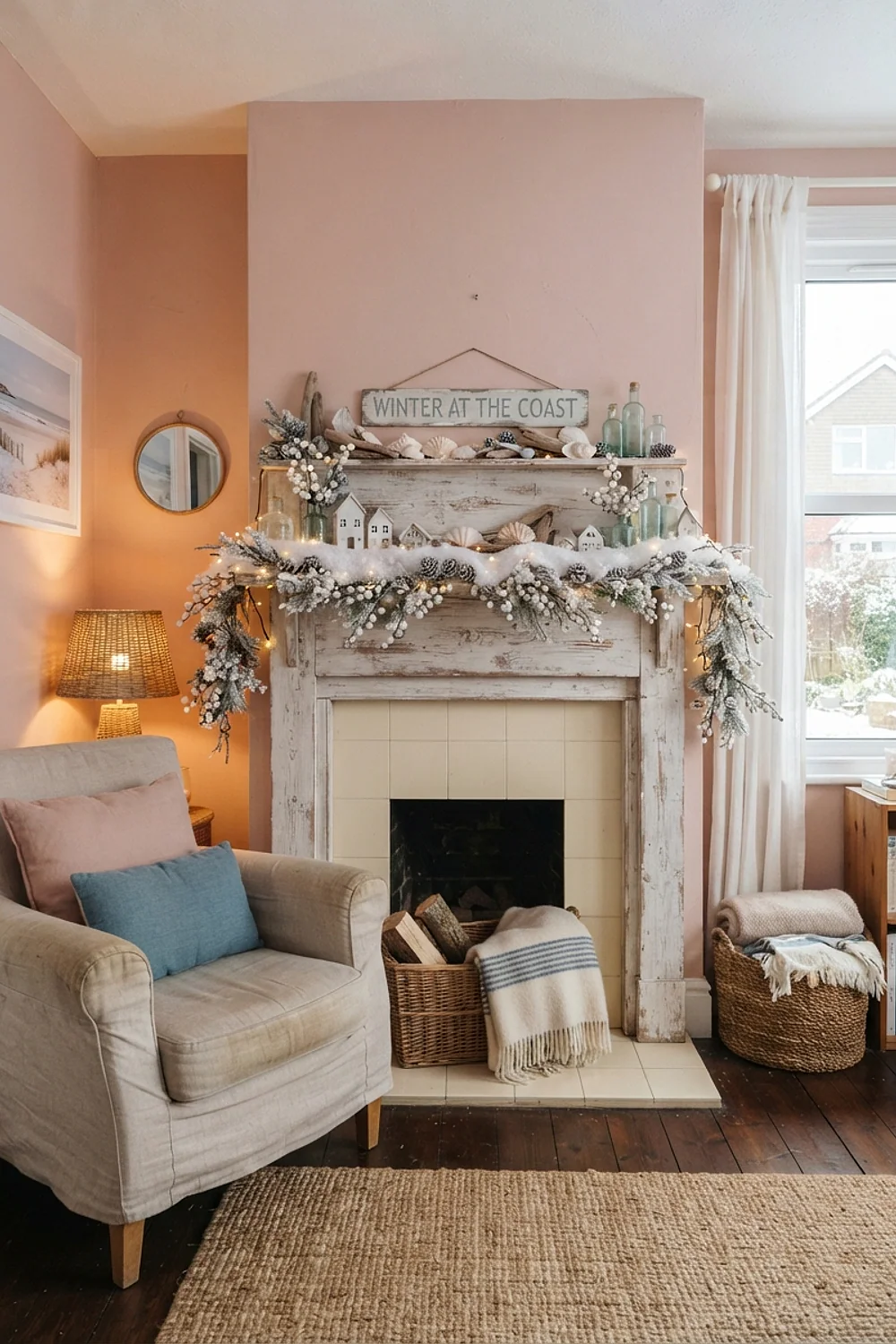
Cotton batting drifts and sprayed flocking announce the holidays and look sad by the second week of January. Matte white ceramics, such as a bowl, a lidded jar, and a vase, say winter without the flakes.
Keep white objects to two or three per surface. More than that and the room starts looking like a showroom for a dental office.
Flannel sheets at 5 ounces

Brushed cotton flannel traps body heat, and a queen set runs about $120 to $180. Look for a weight near 5 ounces per square yard, because anything under 4 ounces pills after a handful of washes.
This is the swap for cold sleepers and for bedrooms with drafty windows. Pick one neutral shade like oatmeal or slate so the bed looks calm in morning light.
Lined velvet curtains, closed at dusk

Conventional advice says keep window treatments sheer to maximize daylight. Skip that in winter. Daylight is gone by 4:30, and a lined velvet panel hung 4 inches above the frame and 8 inches past each side cuts the chill that radiates off glass.
Let the hems graze the floor with about half an inch of clearance. Pull them shut at dusk and open them at 9 a.m., and the room stops feeling like it’s sitting in a draft.
Moving the reading chair to the sunniest window

A south-facing window gives five or six hours of low winter sun, and a chair angled about 30 degrees toward it turns that into a daily habit. Place the chair 3 inches off the glass so the cold doesn’t seep through your shoulder.
This works in any room with a clear 24-inch zone beside the window. Avoid blocking a radiator, since furniture directly in front of one traps heat.
A weighted draft stopper at the door

A fabric tube about 36 inches long, filled with sand and polyfill, blocks the gap under an exterior door for roughly $15 to $25. It also looks good in linen or wool.
It handles gaps up to half an inch. Anything wider needs a proper door sweep screwed to the bottom edge.
Three beeswax pillars on a wooden tray
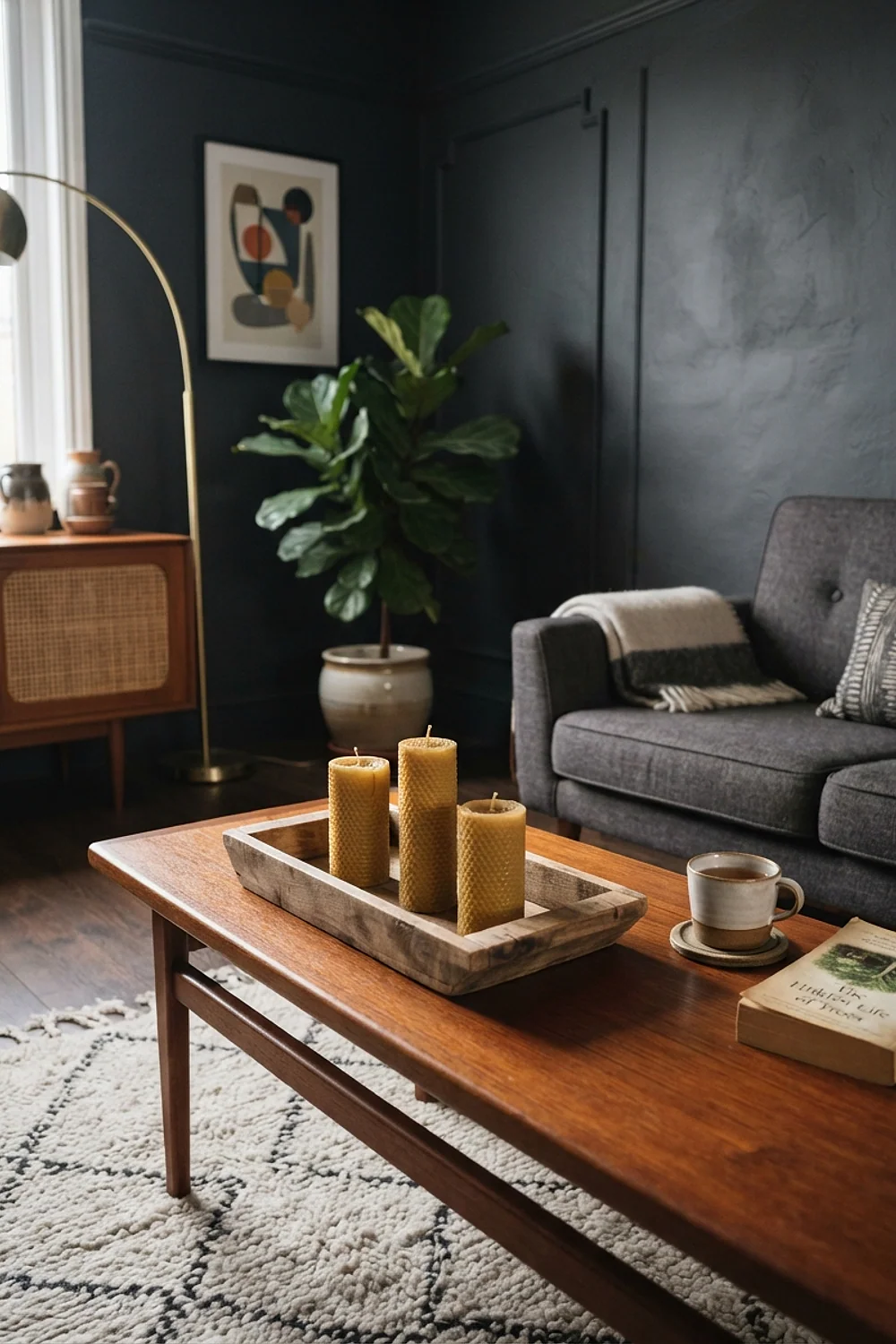
Set pillars 3 inches wide in heights of 4, 6, and 9 inches on a 14-inch tray, and they give off a faint honey scent that synthetic paraffin can’t match. A set runs about $30.
Keep flames at least 12 inches from curtains. Beeswax burns cleaner than paraffin, but it still needs a trimmed wick of about a quarter inch.
One large winter landscape above the sofa
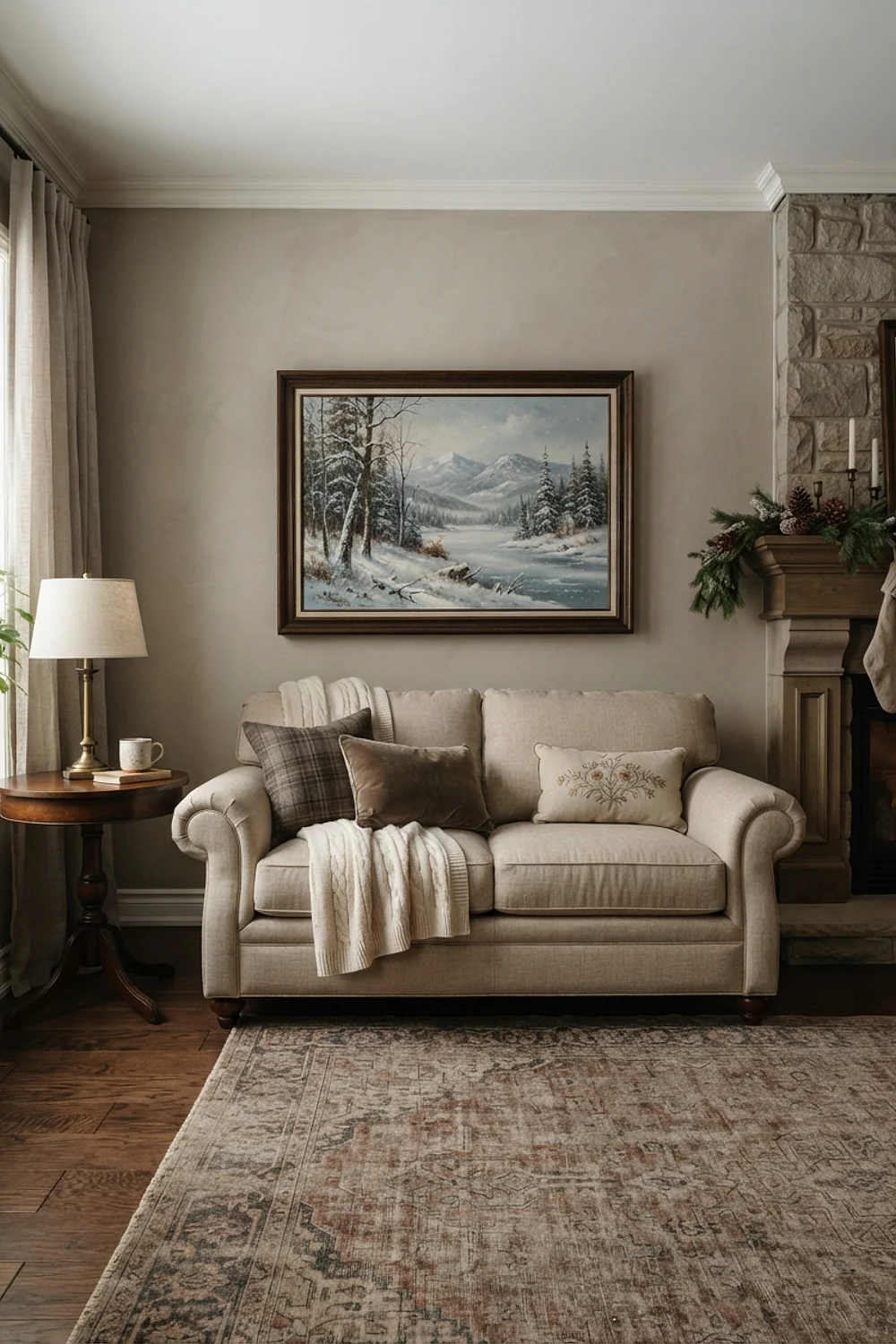
A 40 by 30 inch frosted-field print says more than a cluster of small ones. Hang it so the center sits around 57 inches off the floor, and size the art to about two-thirds of the sofa width.
For an 84-inch sofa, aim for roughly 56 inches across. The usual mistake is hanging it 8 inches above the sofa back instead of 5 or 6, which leaves it floating.
Charcoal and oatmeal in a 60/30/10 split

Let oatmeal take 60 percent (the sofa, the rug), charcoal 30 percent (curtains, a chair), and a rust or ink accent the last 10. The pairing looks like a snowed-in landscape at dusk.
Resist adding black to everything. Too much charcoal in a small room makes it feel like the walls are closing in around 5 p.m.
A lamp on a timer set for 4:15 p.m.
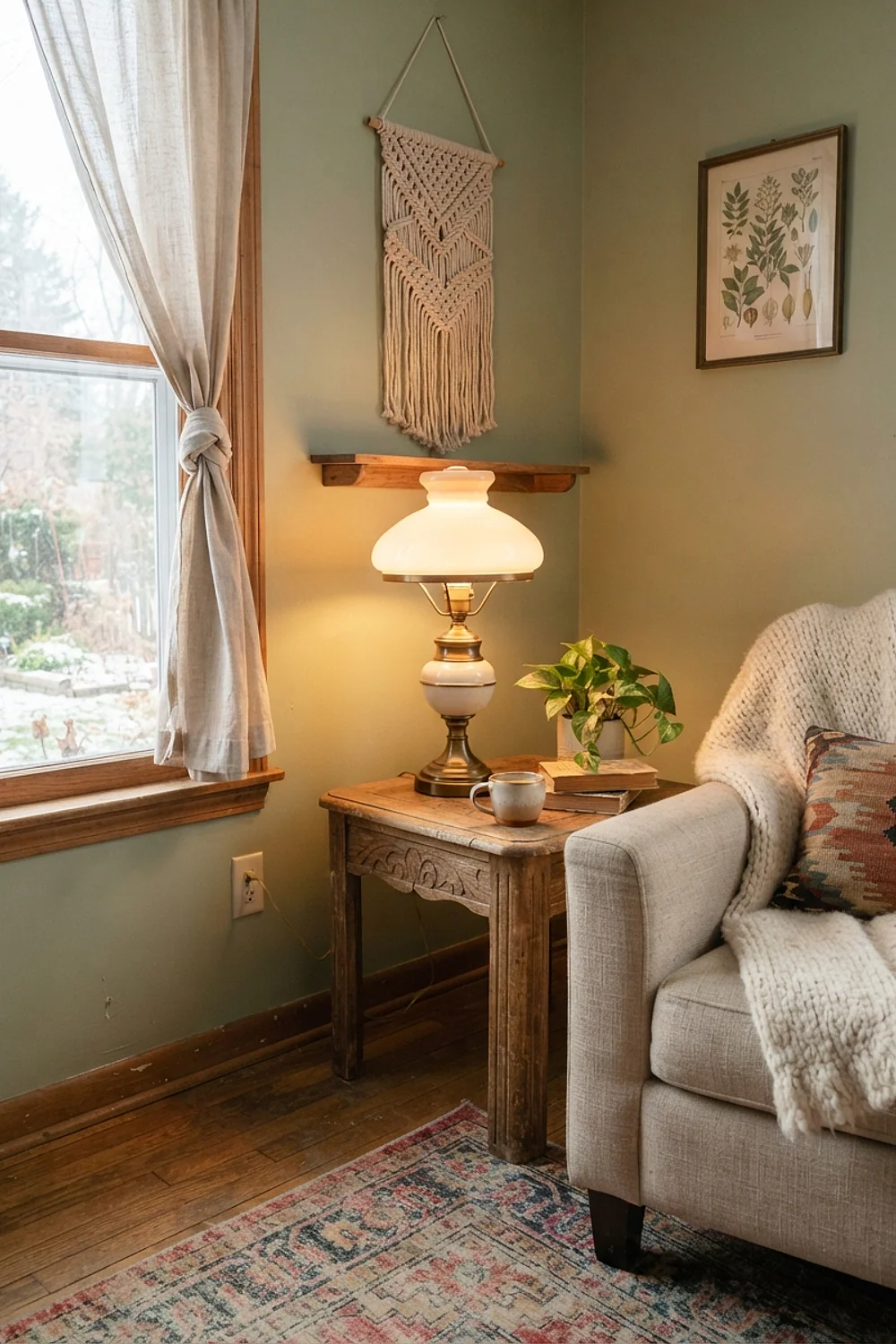
A $10 smart plug turns the lamp on before the sky goes dark, so you never walk into a black house. Set it 30 minutes before sunset, and reset it every few weeks as days lengthen.
It’s most useful for people who get home after dark. Check that the bulb is dimmer-friendly if the lamp has a built-in dial.
A blanket ladder, leaned at 15 degrees
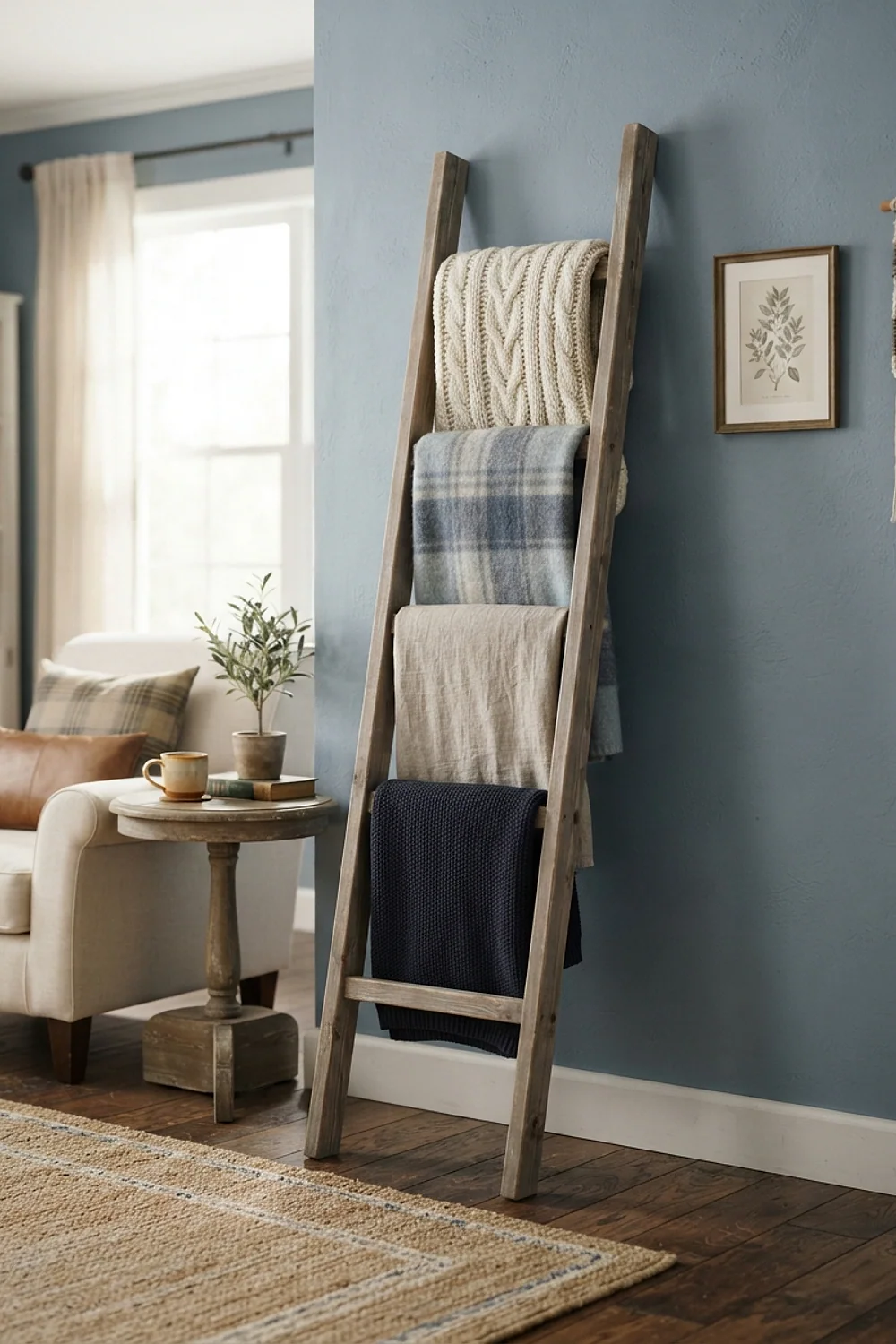
A five-foot wooden ladder with rungs 6 inches apart holds three or four throws and turns clutter into display. Lean it at roughly 15 degrees so it won’t slide on a hardwood floor.
Skip it in any hallway narrower than 34 inches. Ladders stick out about 12 inches, and that’s enough to catch a sleeve.
A rug that’s too small ruins the whole floor
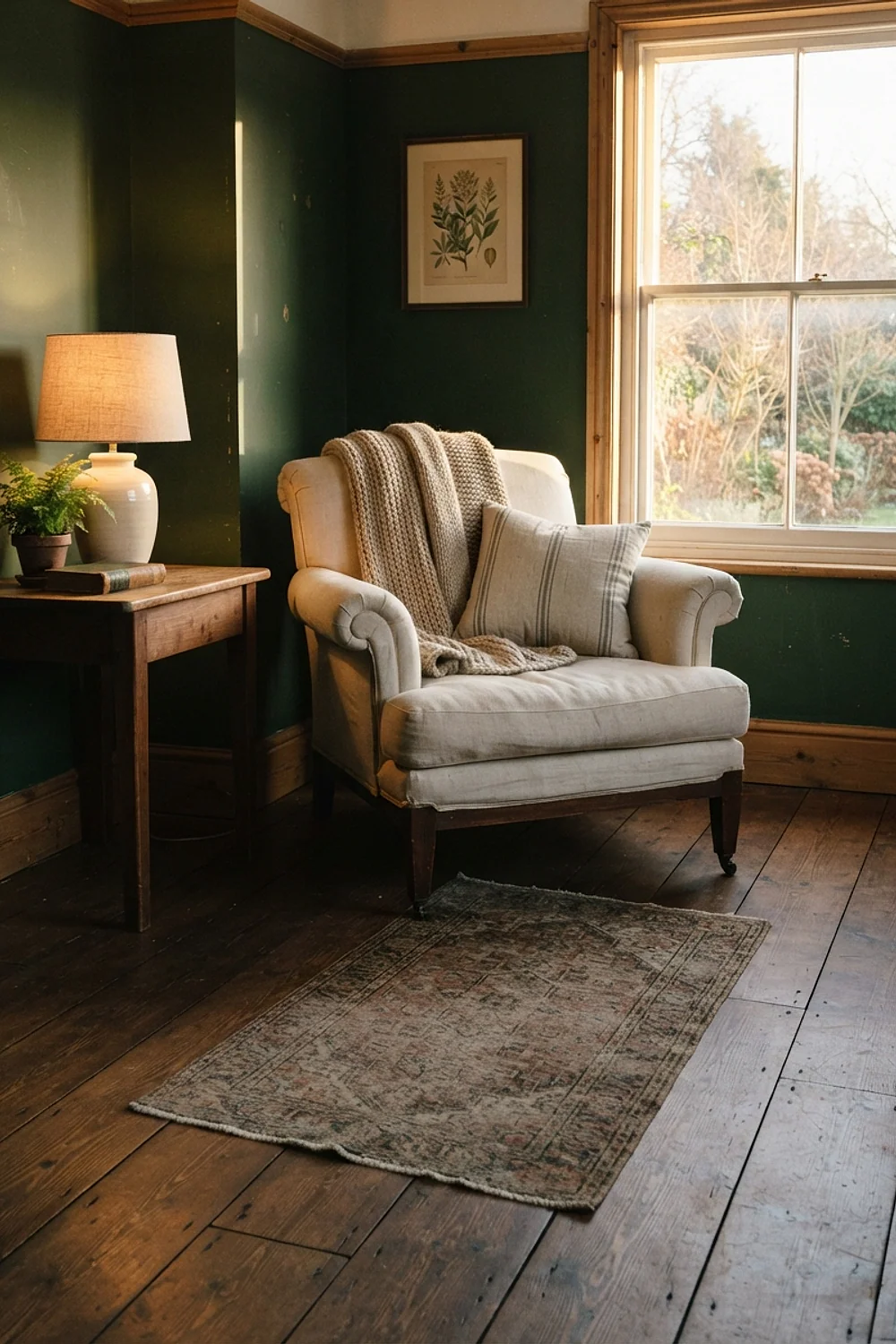
A 5 by 8 foot rug under a living room set leaves a cold ring of bare boards. Go to 8 by 10, with the front legs of every sofa and chair resting about 6 to 8 inches onto the wool.
Wool with a quarter-inch felt pad underneath insulates a floor surprisingly well. The extra rug size costs more up front, but it’s the swap that changes how the room feels underfoot.
A sheepskin over a dining chair

A genuine sheepskin, roughly 2 by 3 feet, turns a hard dining chair into a seat people linger in. Expect to pay $60 to $100, and choose one with a thick, even pile.
It fits households that eat at the table all winter. Use a non-slip pad underneath, because loose skins slide off wood seats.
Unlacquered brass candlesticks
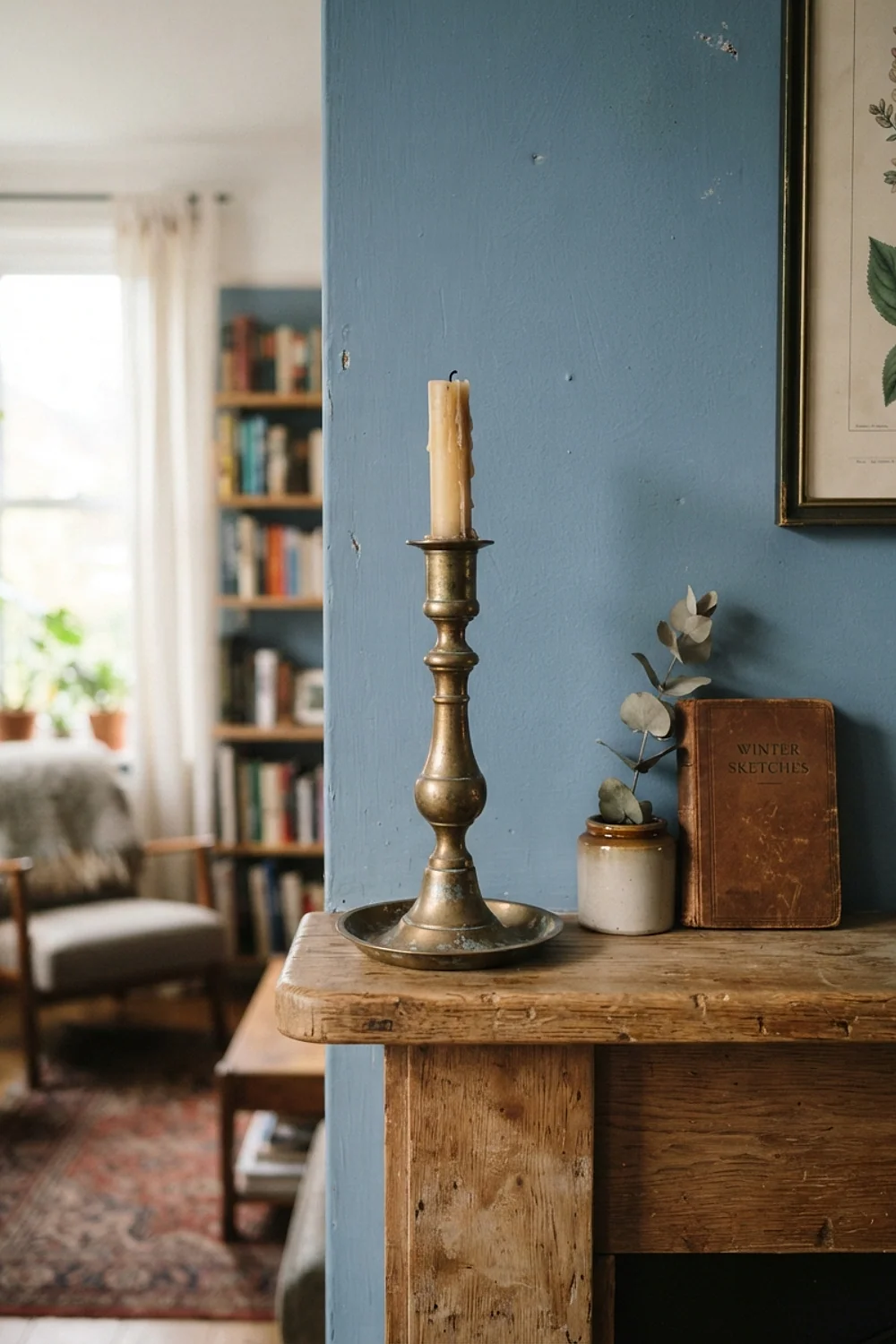
Unlacquered brass darkens and develops patina over a season, and it holds light in a way cold chrome doesn’t. An 8-inch pair beside a mirror catches flame and lamp glow.
Avoid lacquered versions, which flake and look cheap by February. A drop of lemon oil once a month keeps the shine even if you want it bright.
A 40-inch entry bench with a 17-inch seat
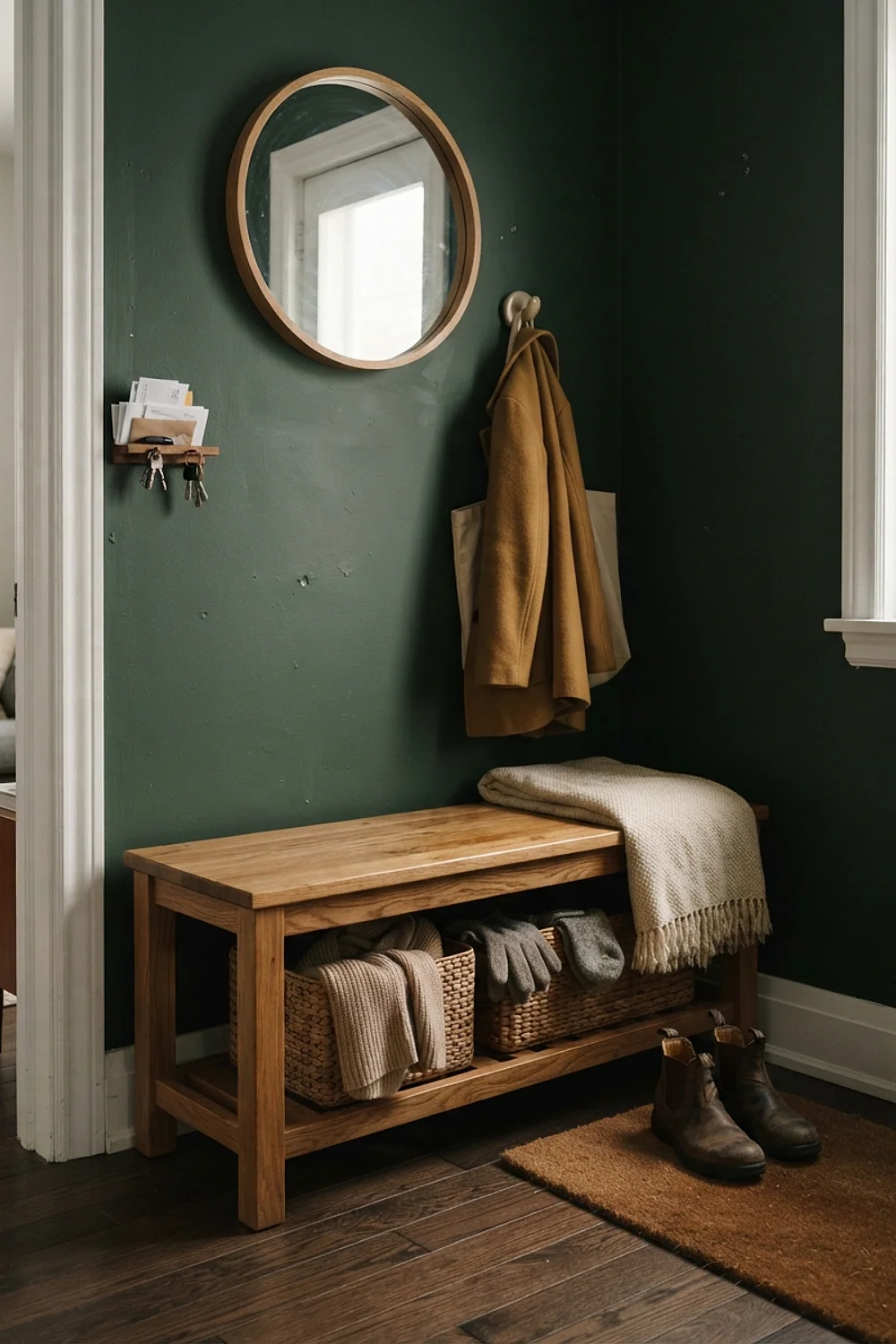
A bench 18 inches deep and 40 inches wide gives you a place to sit while unlacing boots. A 17-inch seat height is the standard for comfort.
You need 36 inches of clear floor in front of it, or the door will bump your knees. In tight entries, a wall-mounted fold-down seat is the better call.
A tea station on a 12-inch tray
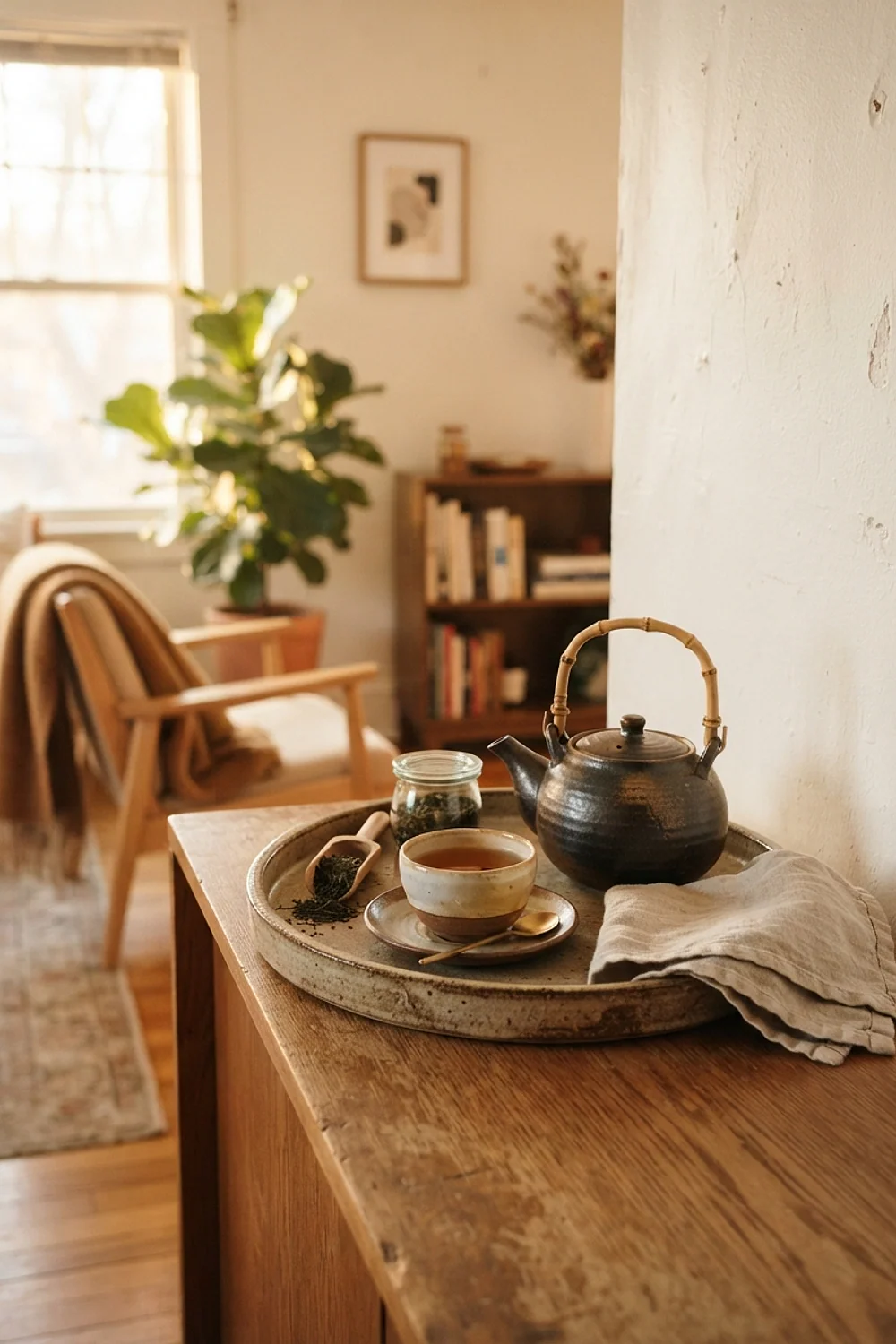
A kettle, six mugs on hooks spaced 4 inches apart, and one tin of loose leaves on a tray 12 inches deep gives winter afternoons a landing point. Everything stays within arm’s reach.
It suits small apartments with no pantry. Choose a kettle with an auto shutoff, since this setup lives near a power strip and bags of paper filters.
Paperwhites forced in a shallow bowl
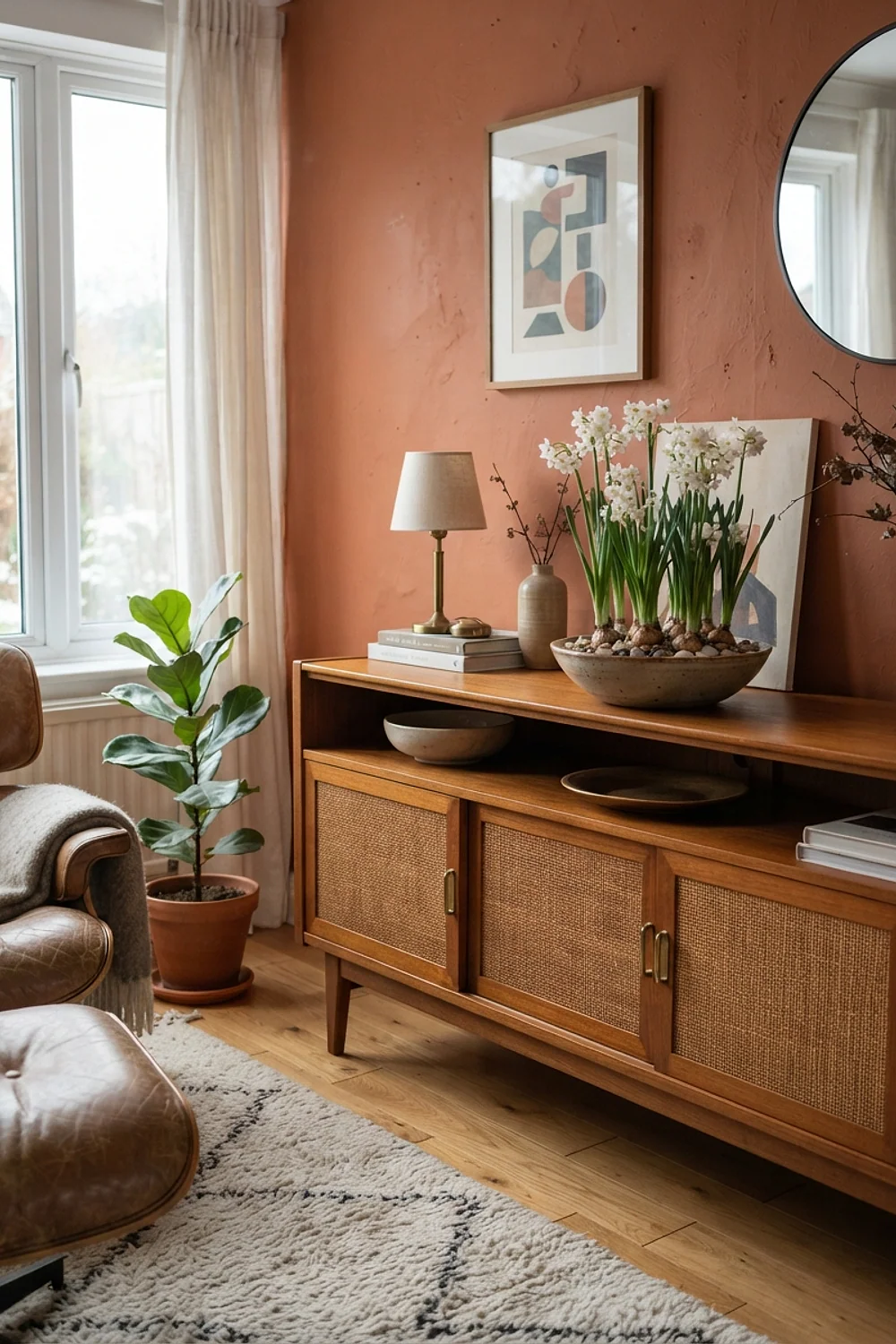
Ten bulbs cost about $15 and fit in a 6-inch bowl of pebbles. They bloom in three to four weeks, right when February feels longest.
Stake the stems with twine to stop them flopping. Skip them if anyone in the house is sensitive to scent, because paperwhites smell strongly musky.
A 28-inch stoneware floor vase

A tall vase with a heavy base fills an empty corner and holds five-foot branches without a wobble. The scale is what makes it read as furniture instead of a pot.
Choose a matte glaze in clay or oat. Place it at least 12 inches from a doorway swing so the stems don’t snap.
Clay pink and terracotta in a north-facing room
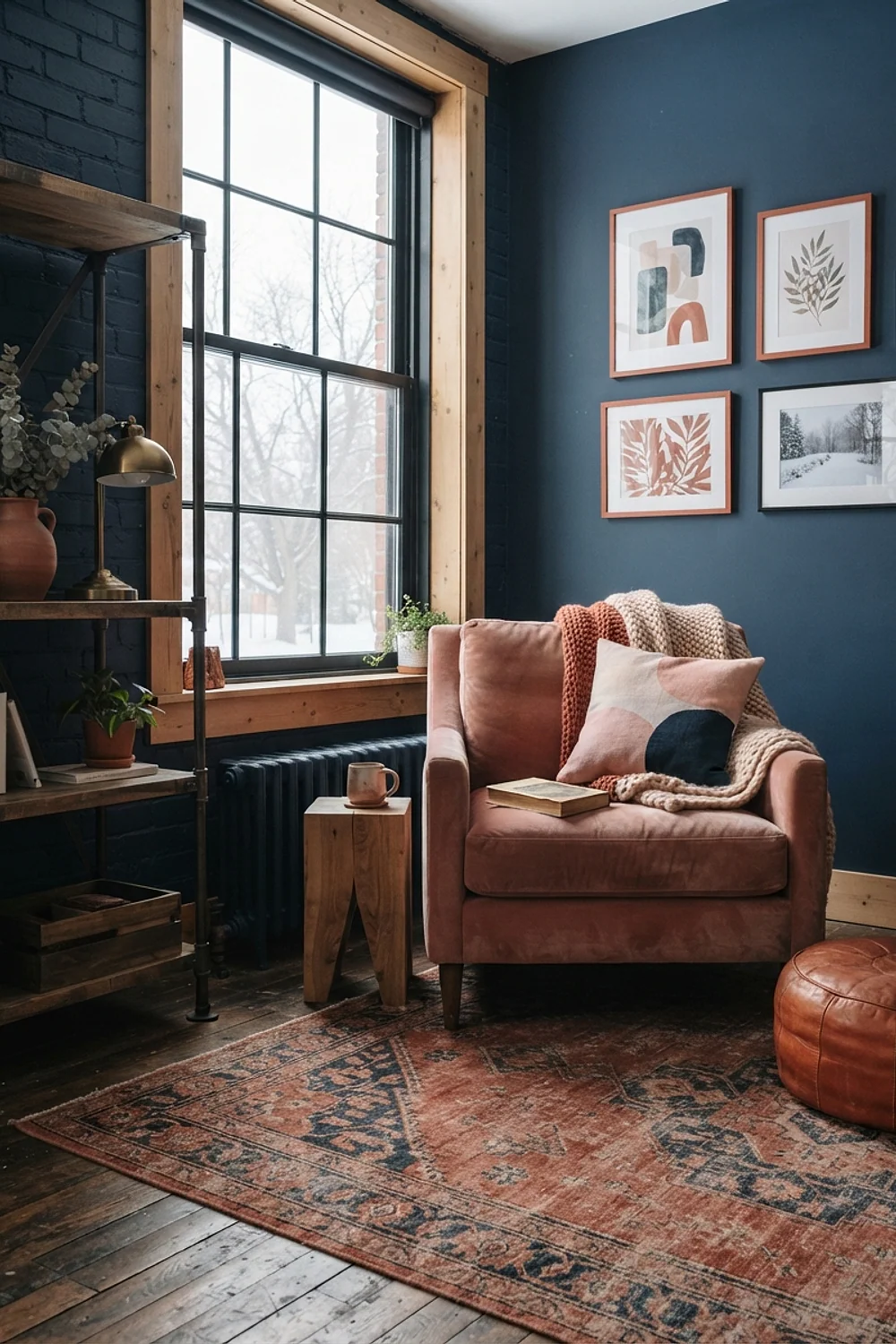
North windows throw a bluish light around 6500K, and muted terracotta pushes back against it. A clay-pink throw on a gray sofa looks like sunset on snow.
Pick dusty, brown-leaning clay. The bright orange versions look like October, which defeats the point of winter decor that’s not christmas.
A washi paper pendant over the table
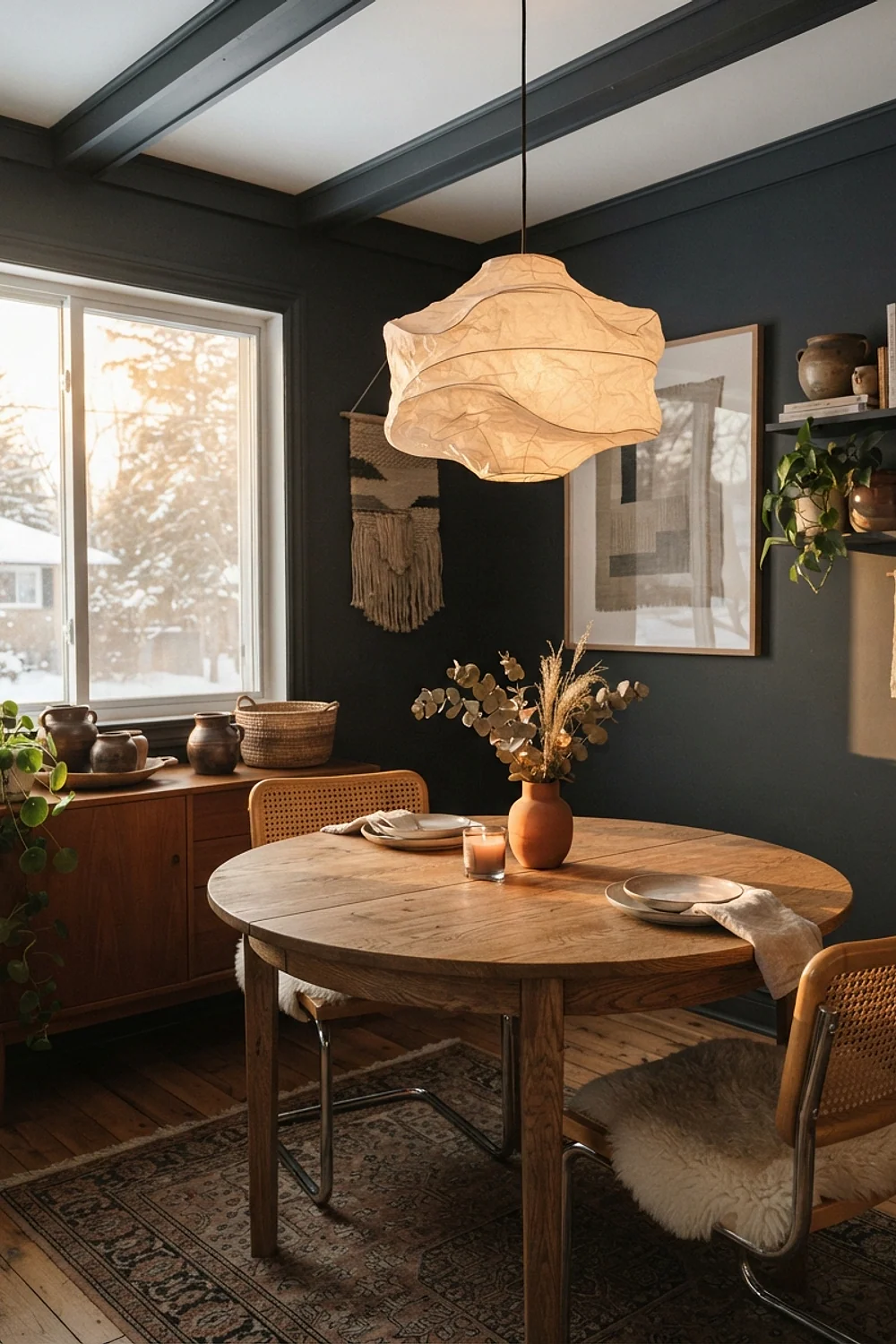
A 24-inch washi lantern diffuses a bulb into an even glow with no hard shadows. It hangs 30 to 34 inches above a dining table, so no one’s eyes catch the bulb.
It suits rooms with ceilings under 9 feet. Keep the bulb under 40 watts equivalent, since paper near a hot filament yellows over time.
Lidded baskets under the console
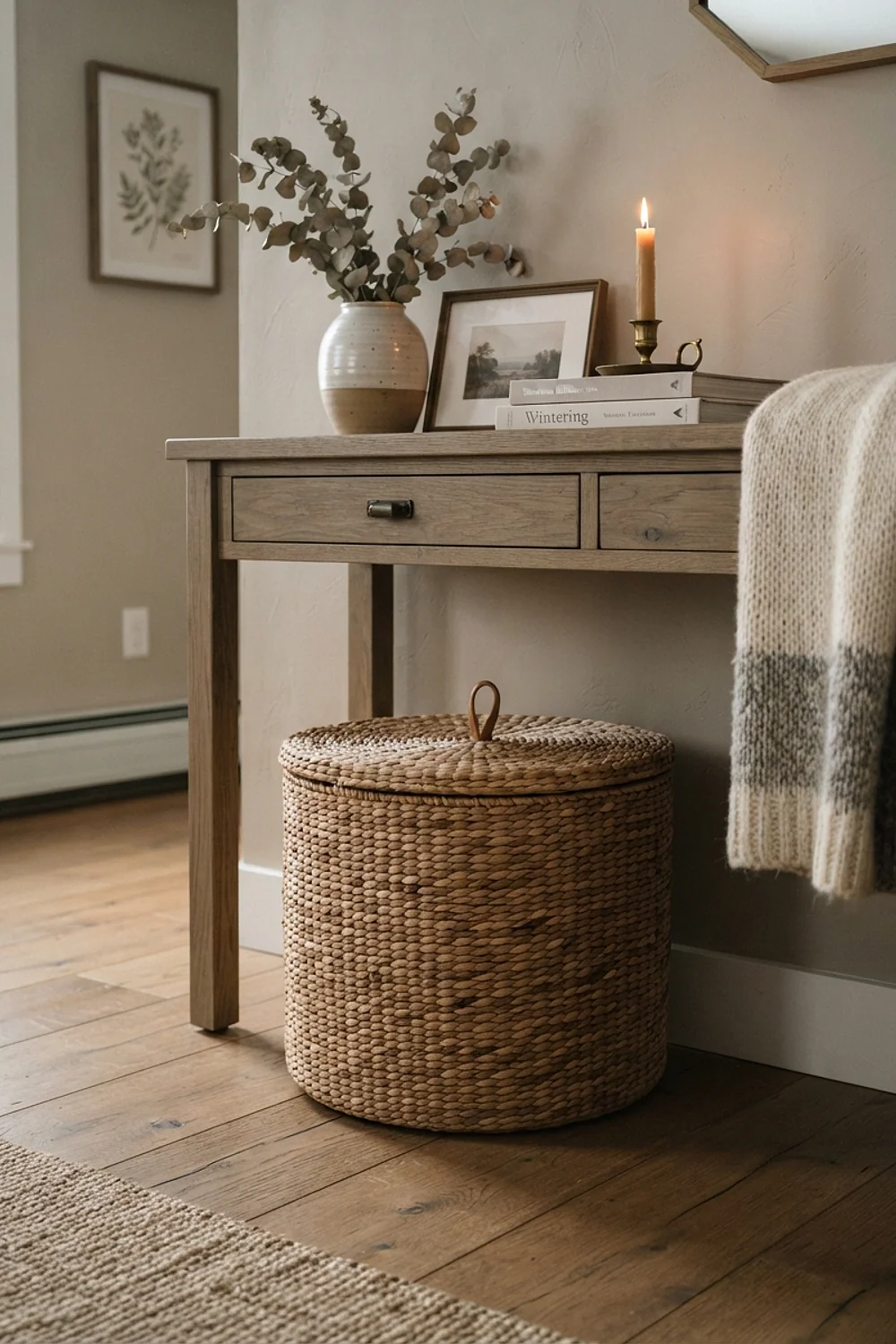
Two 18-inch seagrass baskets with lids hold four throws between them and hide the clutter of winter life. The lids matter because open baskets show every tangled blanket.
Check the clearance first. A console needs at least 14 inches underneath for baskets that size.
Cool-white bulbs make rooms feel like clinics
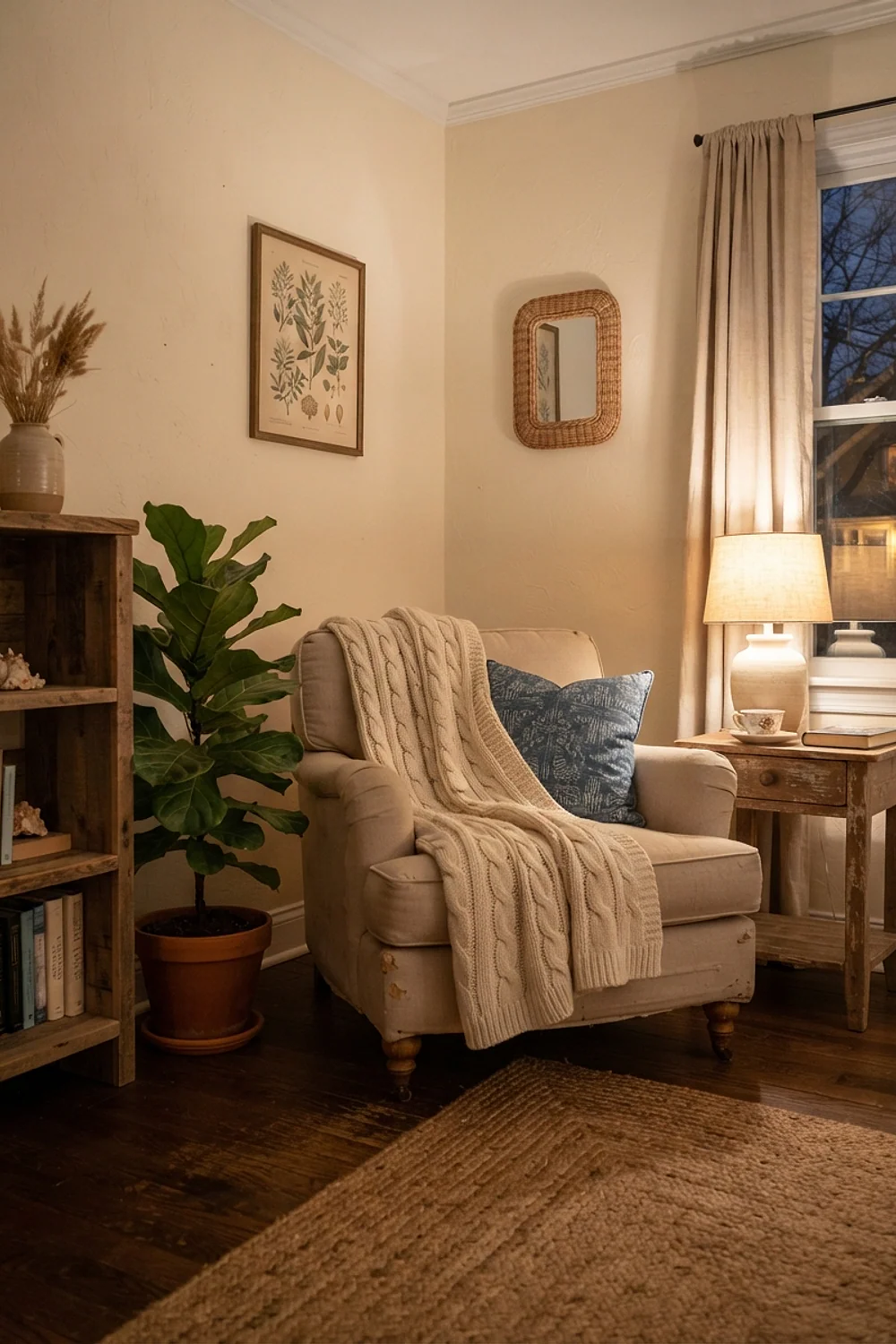
LEDs at 4000K to 5000K turn a living room into a waiting area. Check the box for the Kelvin number and buy 2700K for any room where you relax.
Replace them all at once. One stray cool bulb in a row of amber ones is the first thing the eye lands on.
A basket of wool socks by the sofa
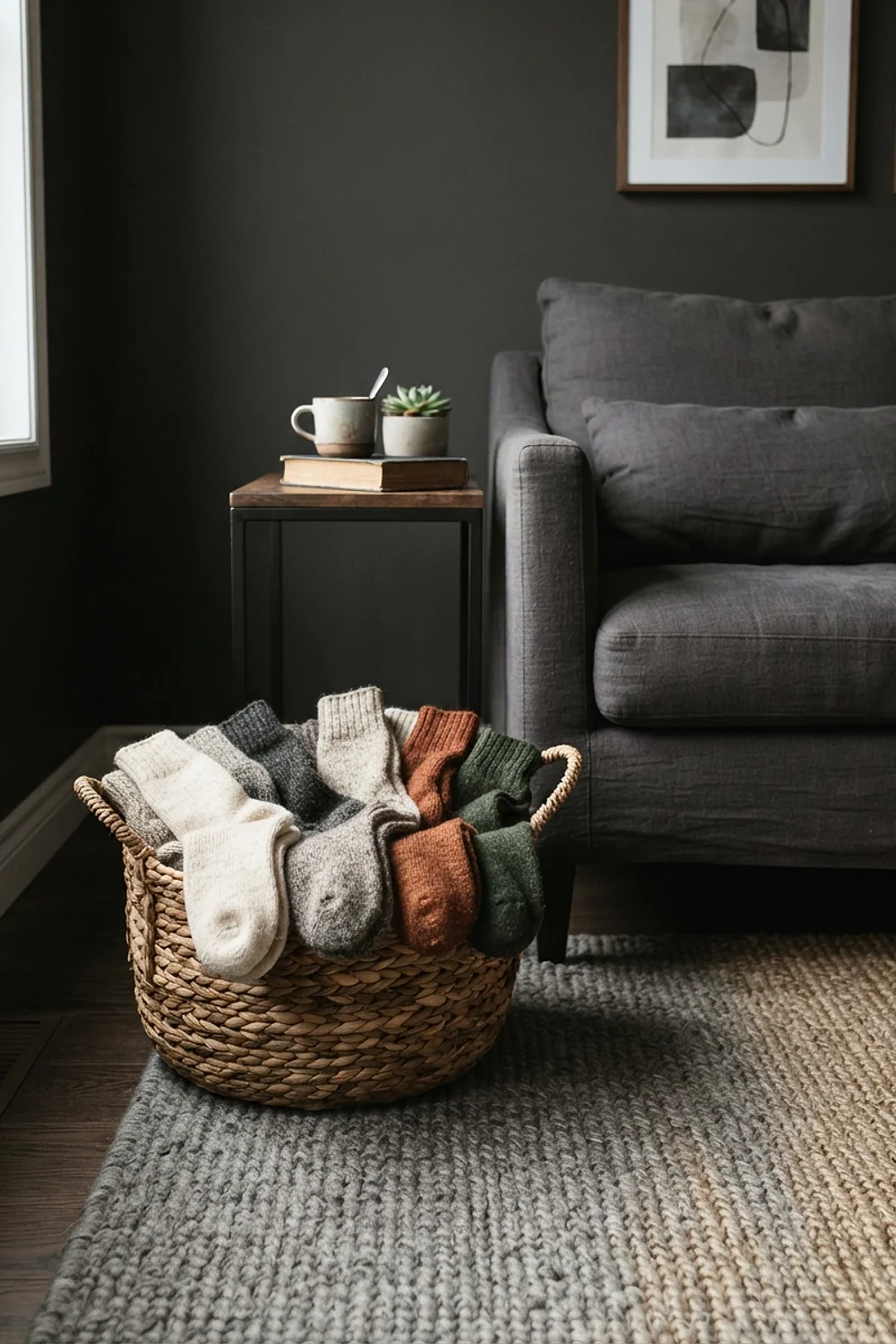
A 14-inch basket holding six pairs of wool socks, at about $18 a pair, cuts down on bare-foot misery on a cold floor. Guests use them too, which makes it a small gesture of hospitality.
Choose a basket with a tight weave so lint doesn’t snag. Wash the socks together in cold water to keep the wool from felting.
Matte stoneware vases, not glossy ones
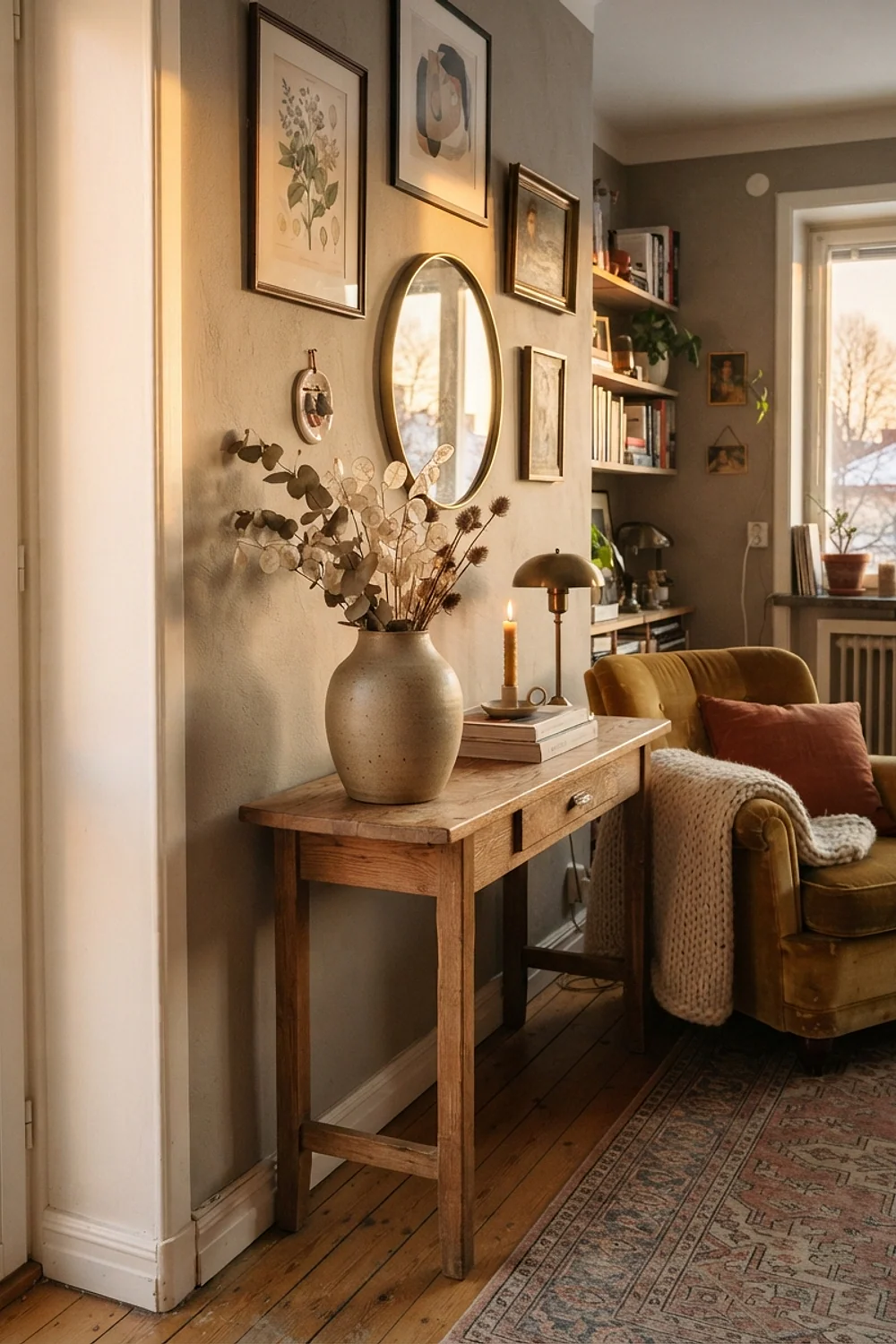
Glossy glazes bounce lamp light back as glare, while matte stoneware absorbs it. Pick vases 8 to 10 inches tall in oatmeal, charcoal, or sage.
Glue a small cork pad under any unglazed base. Raw stoneware scratches wood tables.
Floor cushions around the coffee table
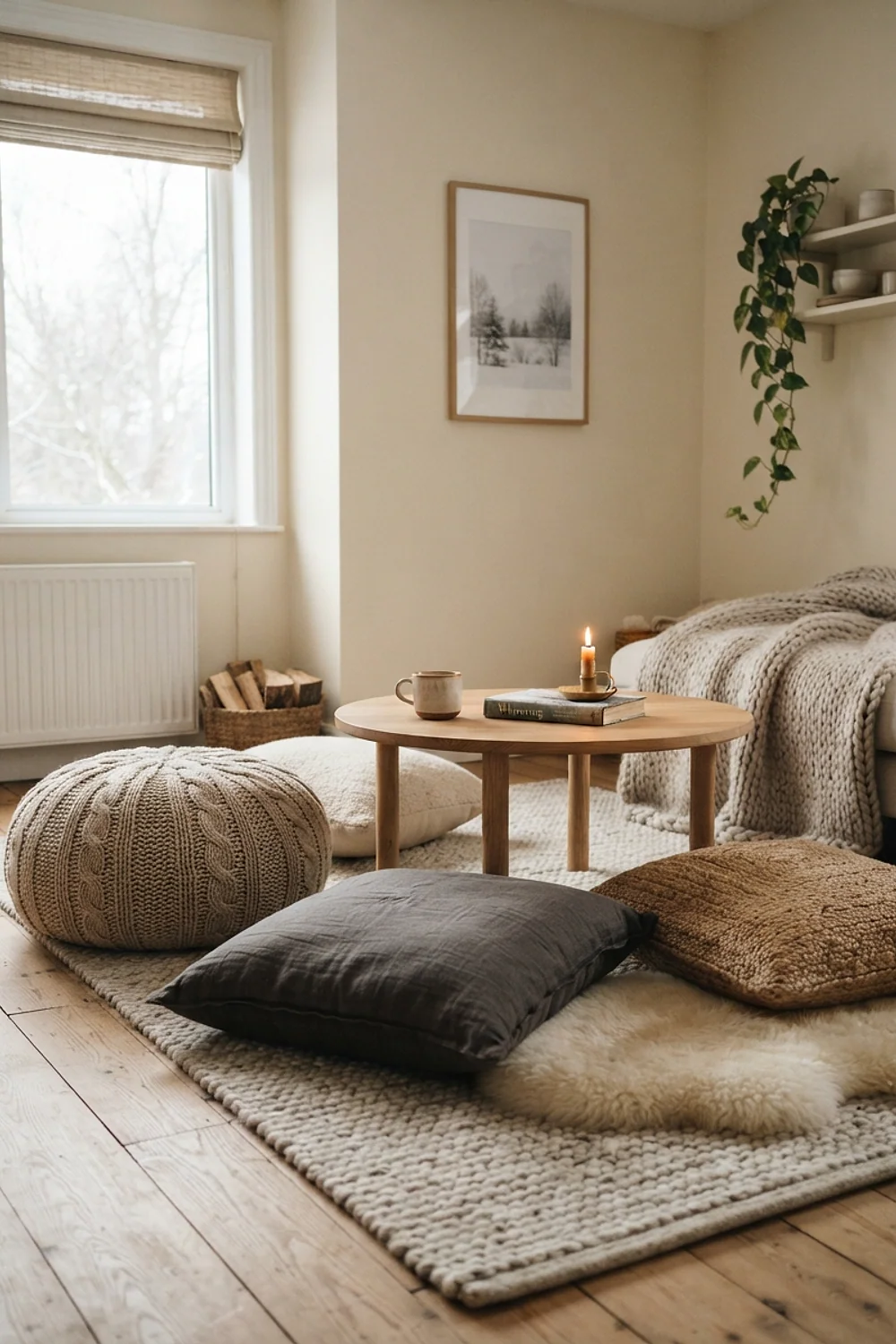
Four 26-inch cushions around a 16-inch-high table give you seating for game night and a place to sit on the rug near a heater. They stack away in a closet when guests leave.
Leave 36 inches of clear floor around the table. Any less and the cushions turn into trip hazards.
A hidden humidifier and a hygrometer
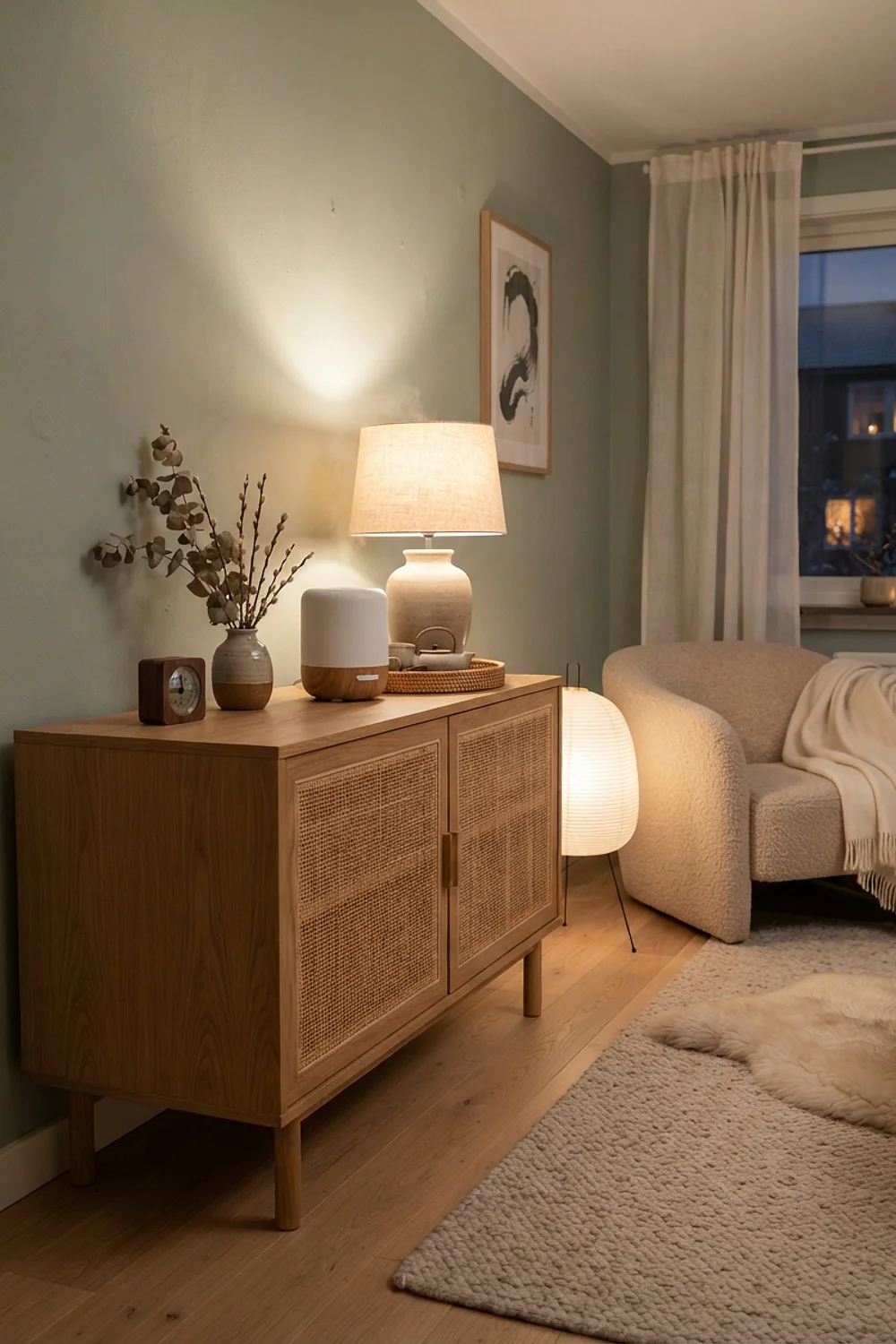
Heated winter air dries to 15 or 20 percent humidity, which cracks wood and chaps skin. A cool-mist humidifier around $70 plus a $10 hygrometer keeps a room between 35 and 45 percent.
Set it 12 inches off the floor and away from wood furniture. Clean the tank every three days, or it grows slime.
A gallery of black-and-white snow photographs
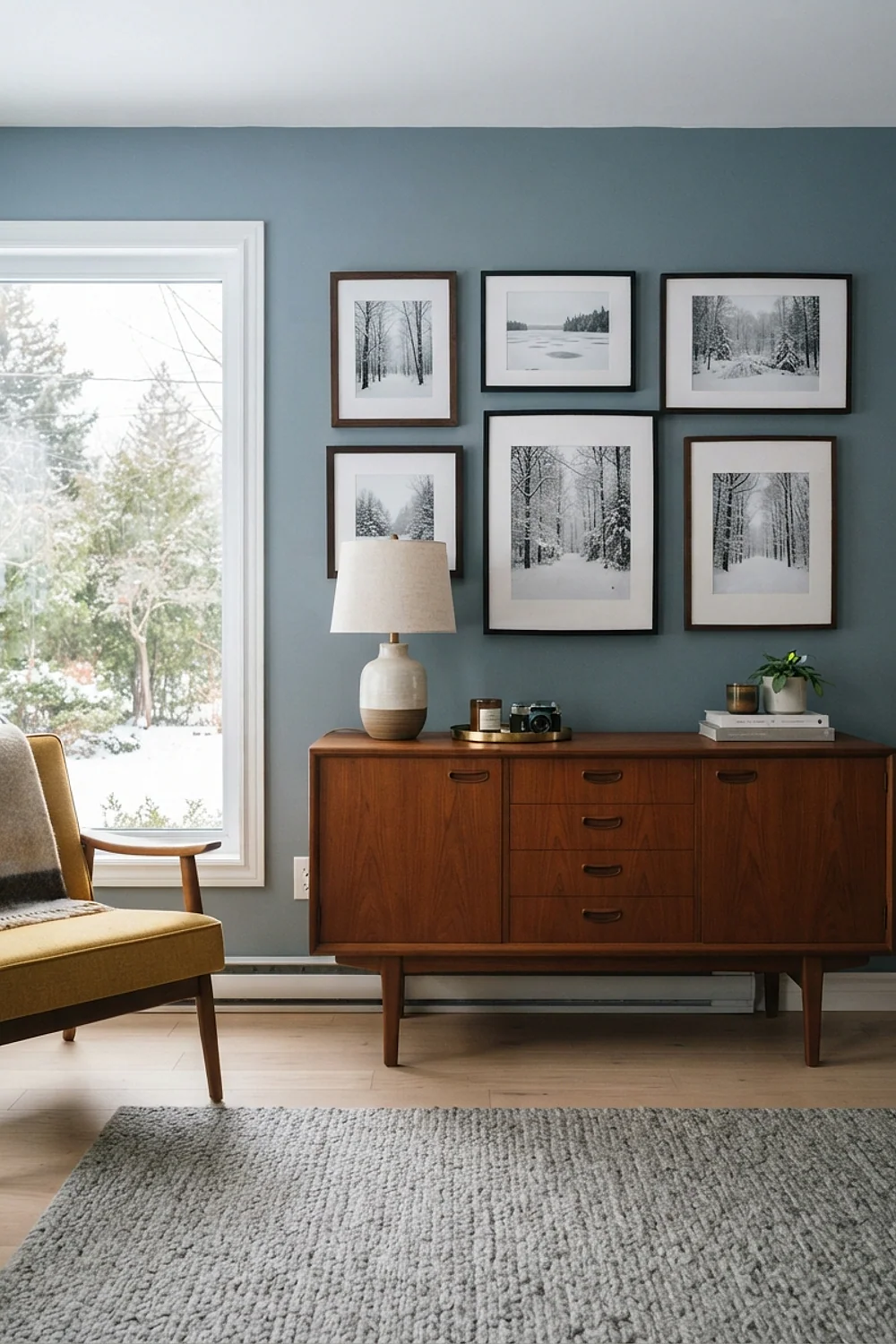
Three 16 by 20 inch prints in matte black frames, spaced 2 inches apart, work in a hallway or above a bed. A 3-inch mat gives each image room to breathe.
Pick matte paper, not glossy. Gloss throws back lamp glare at night and makes the frames hard to read.
A 30-inch round mirror opposite the window
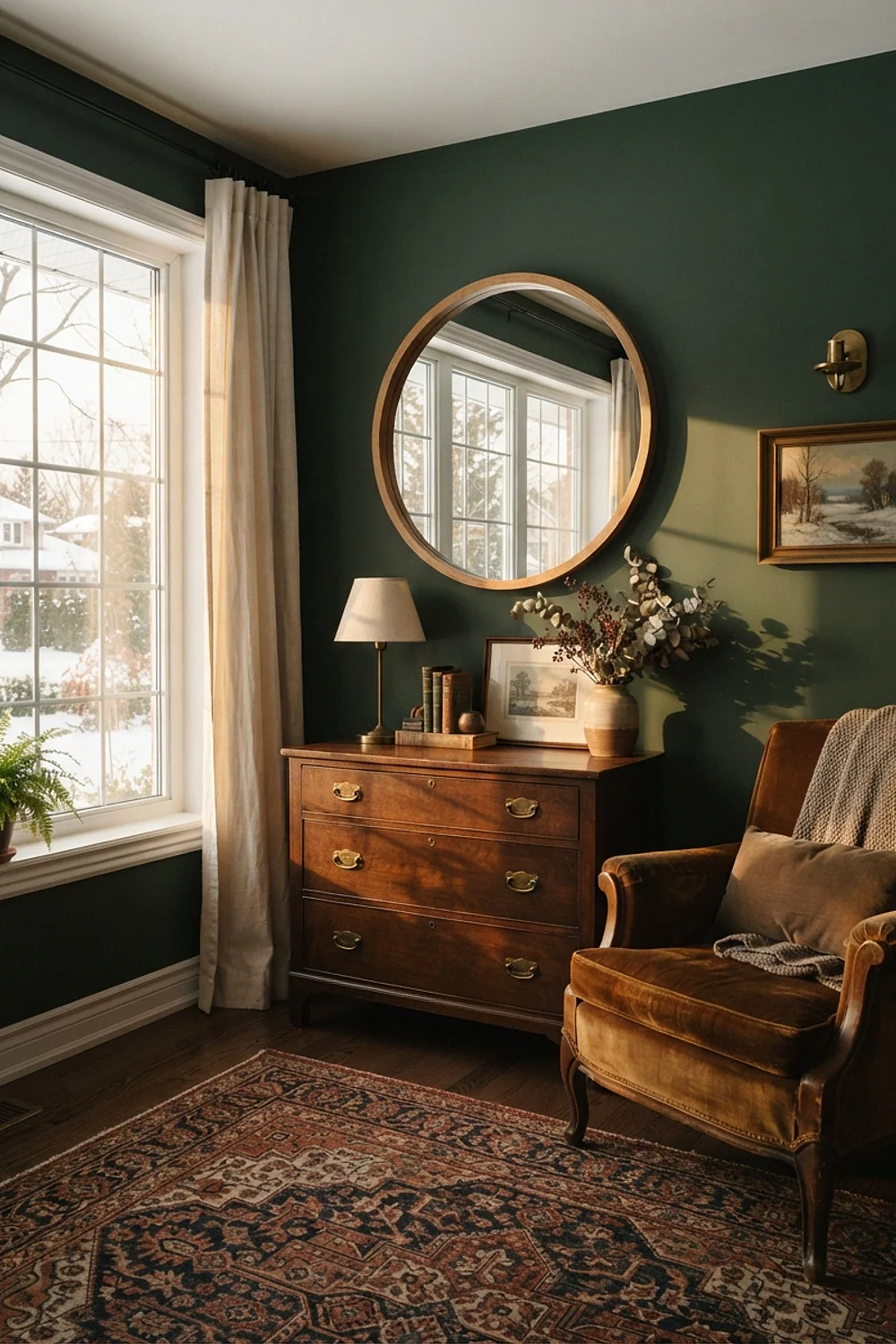
Hung across from a window, a round mirror doubles the little daylight you get. Center it around 60 inches from the floor, a few inches higher than art, so the reflection catches sky.
Check what it reflects before drilling. A mirror facing a cluttered shelf doubles the clutter.
A frosted gray-blue wall color
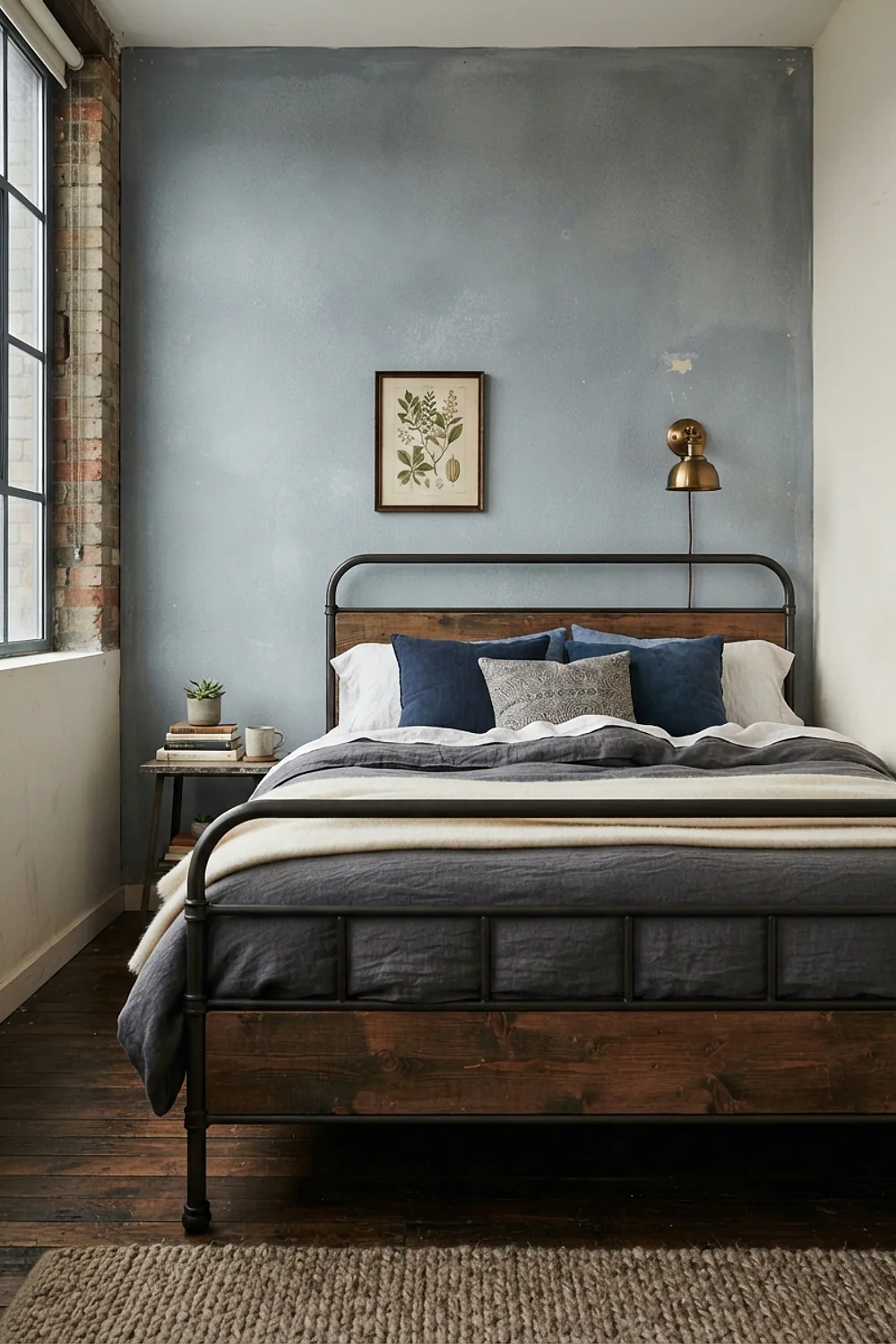
A pale gray-blue in the family of Farrow & Ball Skylight makes a south-facing room feel like clear winter morning. It reflects light well and looks calm next to wood.
In a north-facing room, pick a version with a warm undertone, or it turns icy. Paint only when the room is at least 50 degrees and a window is cracked for ventilation.
A dimmer switch set at 40 percent

A dimmer costs $20 to $30 and replaces a harsh overhead blast with a low glow by 6 p.m. Set it around 40 percent in the evening.
Check that both the dimmer and the bulbs are rated for LED. Mismatched pairs flicker and buzz.
Wide hooks for puffer coats

Mount hooks 66 inches off the floor, spaced 10 inches apart. Winter coats are bulky, and the usual 6-inch spacing forces them to pile onto each other.
Choose hooks that project at least 3 inches. Short ones slip a heavy coat off the edge.
A crowded mantel, and what to clear
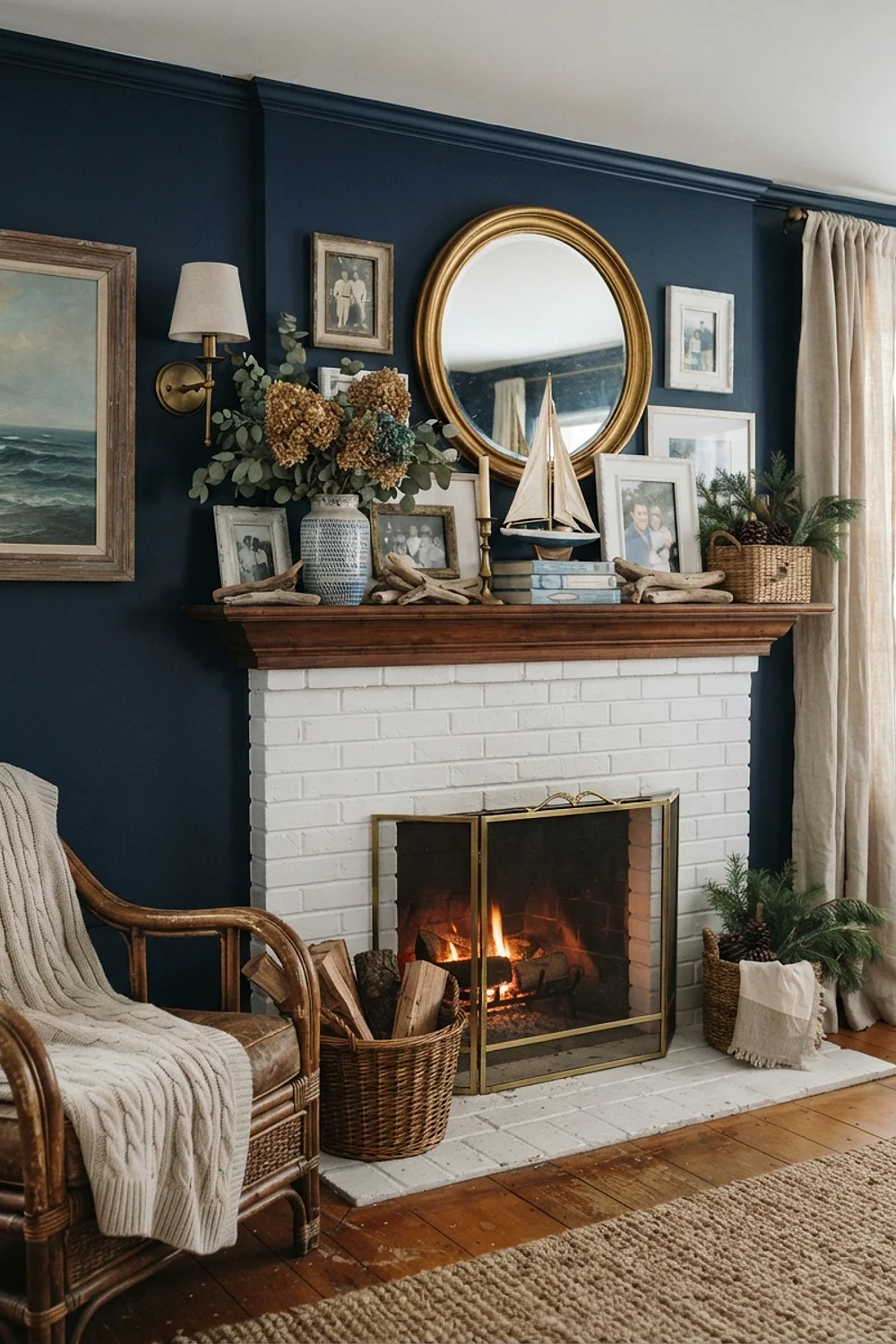
Five tall objects across a mantel create a skyline of clutter. Leave about 40 percent of the surface bare, and keep the tallest piece under a third of the height up the wall.
Try one branch vase, a pair of brass candlesticks, and a framed print leaning back. That’s the whole trick.
Storing the off-season pieces
Winter decor that’s not christmas is easy to put away because none of it is date-bound. Even so, wool and candles need a few specifics to survive spring.
- Wash or air out throws and covers before storing, since moths go for the faint oils left in fabric.
- Wrap beeswax candles in paper, not plastic, which sweats and dulls the surface.
- Store wool in cotton bags with a cedar block, and replace the cedar every year.
- Keep branches and dried stems in a dry closet, standing upright in a tall box.
Label each bin on the end, not the top, so the labels still show when the bins are stacked. A 27-quart bin holds about six throws or ten pillow covers.
And pack the bulbs in their original cartons. The 2200K ones come back out in November.
Year-round foundations worth keeping
A few pieces from this list earn a spot in July. Pick the ones that work in every season, and winter swaps become small adjustments.
- An 8 by 10 wool rug with a felt pad.
- Dimmers on every main light.
- A 30-inch round mirror opposite a window.
- Matte stoneware vases in two neutral shades.
- Lined curtains that close fully.
Everything else is a rotation. Keeping these five in place means the winter layer only needs about an hour to install each year.
Buy in order of impact. The rug and the dimmers change the room more than any pillow ever will.
Closing thoughts on winter decor that’s not christmas
The best winter decor that’s not christmas is built from texture, low amber light, and a few pieces measured properly for the room. Start with the lighting, then add one heavy fabric, then one natural object.
Save or pin this list so it’s easy to find in the first week of January. Try number 8 first: check the Kelvin number on the bulbs in your main lamp before you buy anything else.


