

37 Crochet Christmas Decorations for Every Room
A 6-foot tree needs roughly 40 ornaments before the branches stop looking sparse, and that’s a lot of yarn to commit to before picking a single pattern. Crochet christmas decorations solve the problem room by room, because a 4-inch snowflake and a 22-inch wreath ask for very different amounts of time and cotton.
This list sorts 37 ideas by where they live, from the mantel to the bathroom shelf, with the measurements that decide whether a piece looks intentional or lost. Skim the headings, jump to the room that’s bugging you, and take the numbers with you.
Key Takeaways
- Cotton suits kitchens, bathrooms and porches, while merino and wool blends belong in living rooms and bedrooms.
- Match each piece to its viewing distance: 4-inch ornaments read up close, 22-inch wreaths read from across the room.
- Keep real flame at least 12 inches from any yarn and switch to LED candles.
- Limit each room to three yarn colors so mixed handmade pieces still look like one set.
Crochet christmas decorations for every space
Crochet christmas decorations earn their keep in the rooms where people sit longest, so the living room and entry zone come first. Most pieces here get seen from 8 to 15 feet away, which changes how big and how bold they need to be.
A bobble garland wrapped around mantel lights
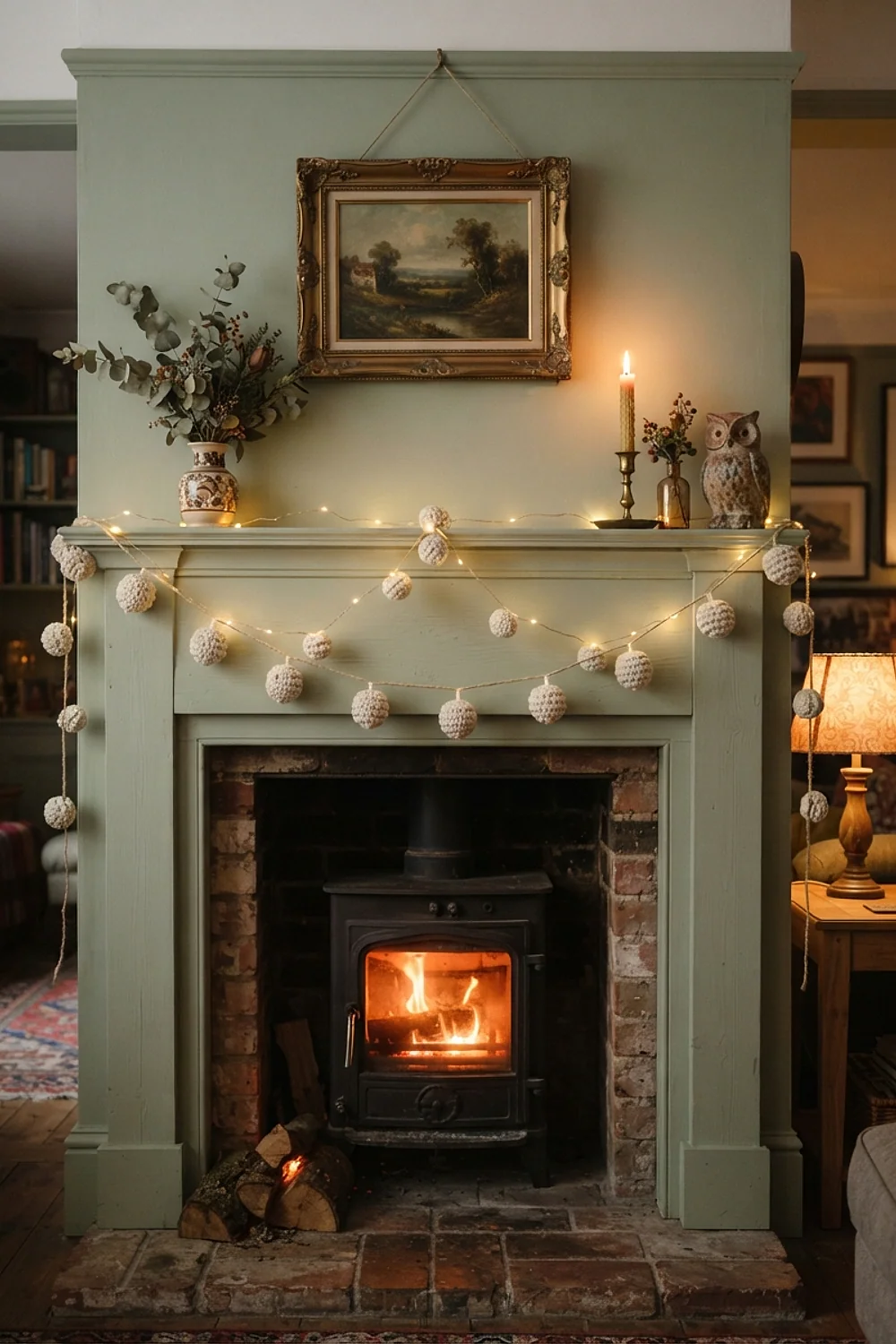
A 9-foot strand of 2700K battery LEDs threaded through a crocheted bobble garland throws a soft, even shimmer that bare wire can’t. The yarn diffuses each bulb into a roughly 1-inch halo, and it looks best around 4pm in December when daylight is fading and the room hasn’t caught up.
Choose copper-wire lights with a timer, since the thin wire hides inside the stitches. Skip incandescent mini bulbs, which run hot enough to scorch acrylic.
A 20-inch merino stocking
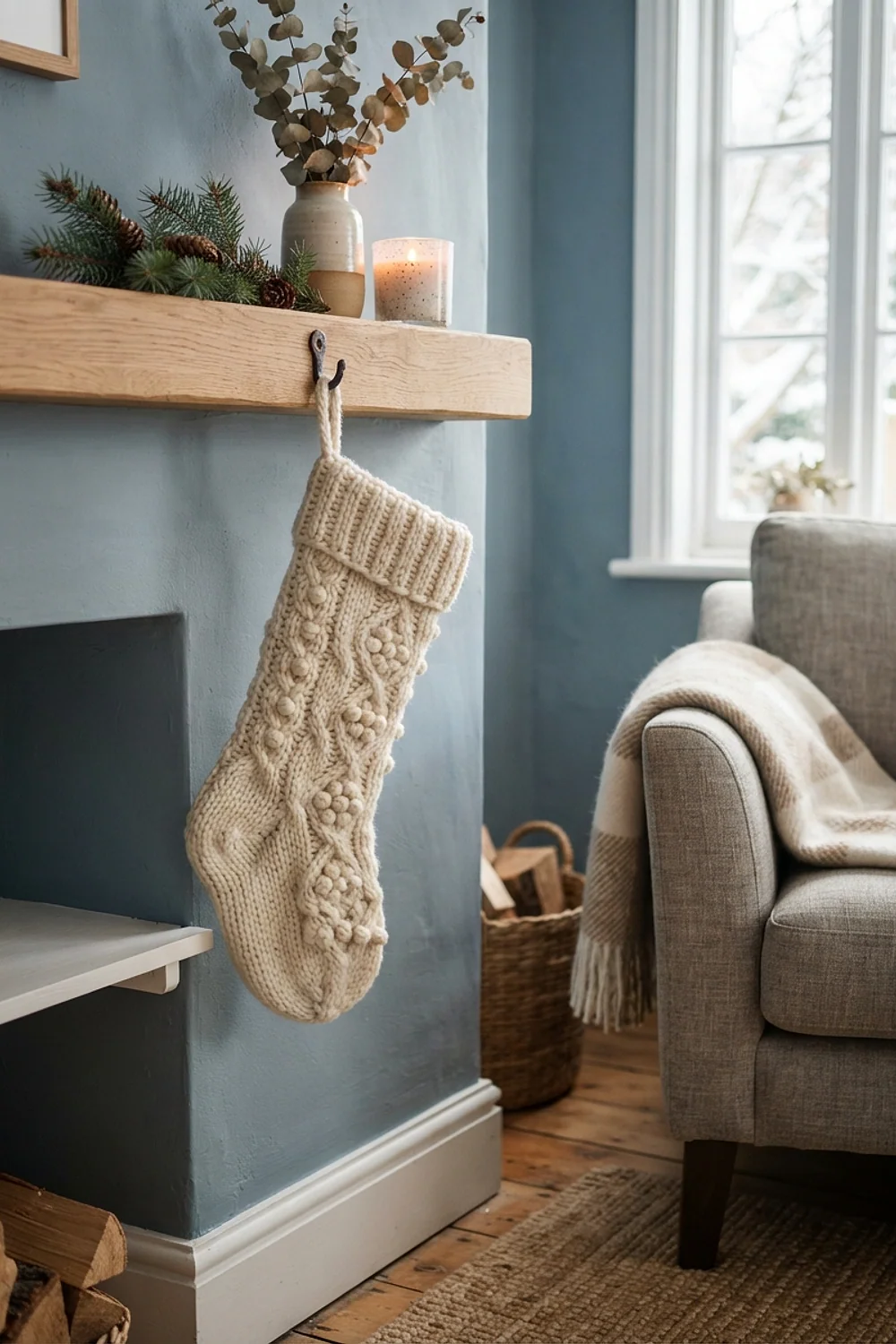
Worsted merino stretches enough to swallow a clementine and a pair of wool socks without sagging past the hearth. Wool has memory, so the cuff keeps its fold after a month of weight.
Acrylic stockings look identical in week one and droop by week three. The trade-off is care: merino needs hand washing, so it suits households where stockings come out once a year, not ones with sticky-fingered toddlers.
A granny-square tree skirt

A skirt 48 inches across is the minimum for a 6-foot tree, and a 7.5-foot tree wants 56 inches to hide the stand and the first ring of dropped needles. Join the squares in a ring with a center slit so it wraps around the trunk.
Expect about 900 yards of worsted cotton, near $28 in yarn. Sew a strip of Velcro across the slit, or the opening gapes open the moment someone steps over it.
Starched snowflakes on a window
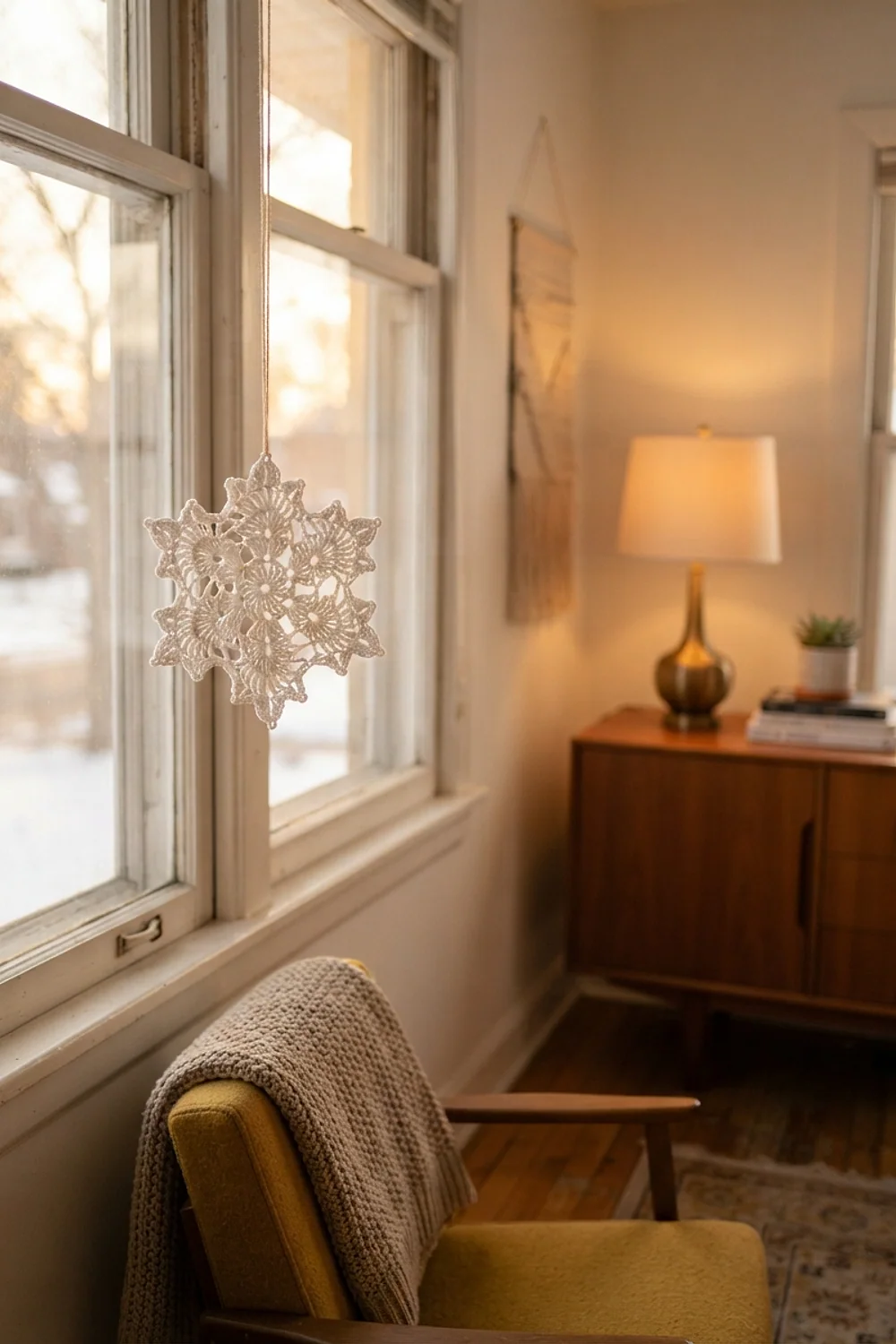
Hang three snowflakes at 54, 60 and 66 inches on clear nylon line, staggered across a 36-inch pane instead of lined up in a row. The staggering stops them from reading as a stiff curtain and lets the afternoon sun throw lace shadows on the floor.
This works best on north-facing windows where light stays flat. Keep them clear of radiators, because steam softens starch and the points flop within a week.
A lined seagrass basket beside the sofa

A 20-inch seagrass basket with a cotton liner holds a folded throw at 24 inches tall without looking like clutter. It also swallows the pile of unused ornaments during the weeks the tree is half decorated.
Pick a basket with sturdy side handles, since a full one gets dragged across floors. Avoid wire-framed liners, which snag loose yarn ends on every pass.
A pom-pom garland draped in loops

Drape a 6-foot garland of 2-inch pom-poms in three loose scallops along a bookshelf, with the lowest point of each dip about 5 inches below the shelf edge. Odd numbers of loops look deliberate, and even numbers look measured.
Anchor both ends with removable adhesive hooks. The common mistake is pulling the cord taut, which flattens the pom-poms into a sad line.
A reindeer pillow cover for the reading chair
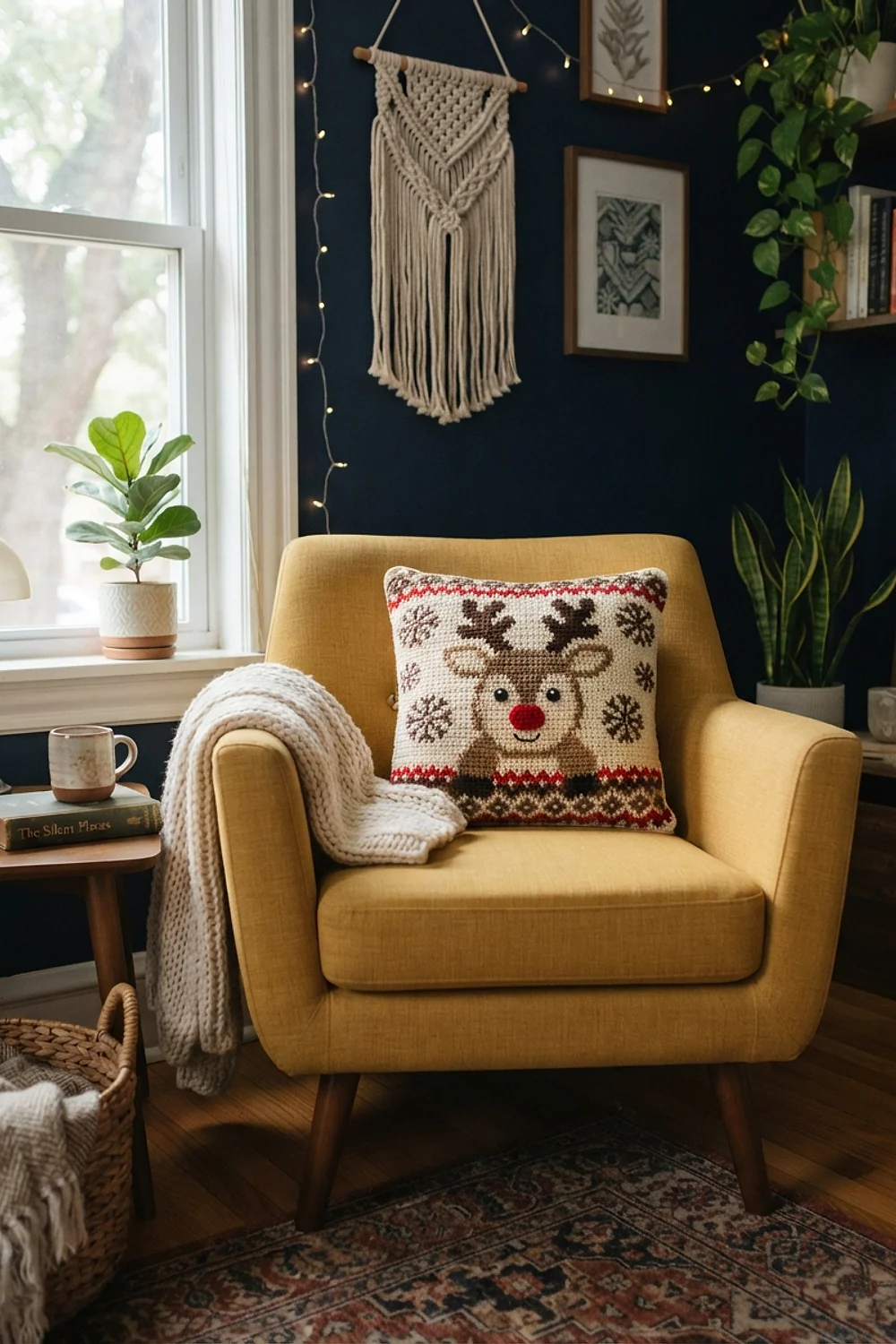
An 18-inch cushion cover in a tight cotton-blend stitch gives a head or elbow something to lean on, which bumpy surface stitches don’t. Run the motif in a flat colorwork pattern, such as a stranded reindeer, instead of raised appliqué that digs into a cheek.
This suits a reading chair, not a sofa that sees constant sprawl. Add a hidden zip so the cover can come off for washing in the new year.
Heavy ornaments hung near the trunk
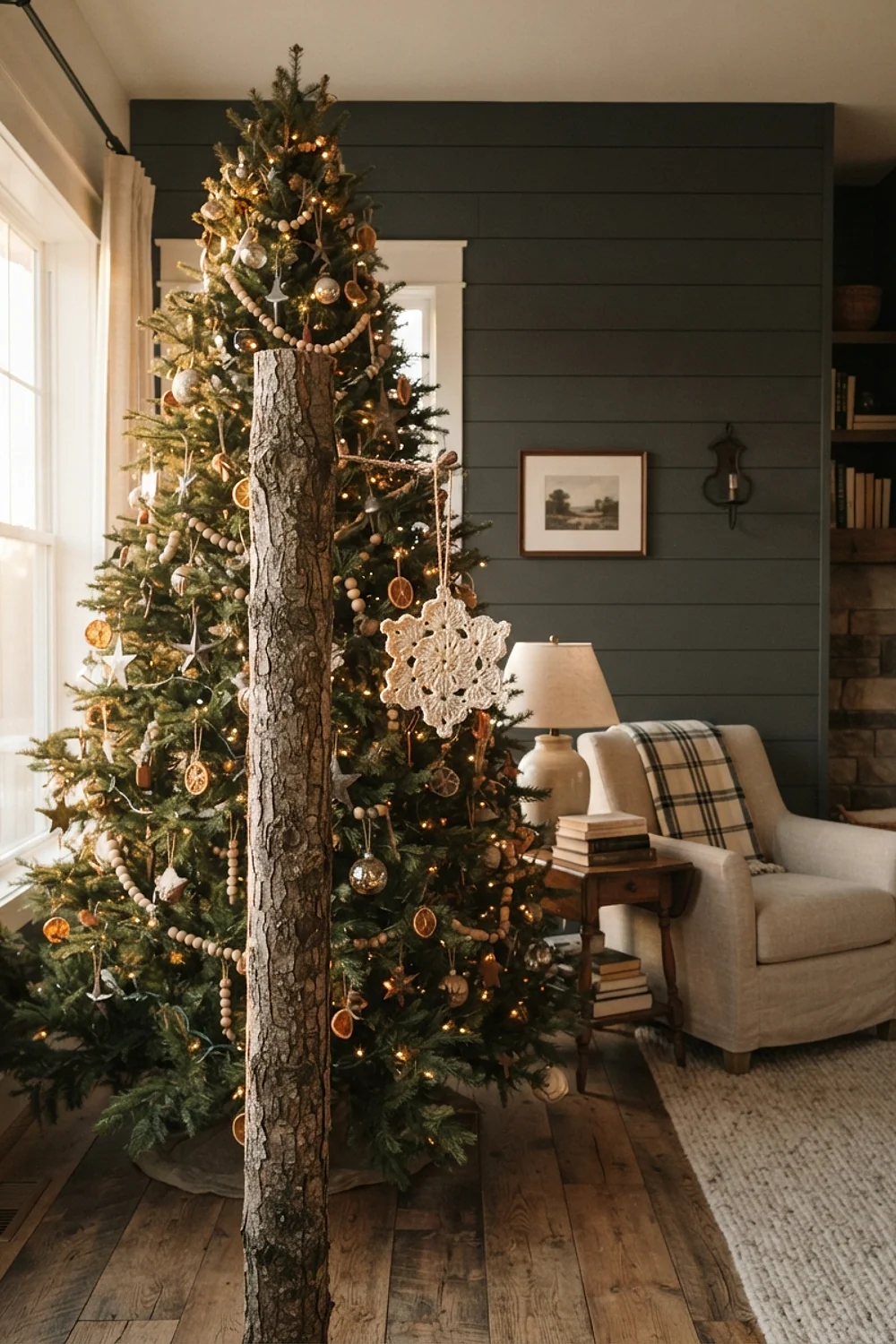
A 4-ounce amigurumi dangling from a thin branch tip bends the whole limb downward by morning. Hang anything over 2 ounces within 6 inches of the trunk, where branches carry weight best.
Use a 2 mm cord loop in place of a metal hook, since hooks chew through crochet stitches. Save the light, lacy pieces for the outer tips, where they can sway.
A 30-inch wreath over the sofa
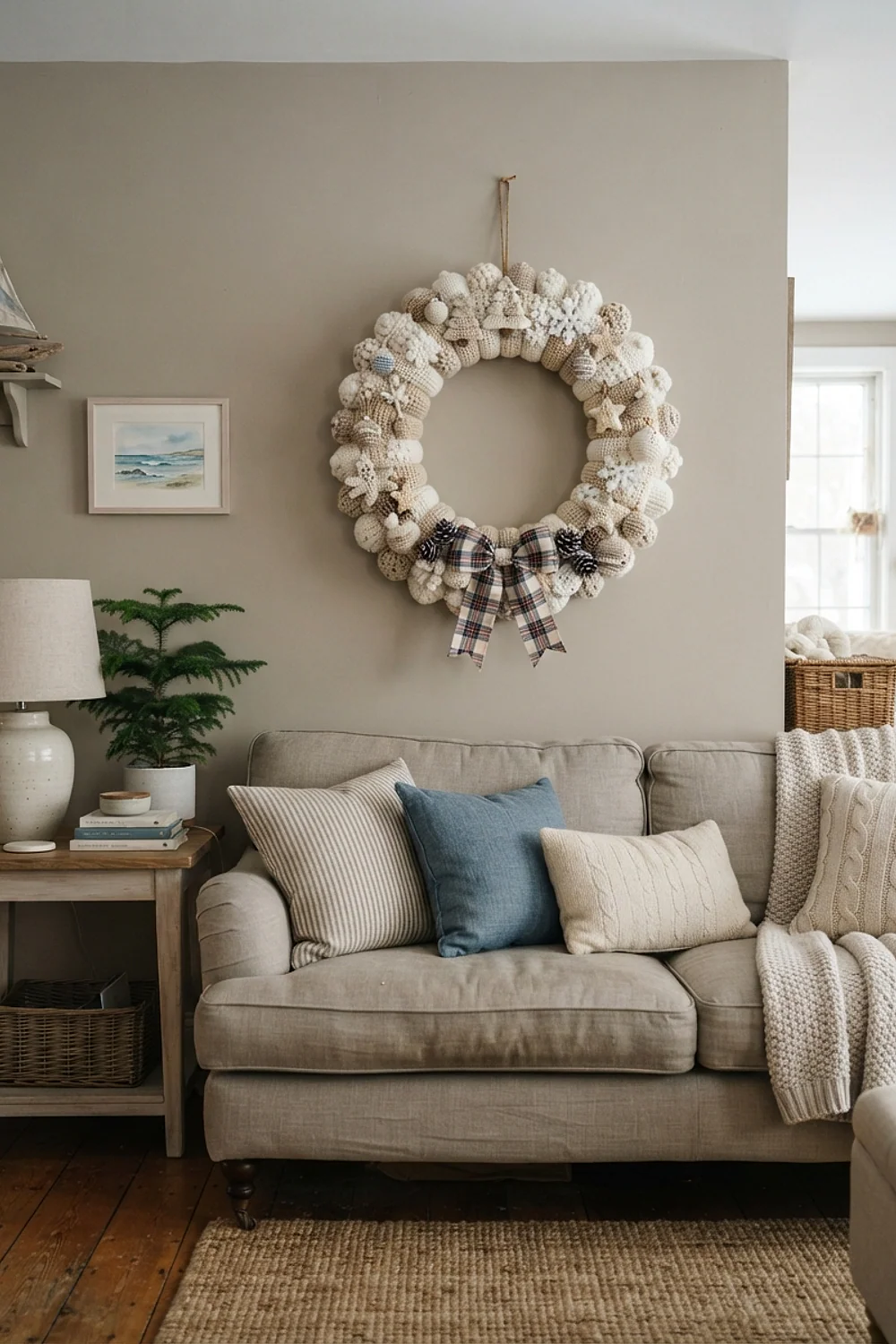
Wall art over a sofa should span about two-thirds of its width, which is 48 inches for a 72-inch sofa. A single wreath rarely gets there, so hang a 30-inch crocheted poinsettia wreath 8 inches above the cushions and flank it with two 12-inch snowflakes.
Skip anything smaller than 22 inches here. A wreath that small floats like a postage stamp on a big wall.
A three-yarn tree palette

Cream, oatmeal and a single rust red, split roughly 70, 20 and 10 percent, keep a tree of mixed handmade ornaments looking like one collection. Hold a skein of each against the wall paint in daylight before stitching anything.
The usual problem is five reds that almost match, which look like a mistake. One true red and one rust are plenty.
A starched cotton star topper

A 10-inch star in mercerized cotton thread, stiffened with fabric starch and set over a battery LED puck, lets light shine through the openwork instead of blocking it. The topper stays crisp for several seasons, and a pair of $6 puck lights does the lighting.
Here’s the counterintuitive part: acrylic yarn won’t take starch well, because the fiber doesn’t absorb liquid. Pick cotton for anything that has to hold a shape.
Mercerized cotton coasters

Four-inch coasters worked in size 3 mercerized cotton soak up condensation from a mug of cocoa, and a wool coaster just pools it. Cotton also launders at 40°C without felting, which matters on a coffee table that takes daily abuse.
Make them double thickness, about 6 rows of tight single crochet. A single loose layer lets a damp ring through to the wood.
Weighted gnomes on a bookshelf

Five-inch gnomes stand in front of books on shelves at least 10 inches deep, and a spoonful of poly pellets in the base keeps them from tipping when the shelf gets bumped. Group them in a cluster of three at different heights, with the tallest nearest a wall.
These are best for open shelving, not glass-door cabinets. Behind glass, nobody gets to enjoy the texture.
More crochet christmas decorations for the kitchen, bedrooms and bath
Crochet christmas decorations behave differently where steam, grease and wet hands are around, so the picks below lean on cotton and short stays. The bedrooms get the softer, heavier pieces.
Mini wreaths on cabinet pulls

A 4-inch crocheted wreath slips over a 5-inch bar pull and stays put without any glue. Hang them on every second door instead of all of them, so the row has rhythm instead of looking like a repeat order.
Keep cabinets within a few feet of the range off the list, since grease collects in the fibers. Wipe-clean wooden knobs nearby are a safer bet.
A cotton rope basket for holiday napkins

Folded cloth napkins stay within arm’s reach of the table when they sit in a 10-inch cotton rope basket on the counter. Rope is wipeable, and the crocheted candy-stripe band around the rim stays clear of splashes, so the stripes stay clean.
This suits a small kitchen or open-plan room where a sideboard is missing and guests help themselves. Pick a basket with a flat base and a 6-inch wall. A shallower one tips when it’s half empty, and a tipped basket spills napkins onto the floor.
Snowflake napkin rings
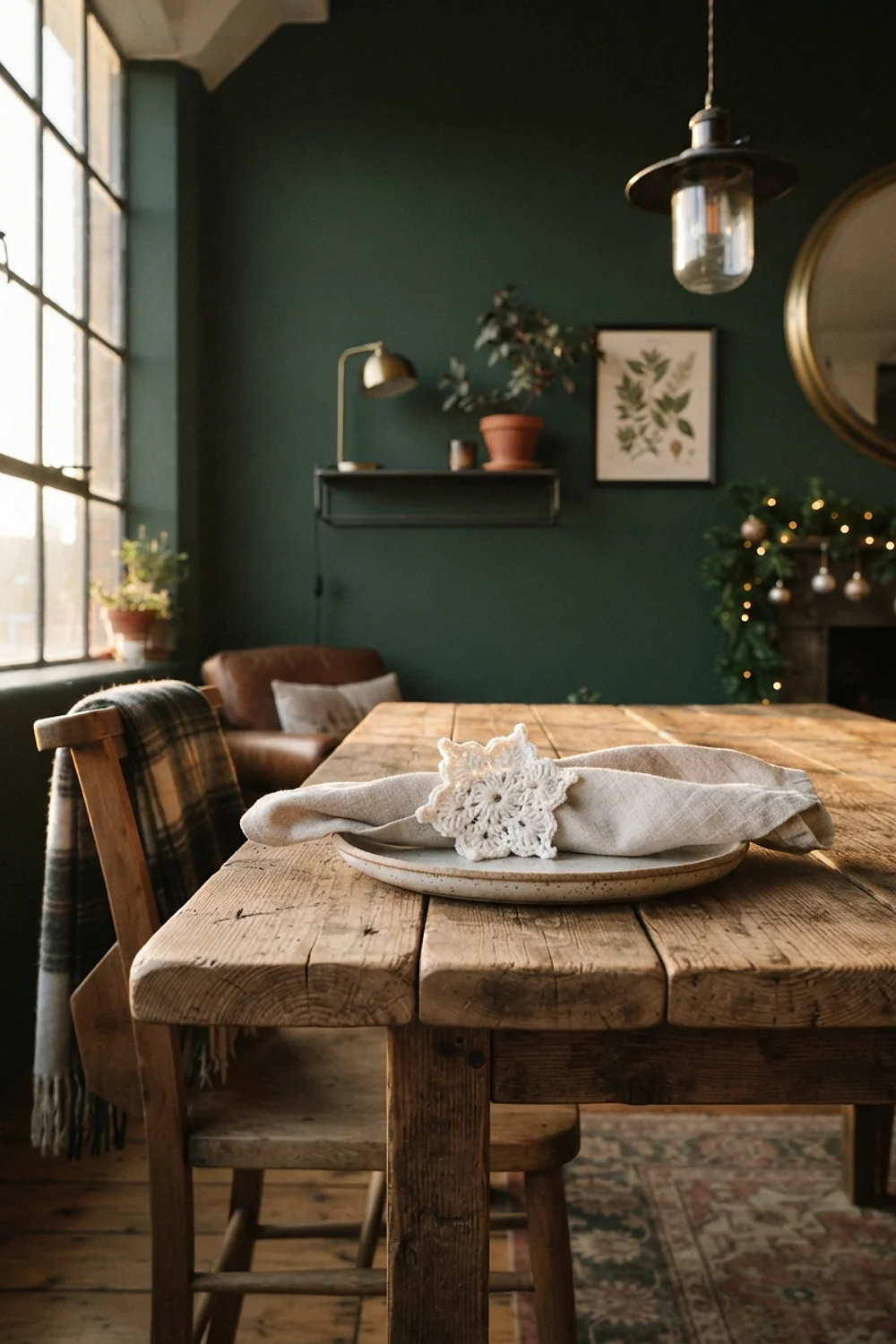
Each napkin ring is a 2-inch band with a small snowflake sewn on, and a set of six sits at each place setting in about 12 seconds of table-laying. The raised stitches give guests something to grab, which helps when plates are crowded.
Use starched thread so the ring keeps its circle. Soft cotton collapses into an oval once a damp napkin is pulled through.
Tie-on chair pads

A 16-by-16-inch pad with a 1-inch foam core and ties at the back corners keeps hard dining chairs bearable through a three-hour dinner. Crochet the top in a dense moss stitch, which lies flat enough that glasses don’t wobble if one gets bumped.
These are for families who linger at the table. Skip them if every chair is already upholstered, because the pads just slide around.
LED votive wraps
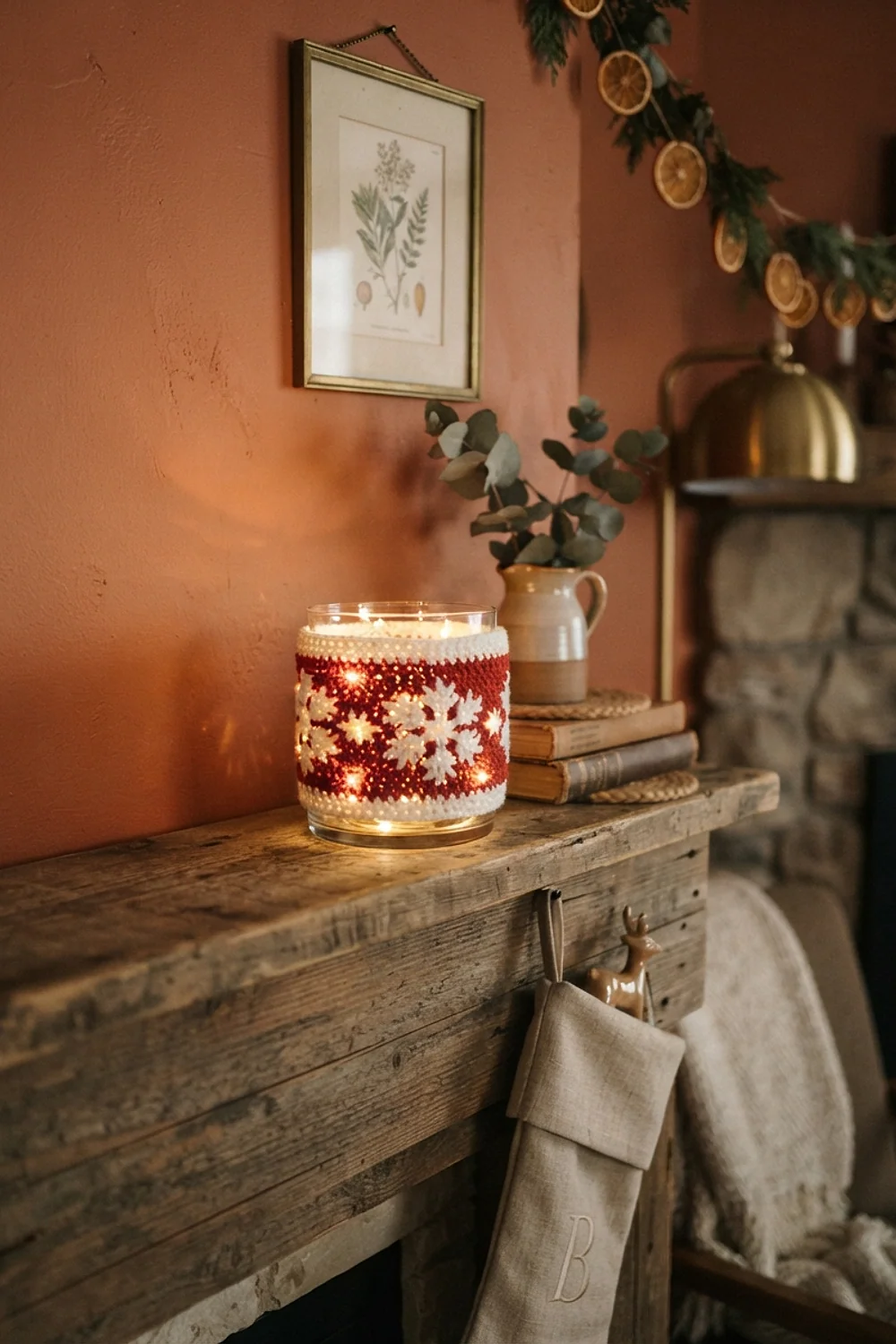
A crocheted sleeve around a glass votive looks lovely, and it turns dangerous the moment a real flame sits inside. Keep flame at least 12 inches from any yarn, and use a flickering LED votive with a 3-inch diameter inside the sleeve, which gives the same soft glow without heat.
This suits mantels, windowsills, and homes with children or pets, where an open flame is a worry. The common mistake is trusting cotton because it’s natural. Cotton burns fine, so a sleeve stitched around a real candle is a fire risk.
A garland runner sized to the table

A runner should run about 14 inches wide on a 36-inch table, with 6 to 8 inches hanging past each end. For a 72-inch table, that means a garland roughly 86 inches long, which is longer than most patterns suggest.
The proportions work because the overhang lets the ends drape and frame the table’s edges, while the width leaves room for plates on both sides. Anyone following a standard pattern should measure first and stitch afterward. A runner that’s 10 inches too short looks like a mistake from the doorway.
A deep green and rust sideboard

Forest green stockings and rust-orange pom-poms on a white sideboard read as a deliberate color story, because the two hues sit opposite each other on a warm wheel. Hold both up beside the wall paint in the afternoon light before committing.
It fits dining rooms with wood furniture best, where the warm grain echoes the rust and the white top keeps the green crisp. On cool gray walls the rust turns muddy, so rooms with that paint need a different accent.
A star garland over the headboard

Twelve 3-inch cotton stars on a 6-foot cord, mounted 8 inches above the headboard with a 2700K LED strand tucked behind, give a bedroom a faint glow without overhead light. The stars hide the wire, and the bulbs rarely get hot.
Keep the strand on a timer, set to 2 hours. A battery pack at the foot of the bed wakes nobody.
A merino bed throw
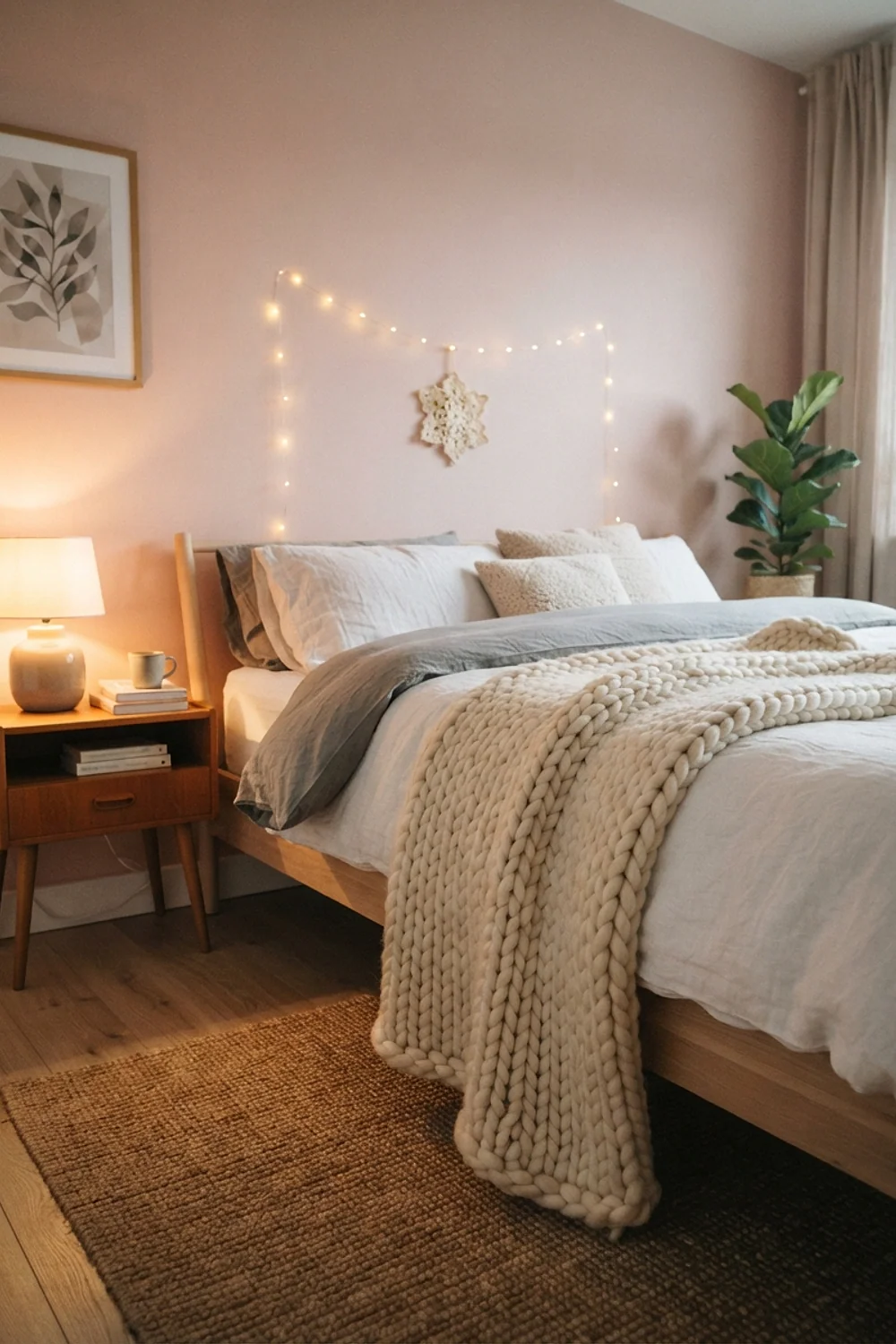
A 50-by-65-inch throw in bulky merino weighs about 3 pounds and holds heat against a cold room better than acrylic of the same weight. Wool breathes, so it doesn’t turn clammy overnight like many synthetic blends do.
Budget around $90 in yarn for a throw this size. It suits the foot of a bed best, where it can be pulled up without being used daily.
A wall advent calendar

Twenty-four pockets, each about 4 by 5 inches, fit a folded note or a small chocolate and hang from a 30-inch wooden dowel. Mount it at 48 to 60 inches, which keeps the top row within a child’s reach and the bottom row visible to adults.
Number the pockets with embroidered thread, since felt numbers peel. It works well in a hallway or bedroom with free wall space.
Three trees on a dresser

A trio of crocheted cone trees at 6, 9 and 12 inches, set in descending order from the wall, gives a dresser a quick skyline. Stuff each with polyfill and add a 2-inch disc of cardboard in the base, so the trio doesn’t lean after a week.
Keep 3 inches of clear space around the group. Crowding them against a lamp turns the vignette into clutter.
A tissue cover and spare roll basket

Bathroom humidity runs high, so cotton is the only sensible fiber for a tissue box cover and a 7-inch spare roll basket. Wool and acrylic hold odor, and a damp wool cover smells like a wet dog by January.
Stitch them in a rust-and-cream stripe that matches the season. Take them off the counter at New Year’s, so mildew doesn’t get a head start.
Holly trim on a hand towel

A 2-inch crocheted holly edging, sewn onto a plain cotton hand towel with a button loop, drapes over a bar without slipping. The green and red read clearly against white, even at the far end of a narrow bathroom.
It suits guest bathrooms and powder rooms, where one towel is on show for visitors. Skip anything bulkier than the towel’s own hem. Thick trim makes the towel hang crooked, and it dries slowly, which matters when guests need a dry towel.
A hot-water bottle cover for the guest room

A 12-by-8-inch cover in soft DK wool slides over a standard bottle and keeps a guest’s feet comfortable on a chilly Sunday night. A snug rib at the neck stops the cap from slipping, and a button loop is easy to adjust.
Leave it on the pillow with a folded note. It beats a bowl of chocolates because it gets used all night.
Small details, big impact
Doors, stairs and the odd leftover corner finish the list. These pieces need either weather sense or a durable fiber.
A door wreath under a deep overhang
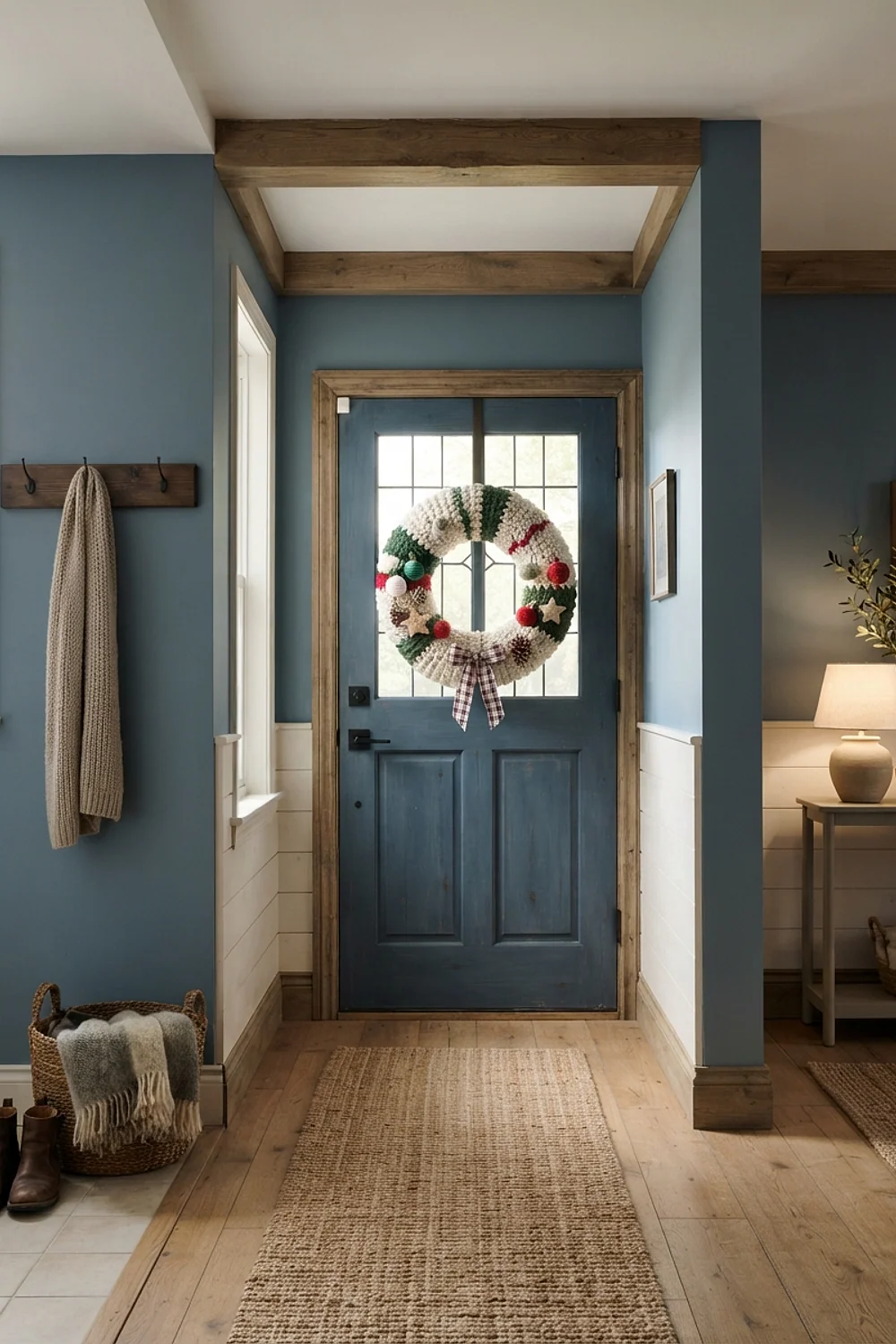
A cotton crocheted wreath hung on an exposed door soaks up sleet, sags and mildews within days. Reserve it for a covered porch with at least 4 feet of overhang, or hang it indoors on the back of the door.
Anyone on a windswept stoop should buy a plastic or wire wreath instead. Crochet isn’t a weatherproof material, whatever the pattern photo claims.
Flag bunting on the porch rail
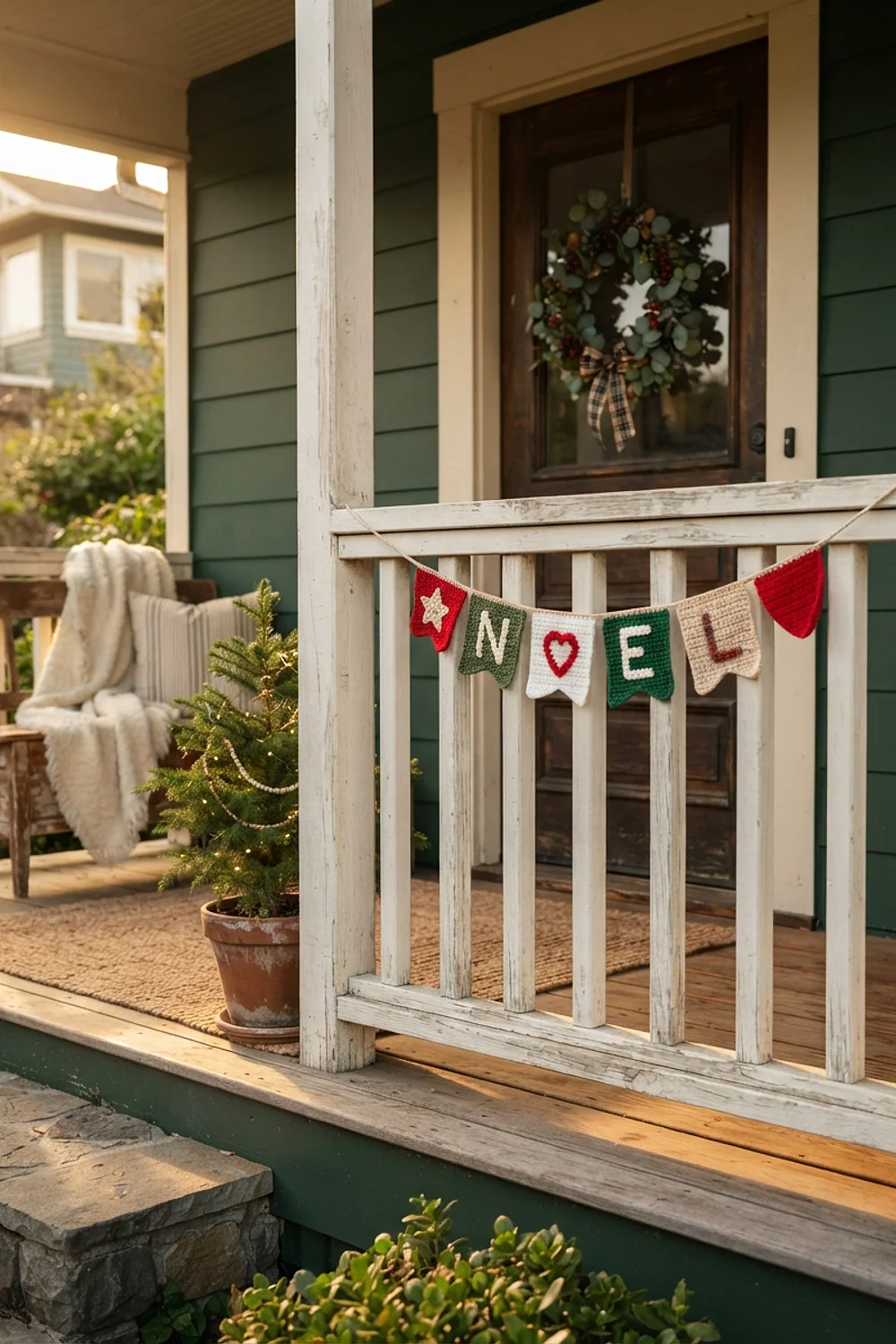
An 8-foot bunting with 8-inch flags spans a standard porch rail, which usually sits 36 to 42 inches high. Bigger flags look sloppy on a rail this short, and smaller ones vanish from the sidewalk 20 feet away.
Attach it with zip ties in a matching color, every 24 inches. Wind pulls a loose bunting off by the second night.
A white-on-white snowman trio
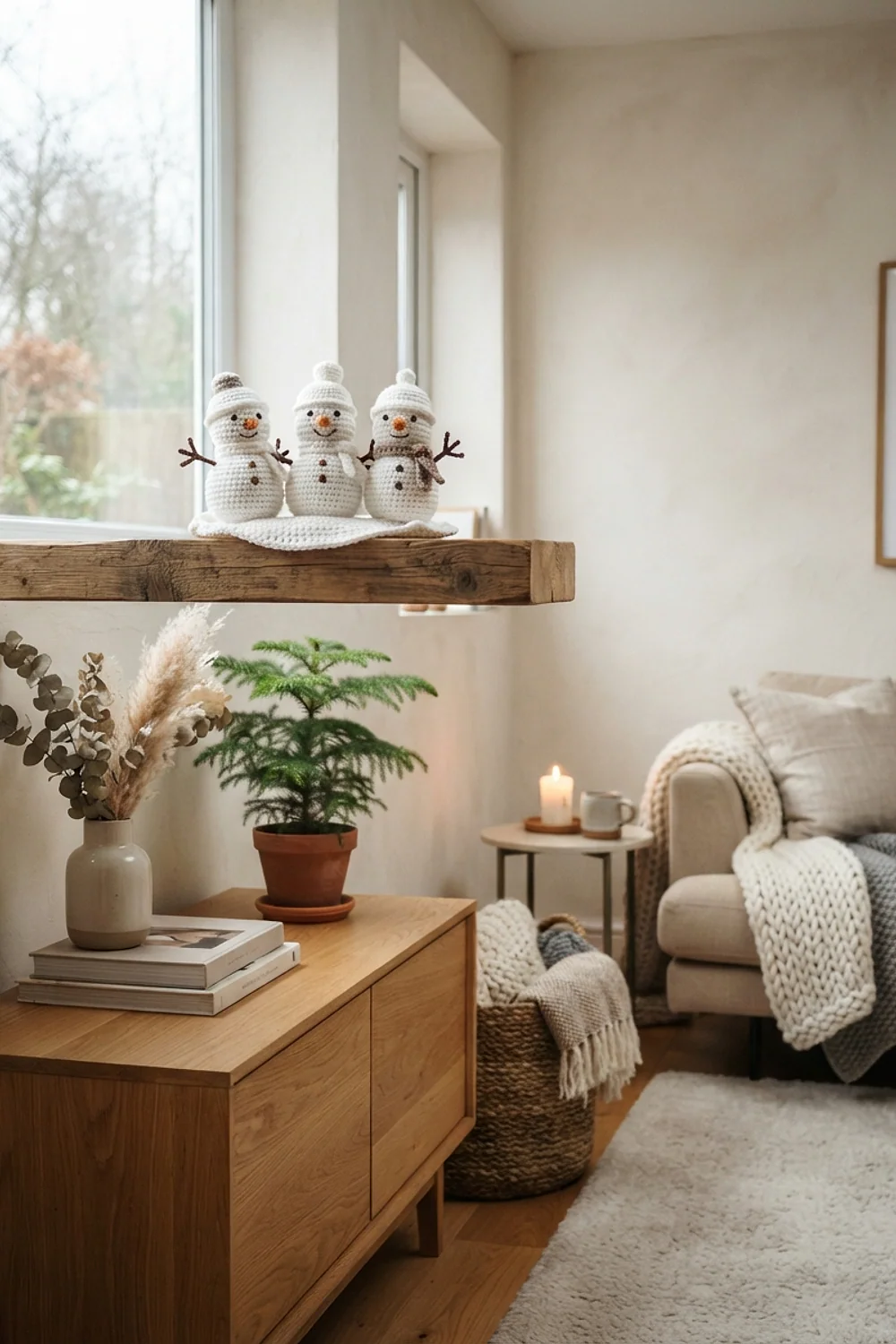
Three snowmen on a 32-inch console look crisp when they share one white. Cream beside optic white looks dirty, so buy the same dye lot, or stick to cream across the whole set.
Add one contrast color, such as a navy scarf, to stop the group from vanishing against a white wall. It works best in a hallway with a dark floor.
A stair banister garland

On the staircase, a crocheted garland wrapped around the banister, with a 2700K battery strand tucked behind it, lights the steps just enough for a late-night trip down. Use a strand with a 6-hour timer, so it switches itself off before morning.
The warm 2700K glow stays soft enough not to dazzle sleepy eyes, and battery power means no cord across the steps. It suits a staircase that has no night light of its own. Secure the garland every 18 inches with floral wire. A loose one catches a hand at the worst moment.
Washable cotton amigurumi for kids
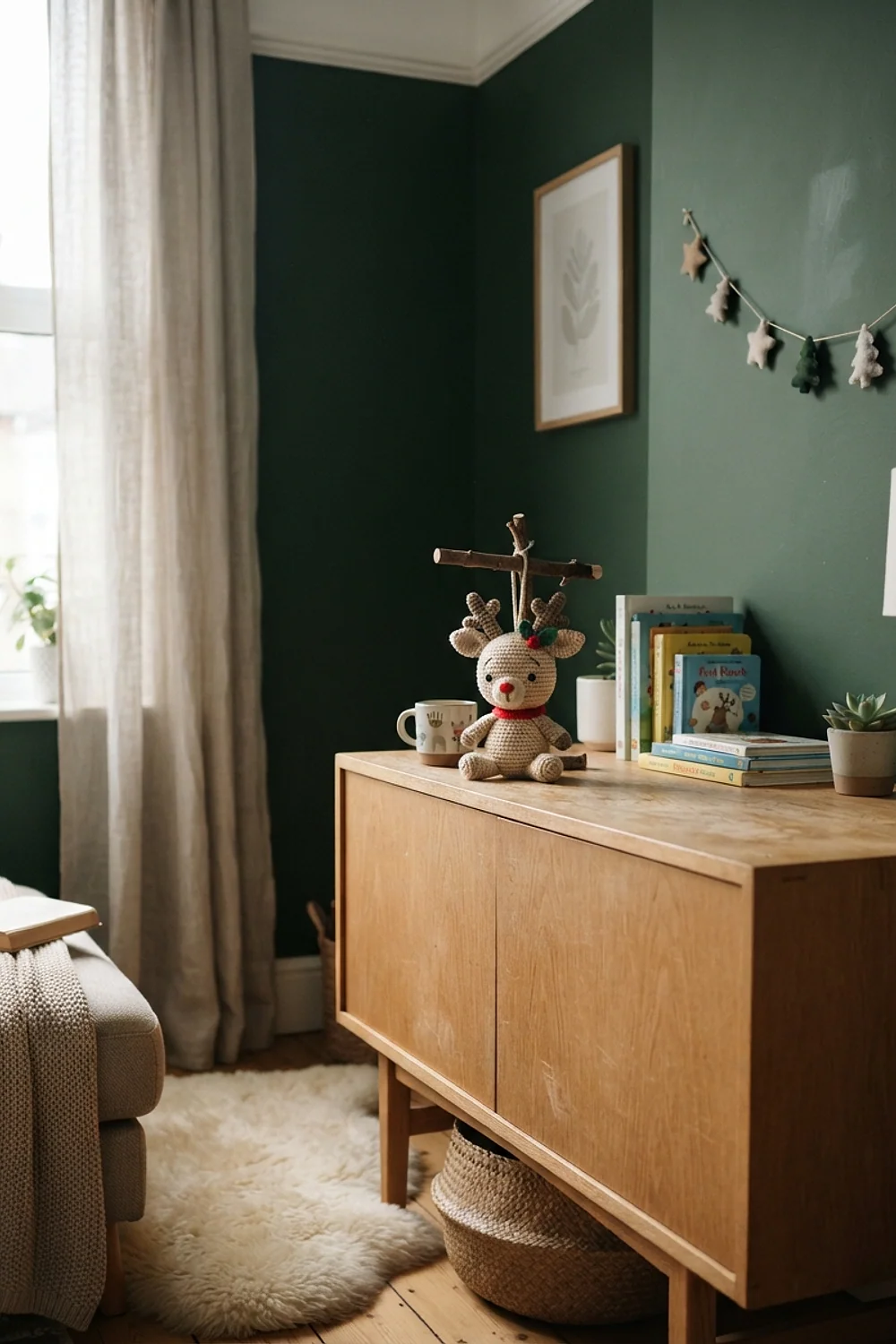
A 7-inch reindeer in washable cotton survives a 30°C cycle and a dog’s attention. For children under 3, embroider the eyes instead of using plastic safety eyes, which can still pop off.
Cotton works because it tolerates repeated washing, so a toy that gets sticky or muddy can simply go in the machine. It suits families with toddlers, pets, or both. Stuff firmly with polyfill so the body holds its shape. A floppy toy gets chewed and dragged instead of kept.
Reusable drawstring gift sacks
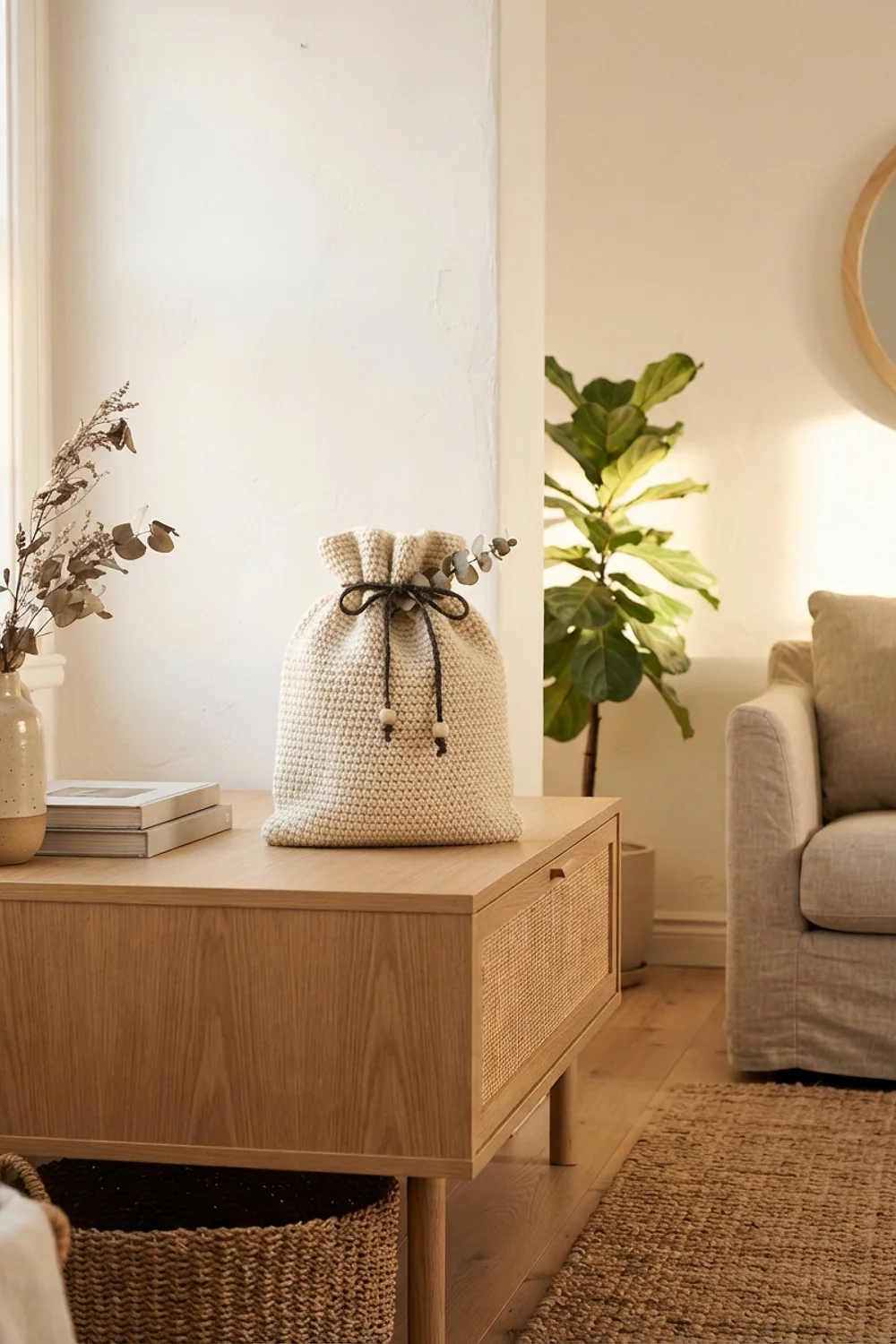
A 10-by-14-inch sack in worsted cotton holds a paperback or a pair of slippers and replaces roughly $4 of wrapping paper each year. Add a drawstring cord made from a 36-inch i-cord.
The sack saves a little more with every reuse, which suits families who exchange many small gifts and dislike the bin full of torn paper afterward. Use sturdy cotton, since acrylic stretches when a heavy gift pulls on it. Families can pass the same sacks around for a decade.
A frame gallery of snowflakes
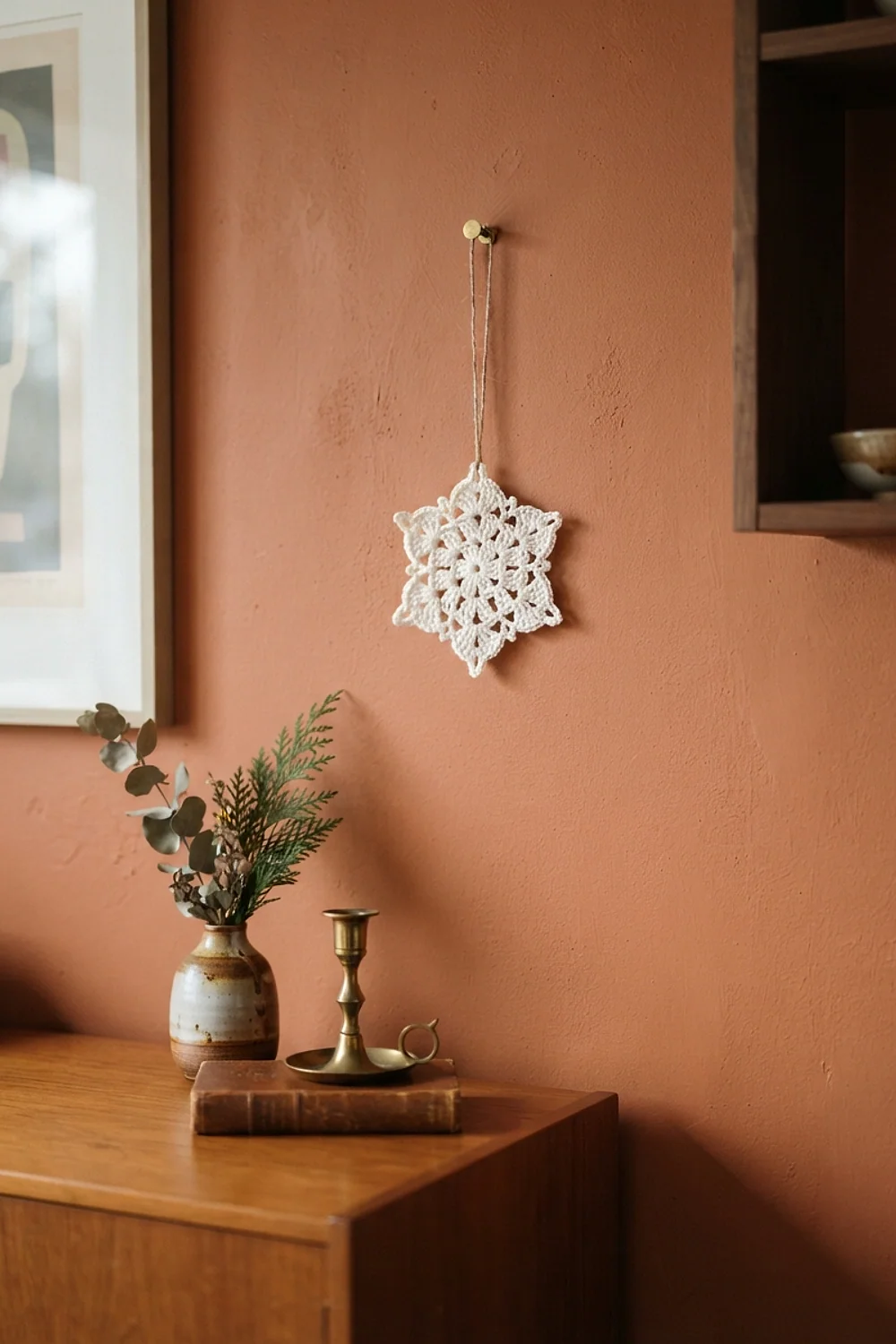
Six 8-by-10-inch frames, spaced 2 inches apart, each holding a starched snowflake on dark linen, make a wall panel about 28 inches wide. Center the grid at 57 inches off the floor, the standard eye-level height for gallery walls.
Dark linen makes white lace stand out, and the matching frames turn small pieces into one display. It suits a hallway or a blank stretch above a sofa. Use frames with a 1-inch deep rabbet, so the snowflake sits clear of the glass. Snowflakes pressed flat under glass lose their lacy shadows.
A storage box for the season’s pieces
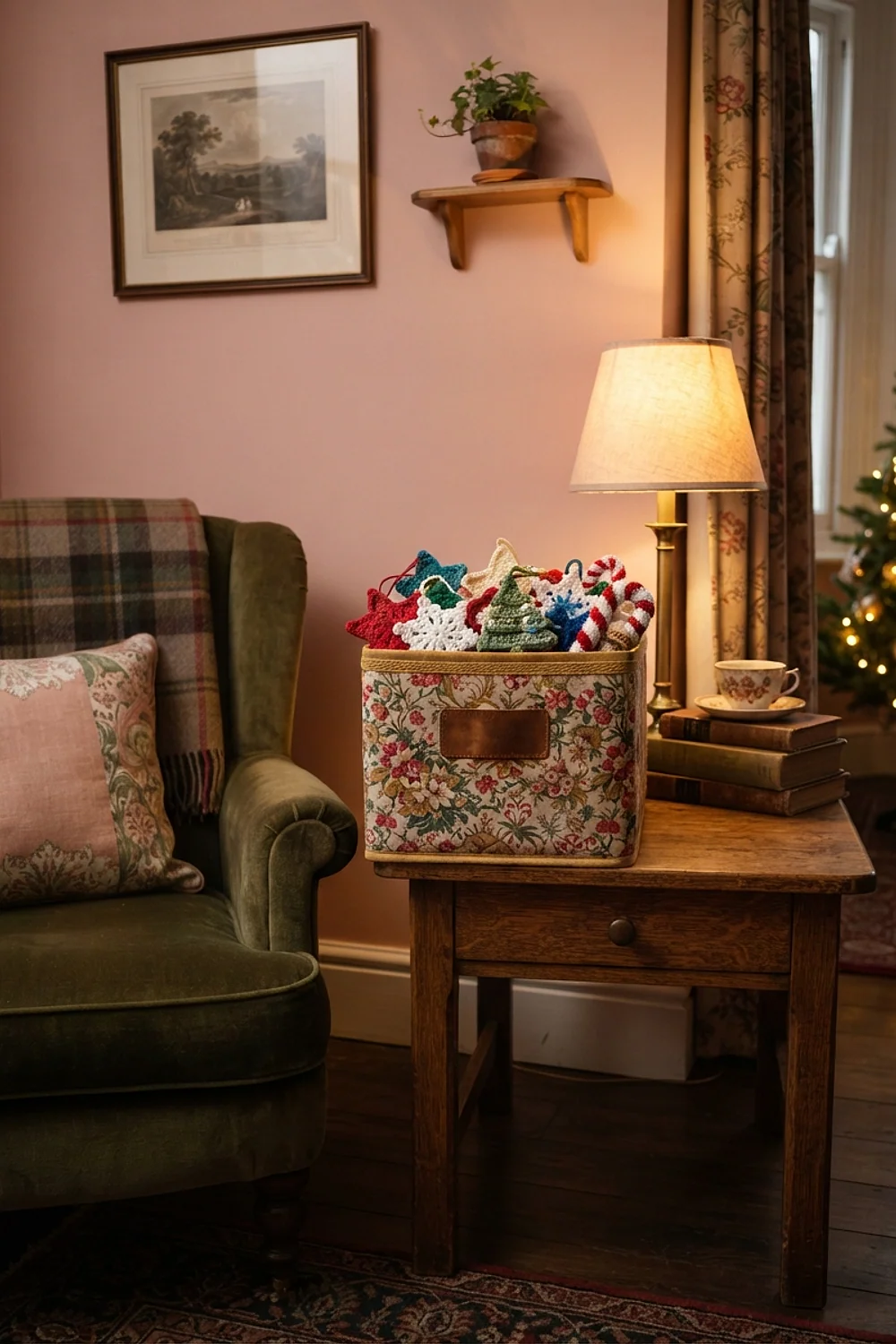
A 12-by-12-by-6-inch archival box lined with acid-free tissue holds about 20 ornaments without crushing them. Add a silica packet to absorb damp, and store the box on a closet shelf, not in an attic that swings from freezing to 90°F.
This is the unglamorous step that decides whether a piece lasts five seasons or one. It suits anyone with a collection of handmade pieces and a spare closet shelf. Skip plastic bags, which trap moisture and can leave yarn musty or mildewed.
Baubles under a glass cloche
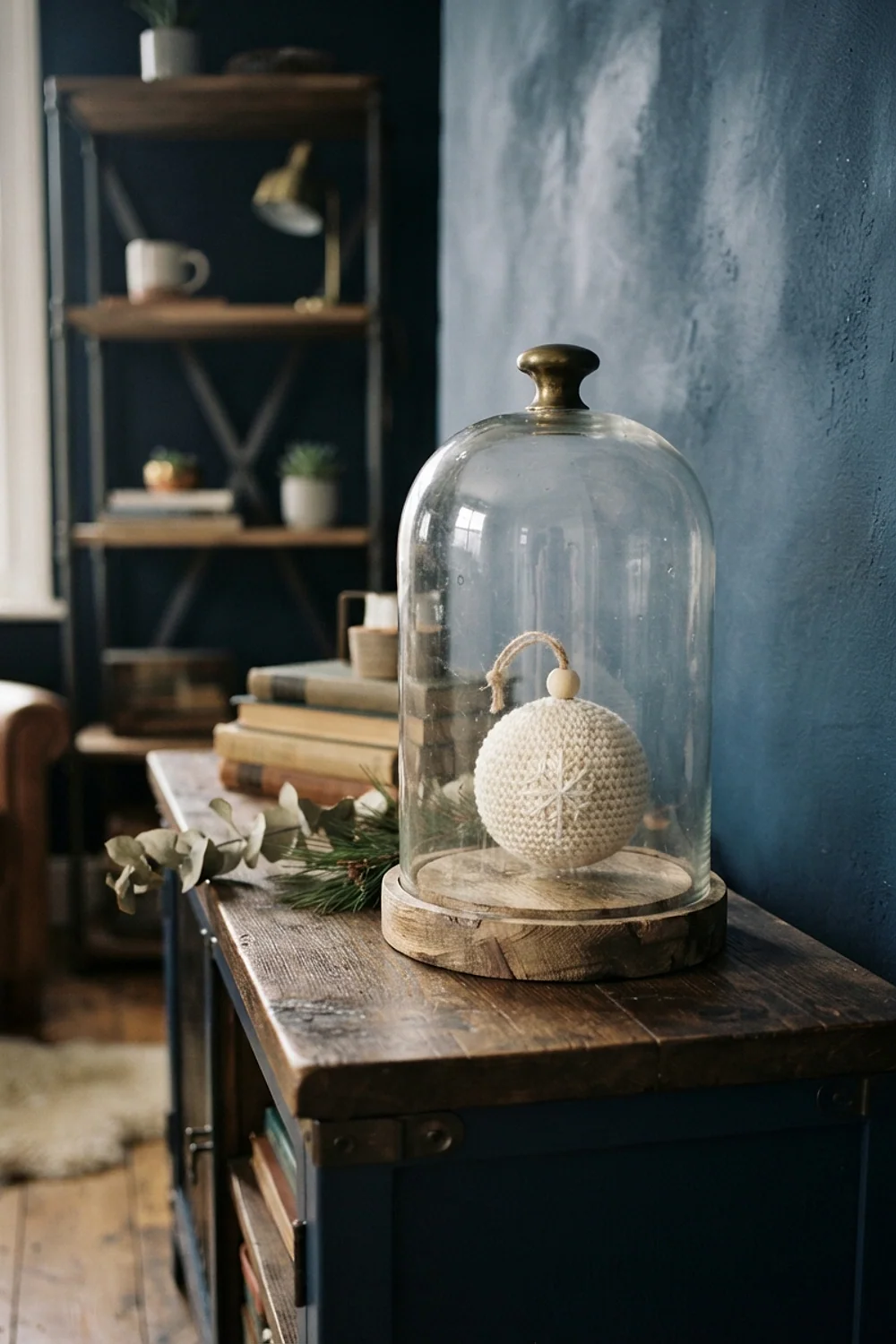
Three 3-inch crocheted baubles under a 12-inch glass cloche look like a window display on a coffee table, and the dome keeps dust and cats off them. Rest the cloche on a 10-inch wooden base, so it sits above the clutter.
It suits a living room with pets or a dusty entry table, and it costs little because only three small pieces are needed. Choose baubles in two colors, no more. Too many colors under glass look like a bag of sweets.
A crocheted pouf cover
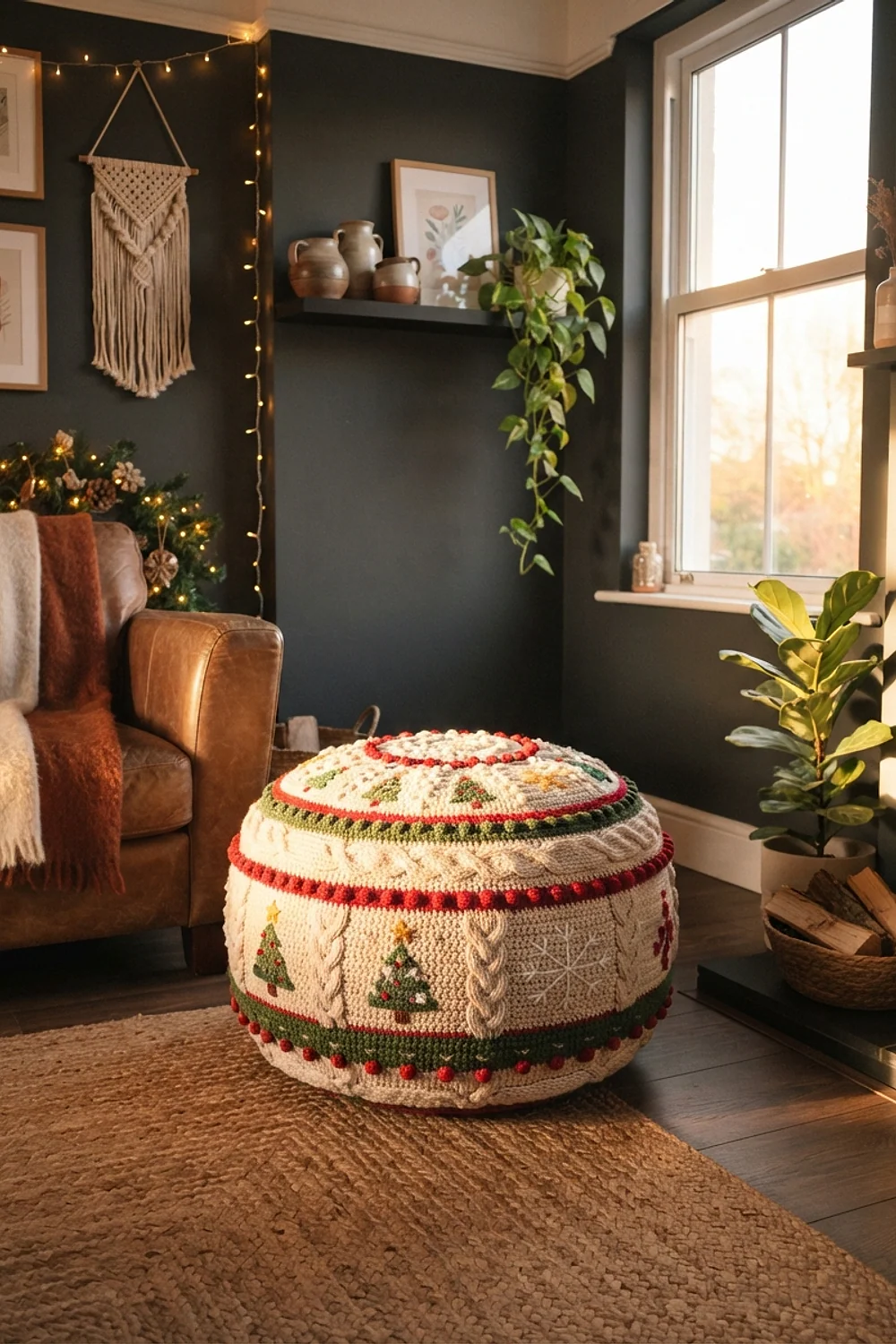
An 18-by-14-inch pouf wearing a bulky crochet cover in cream gives a spare seat and a foot rest that stays out of the traffic path. A 2-inch overlap at the back hides the zip, and tight stitches keep a stray heel from snagging.
It suits a living room that’s short on seating. Avoid loose loops, because they catch on rings and dog claws.
The finishing touches
Crochet christmas decorations only read as a set when the measurements stay consistent from room to room. A quick tape-measure pass takes 10 minutes and prevents most of the mistakes in the list above.
- Hang wreaths and wall art with the center at 57 inches off the floor.
- Leave a 34-inch walkway clear around any floor piece, such as a pouf or basket.
- Allow 3 inches of clear space around shelf groupings, so each piece reads on its own.
- Drop a garland 5 inches at the lowest point of each loop, then adjust by eye.
- Keep any yarn at least 12 inches from real flame.
Center a hanging cluster at 60 inches off the floor. No, scratch that: 57 inches is the standard gallery height, and 60 only suits ceilings over 9 feet.
Test garlands with painter’s tape before drilling or sticking anything down. (This only works if the wall paint cooperates, since cheap tape lifts flat finishes.)
Making it flow between rooms
Crochet christmas decorations from different rooms start looking like a single collection once the yarn, the colors and the stitch pattern repeat. A reader skimming the house from the front door should see the same two or three cues in every room.
- Pick three yarn colors before starting any piece, and write the dye lots on a note.
- Repeat one stitch motif, such as a bobble or a shell, in each room.
- Match scale to viewing distance: 3-inch pieces in bathrooms, 20-inch pieces in living rooms.
- Keep wool and merino to dry, living-area rooms, and cotton to kitchens and bathrooms.
The counterintuitive trick is repetition at different sizes. A 3-inch snowflake in the bath and a 22-inch one in the living room tie the house together better than six unrelated ornaments.
Where to start
Start with one room and one piece: the stocking, the tree skirt or a single snowflake for the window. Crochet christmas decorations pile up fast, and a first project that finishes in an evening beats a half-stitched afternoon project that stalls in November.
Save or pin this list so it’s ready the next time a room feels bare, then pick the one idea closest to your front door. Measure that spot first, and buy yarn after the numbers are down on paper.


