
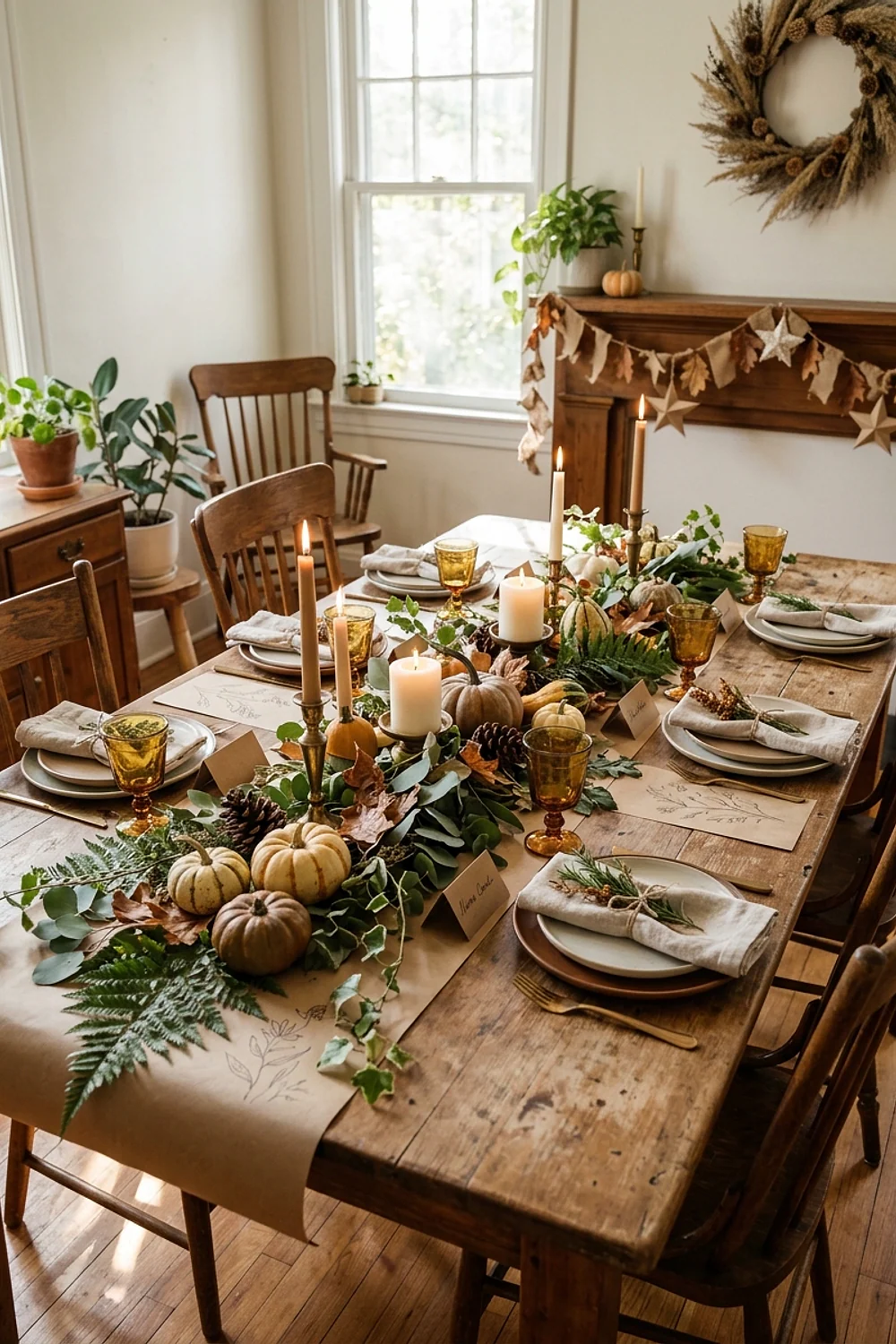
Stop Making These DIY Thanksgiving Decorations Mistakes
Dried eucalyptus crackles under your thumb, hot glue strings across a wooden bead, and a pumpkin sweats quietly onto the sideboard. Most diy thanksgiving decorations go wrong in small, physical ways like these, long before anyone sits down at the table.
This guide names 13 common mistakes and gives the correction for each, with measurements and materials you can check against your own table, mantel, and front door.
Key Takeaways
- Keep table centerpieces under 12 inches tall so guests can see and talk across the table.
- Choose warm 2700K light and one anchor color instead of five competing autumn shades.
- Build decorations that store flat and survive a year in a bin, not just one weekend.
- Match scale to the surface: a mantel needs height variation, a table needs open center space.
Diy thanksgiving decorations: Mistakes that keep showing up
A centerpiece that blocks the conversation
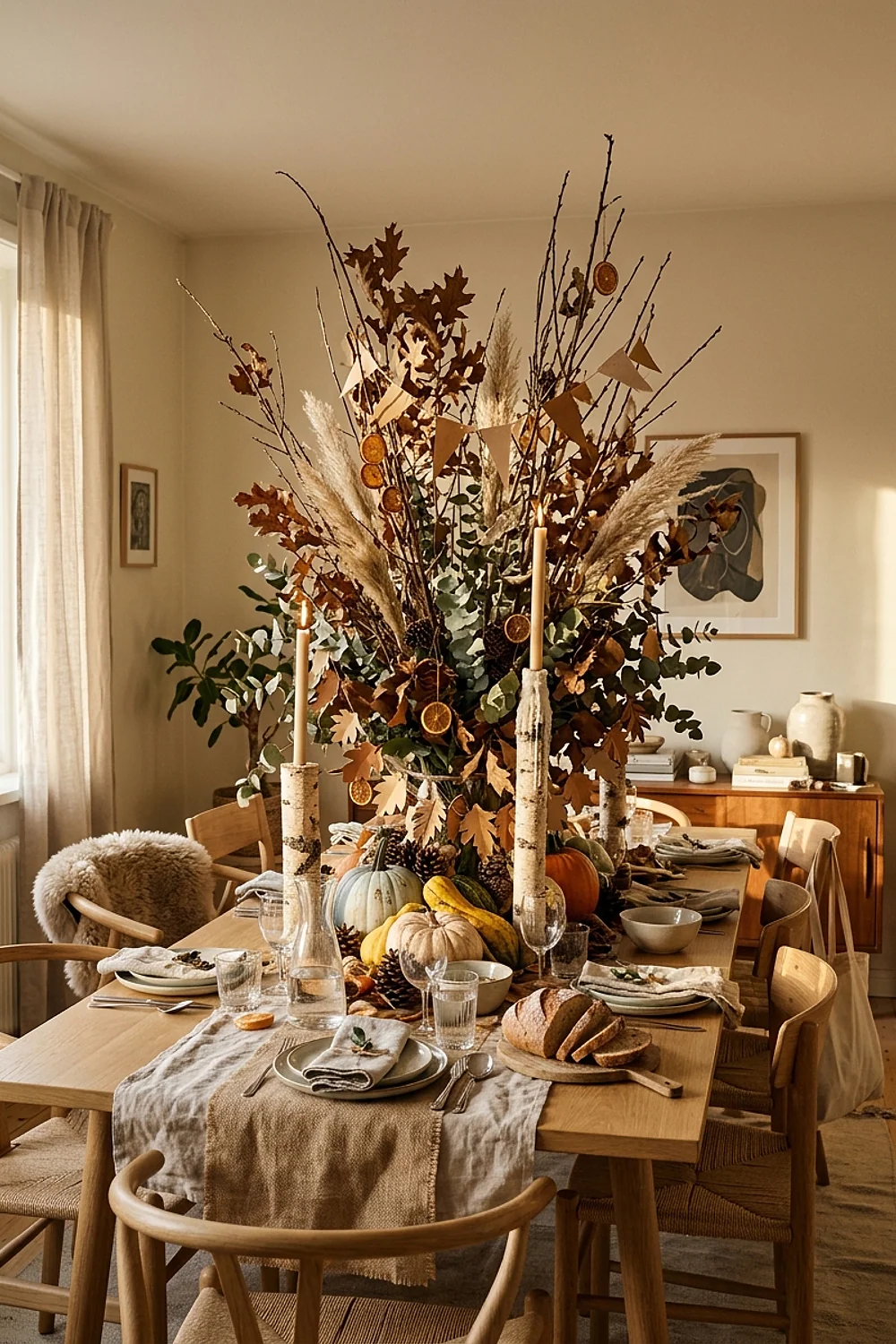
A centerpiece taller than 12 inches turns a 36-inch table into two separate conversations. The fix is to keep everything on the table under 12 inches, or go above 20 inches on a thin stem so eyes pass underneath.
This matters most at rectangular tables seating eight or more, where people already sit far apart. Low trays of mini gourds and a few tall tapers beat a bulky wreath-and-pumpkin stack every time.
Candles set at the wrong height
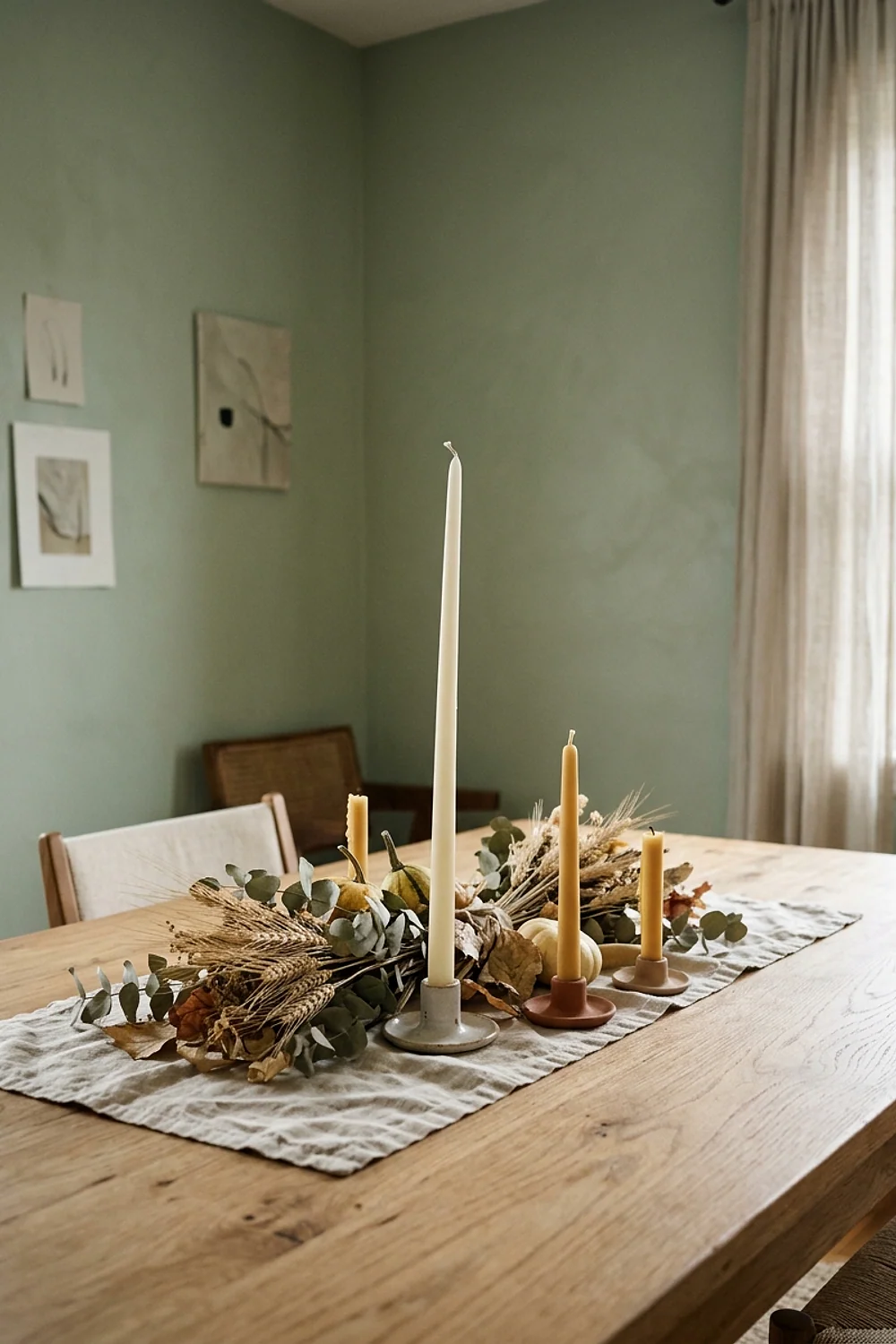
Candle flames sitting at eye level glare straight into guests’ faces, and bare cool-white string lights (5000K) turn orange gourds a flat, sickly yellow. Choose warm 2700K bulbs and place flames either below 6 inches or above 18 inches.
The upkeep trade-off is real. Real tapers drip wax onto linen, and flameless LED versions need new batteries every season, but the LEDs are the safer pick beside dried grasses.
Scratchy burlap runners
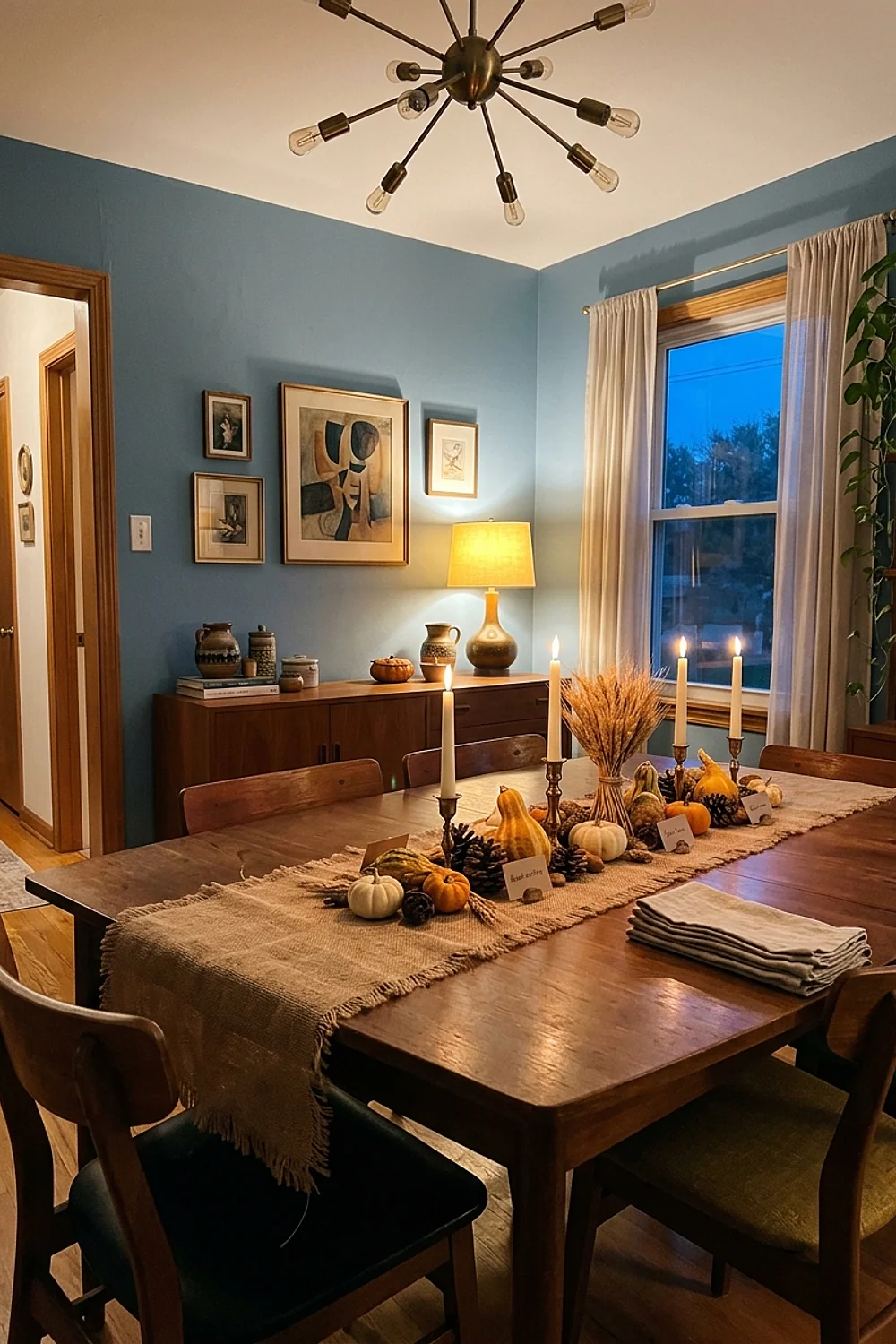
Burlap looks right in photos and feels terrible under forearms. It sheds fibers onto dark sleeves and snags on bracelets, so skip it for anywhere people will lean.
Washed linen or cotton flannel in rust or oatmeal is kinder to skin. Linen wrinkles and needs a warm iron, which is a fair price for fabric that survives a 40-degree wash.
Decorations that can’t be stored
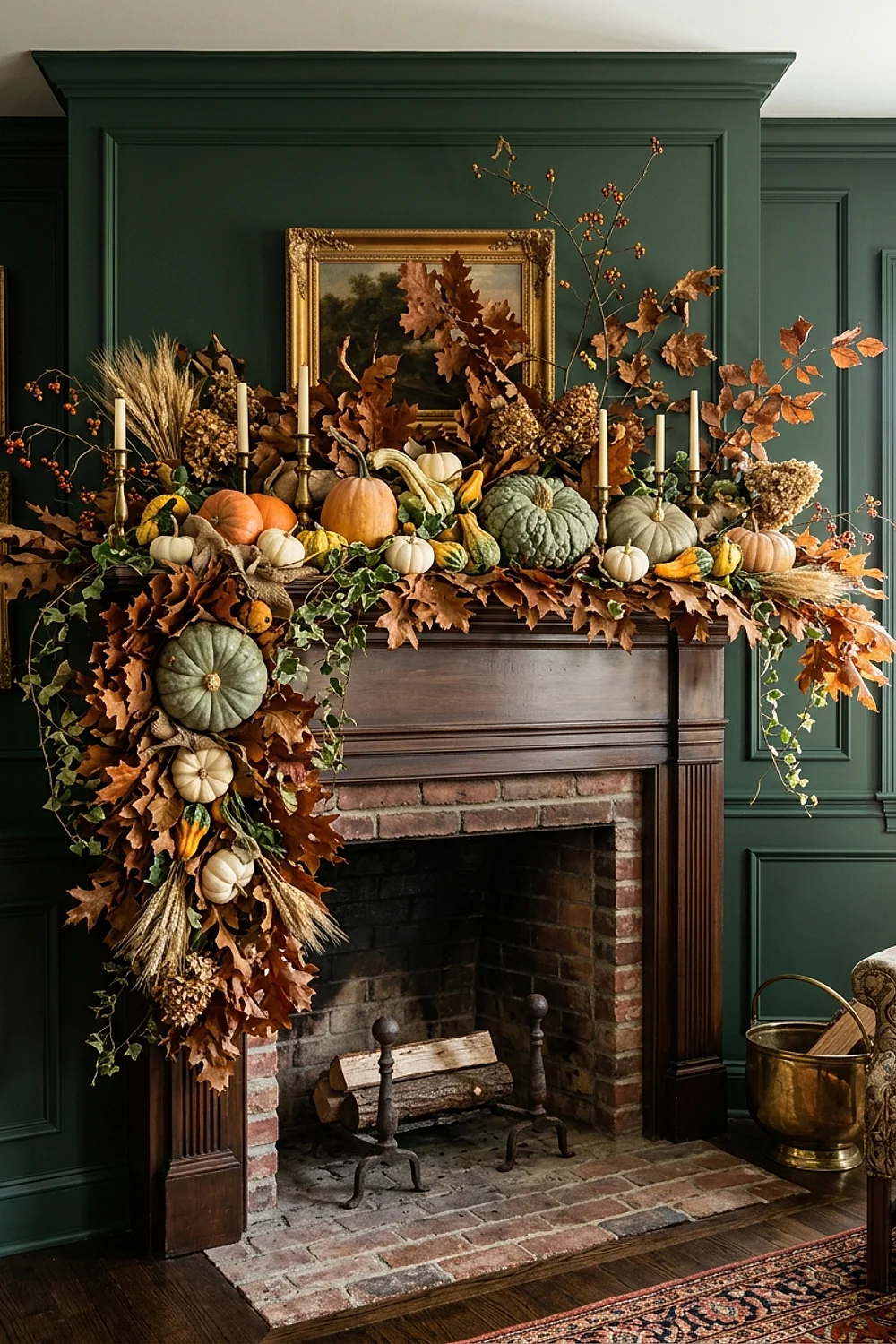
A glued-together wreath with glass beads and a rigid wire frame ends up crushed in a closet by January. Build flat or modular pieces instead: garlands in sections, picks that unclip, paper leaves that stack.
Plan for one 16-quart lidded bin per surface. Paper garlands lie flat in a file box, and anything with real stems should go in a breathable cardboard box, never sealed plastic, which traps moisture and breeds mildew.
Five autumn colors fighting each other
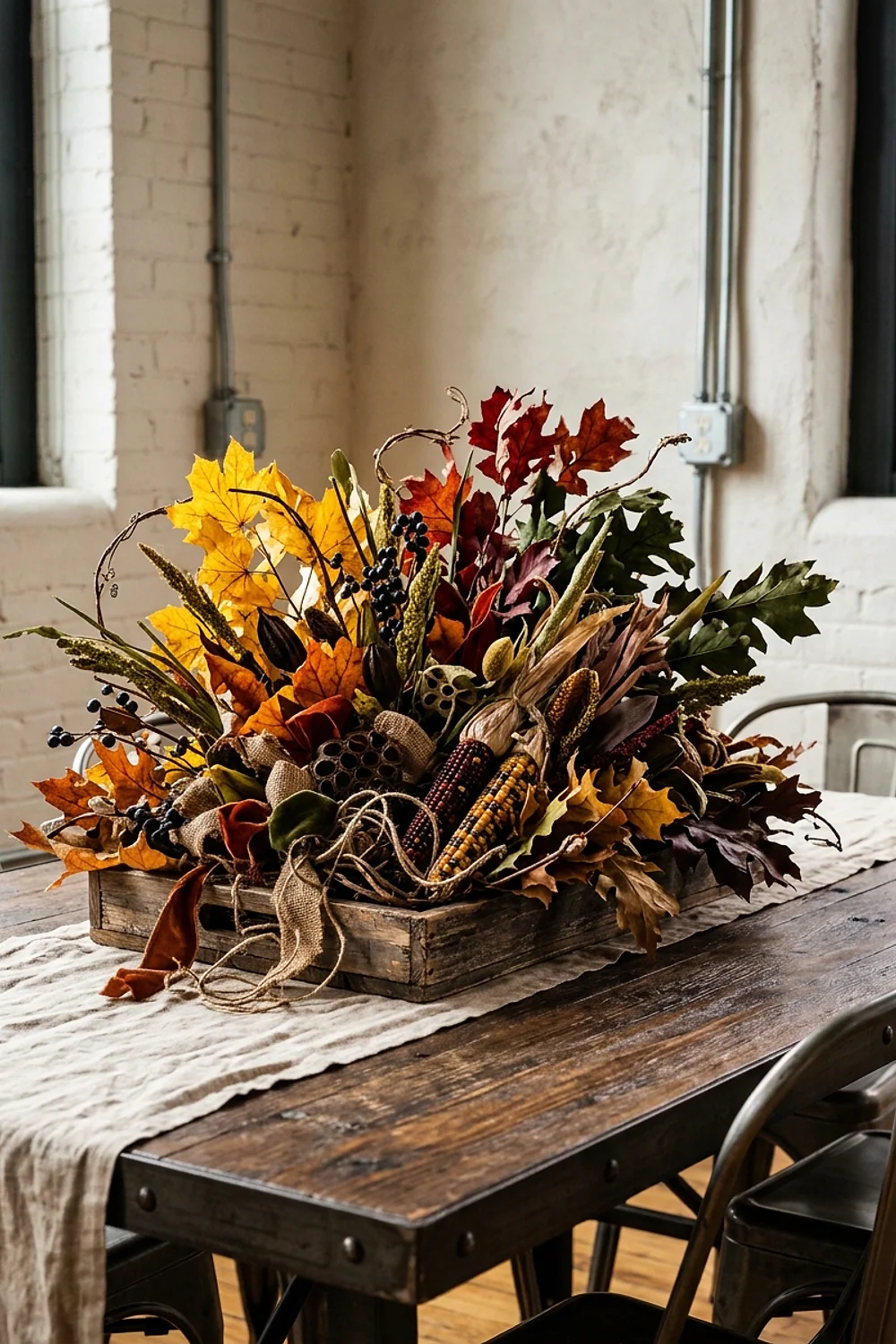
Orange, brown, mustard, red, and yellow at the same intensity turn muddy fast. Pick one anchor, such as a muted rust, then add cream and a cooler sage or olive for relief.
That click of a palette settling is audible in a room, and a 60-30-10 split gets you there: 60 percent neutral, 30 percent anchor, 10 percent accent. It suits anyone working from a few thrifted pieces who needs them to look intentional.
Fresh leaves hot-glued onto everything
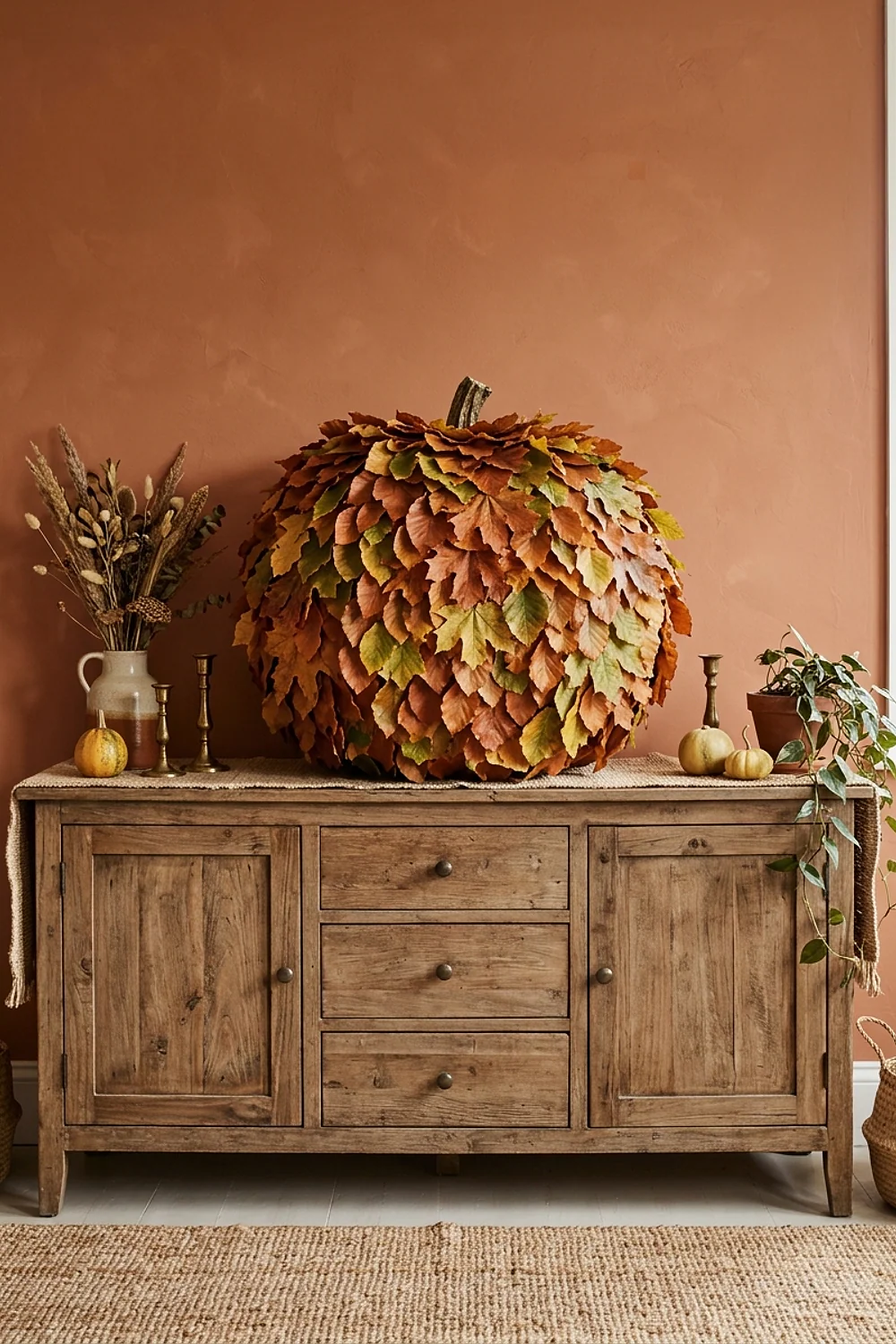
Fresh maple leaves curl and turn brittle within about 48 hours, so a garland assembled on Monday looks tired by Wednesday. Preserve them first by soaking stems in one part glycerin to two parts hot water for 3-5 days.
A bottle costs about $8 and the leaves stay supple for a full season. Here’s the counterintuitive part: leaves pressed flat in a book look fine but crumble, while glycerin-treated ones bend like leather.
Mantel pieces sized for a coffee table
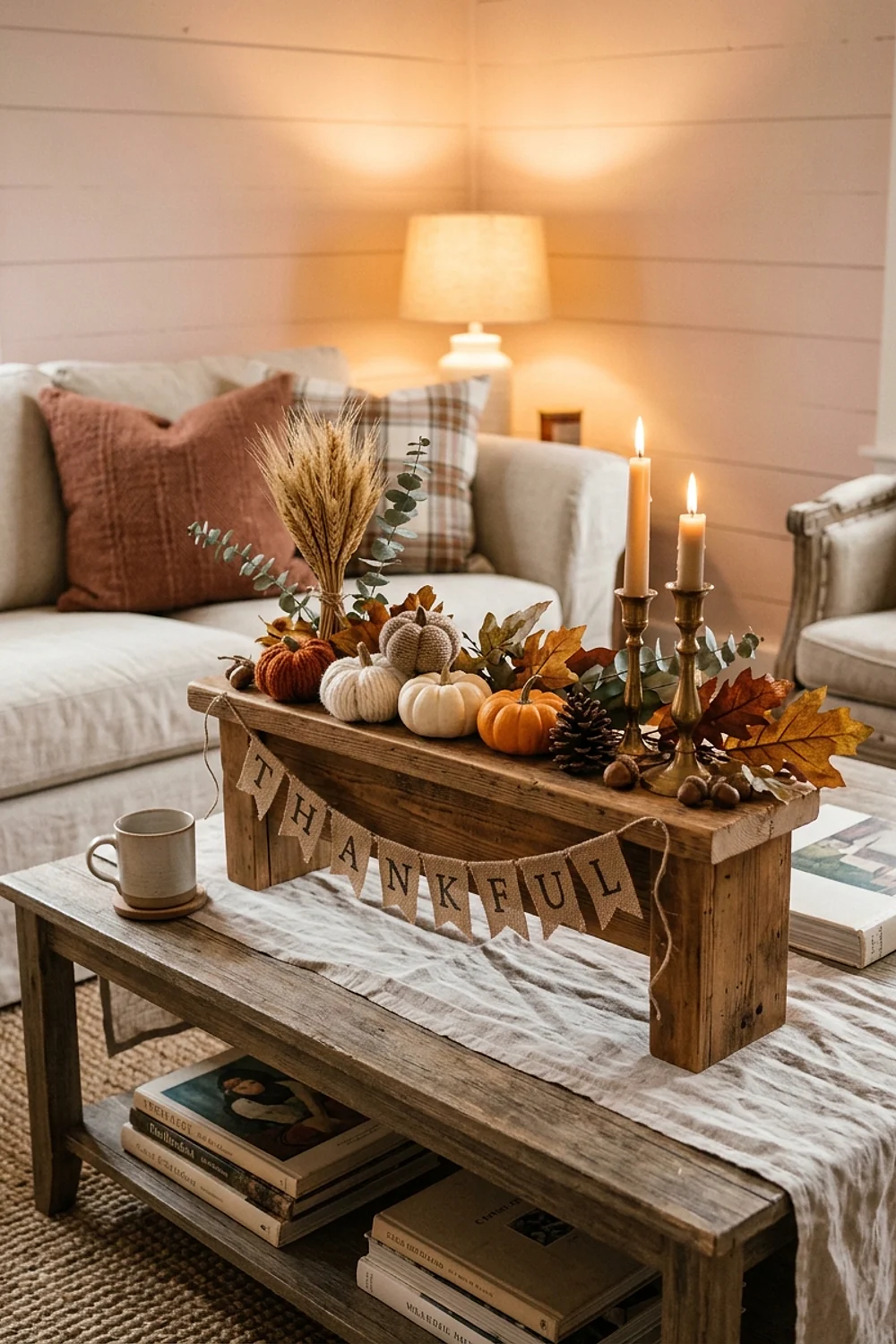
Six-inch pumpkins lined along an eight-foot mantel disappear. Group items in odd numbers and vary heights between 4 and 14 inches so the eye travels up and down.
Cut the garland to mantel length plus a third for draping…actually, no, scratch that. Measure the drop you want first, usually 6-10 inches at each end, then cut. Garland that hangs too short looks like a mistake rather than a swag.
Real pumpkins sweating on bare wood
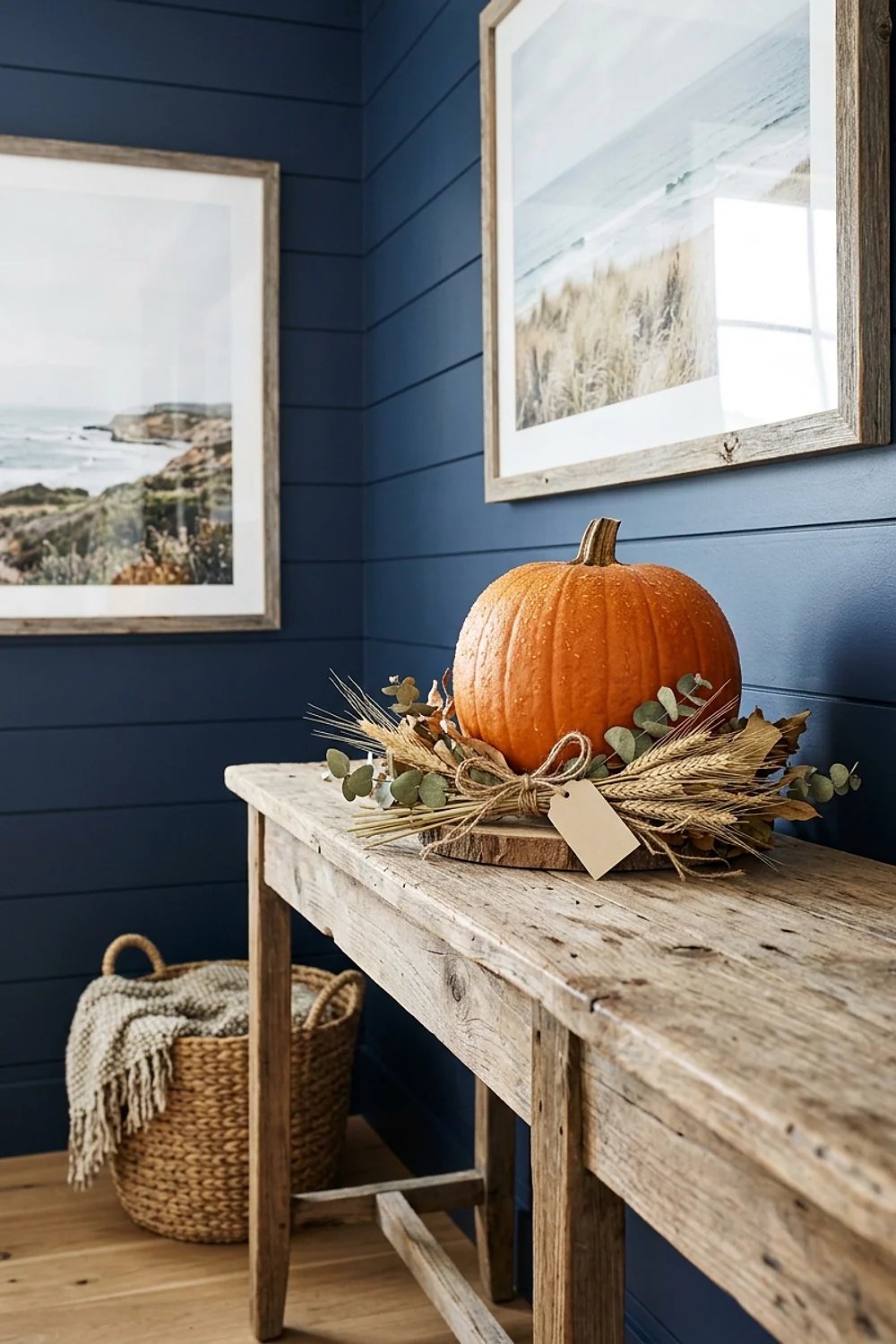
A carved pumpkin lasts only 3-5 days indoors, while an uncarved one can last two months in a cool room. Carving early for the holiday is the most common timing error.
Raw wood also takes the moisture ring. Set pumpkins on a saucer or a cork trivet, and wipe the base with a damp cloth weekly. Painted craft pumpkins skip the rot entirely but won’t give you that earthy smell.
Every napkin ring wearing the same turkey
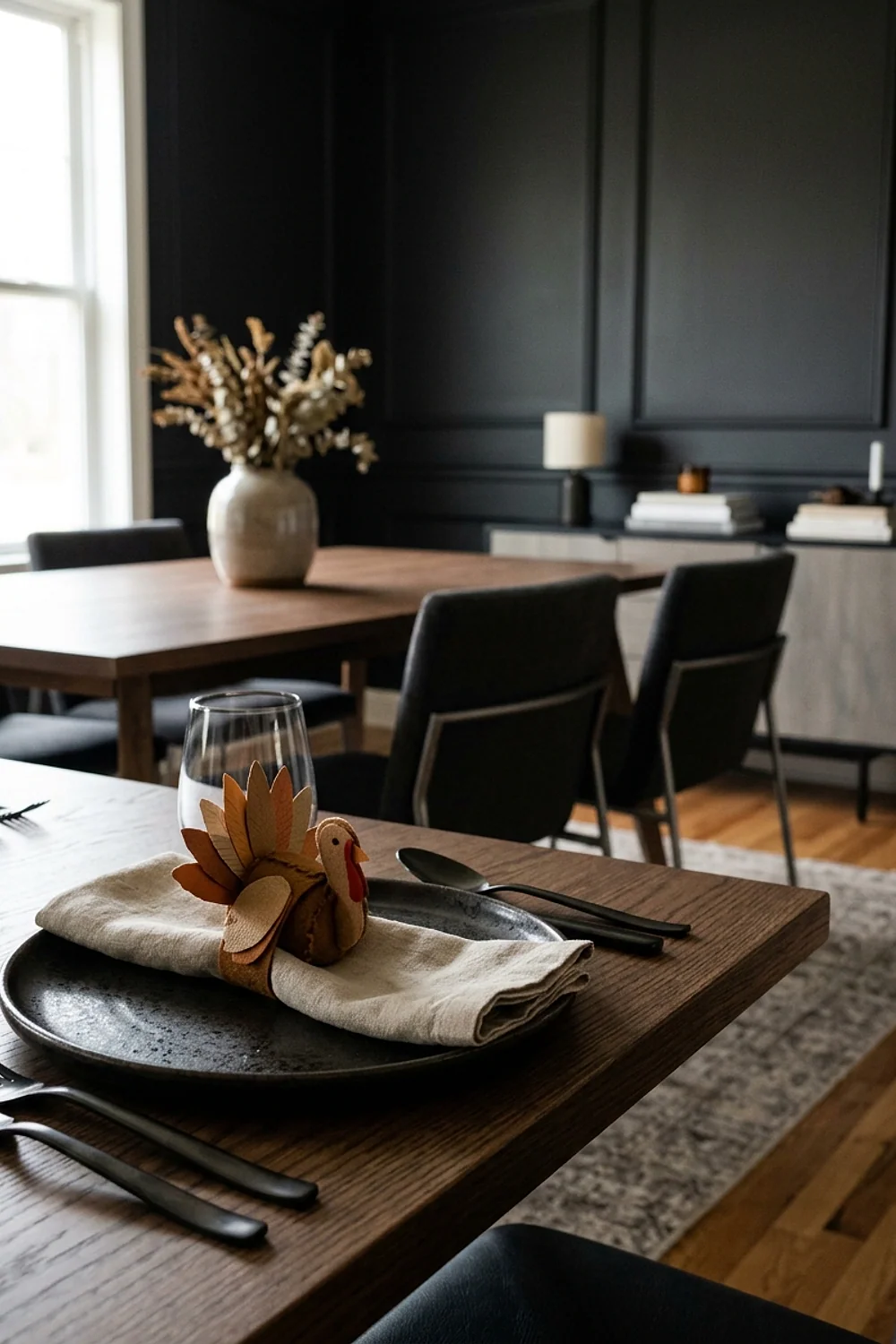
Matching turkey place cards, turkey napkin rings, and a turkey runner read as a children’s party. Repeat one motif, such as wheat stalks, in three spots and let the rest vary in texture: ceramic, linen, wood.
Look, restraint is the harder skill. A table with three textures and one repeated element feels collected, which suits adults hosting adults and fits any budget.
A tablescape that leaves no room for platters
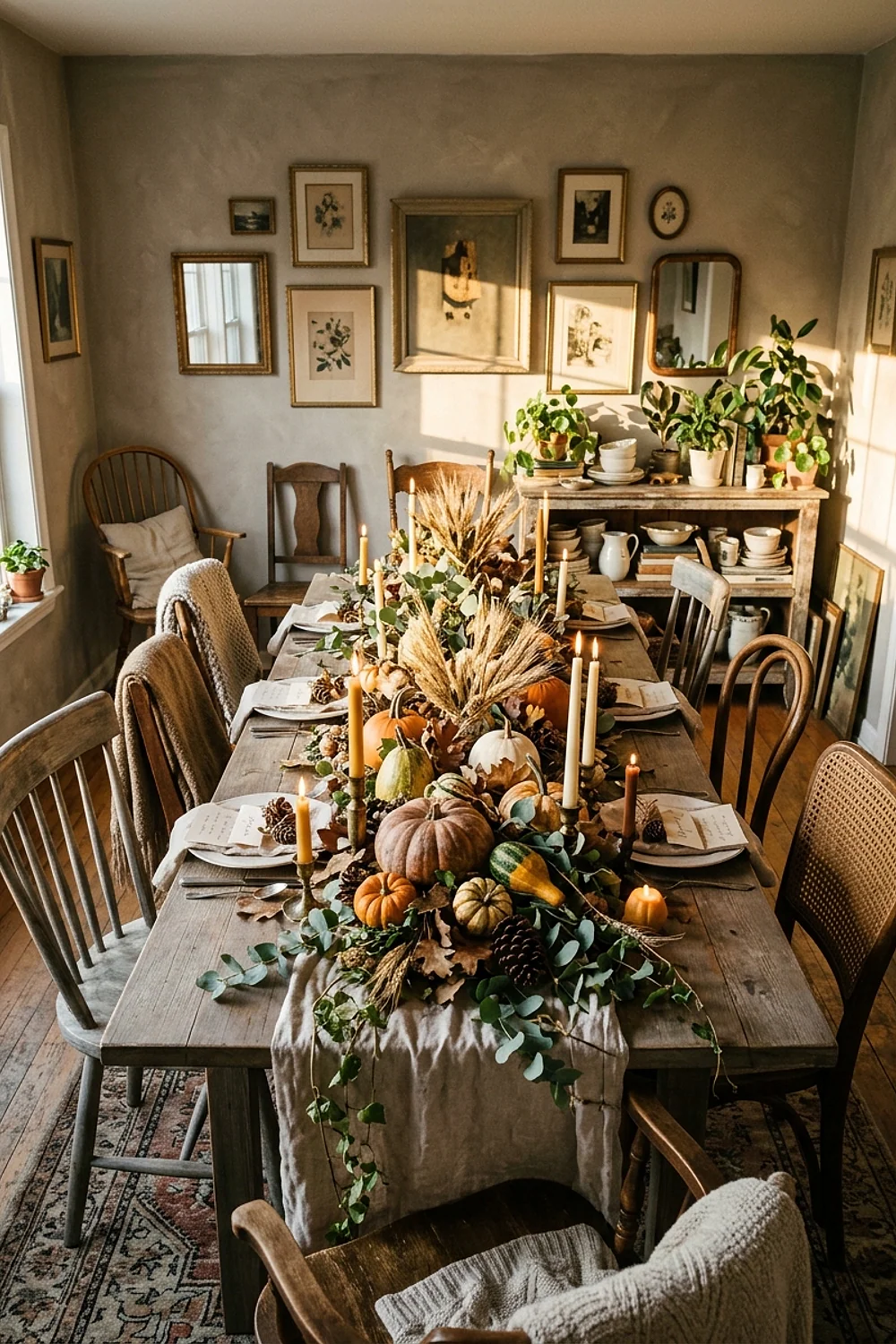
Decorations crowding the middle of a table leave no landing space for a 14-inch turkey platter or a gravy boat. Allow about 24 inches of width per guest and keep the center 10-12 inches free for food.
Move excess decor to the sideboard, window sills, and entry table. A narrow bud-vase row can sit down the center, but anything bulkier belongs somewhere else.
Place cards nobody can read or keep upright
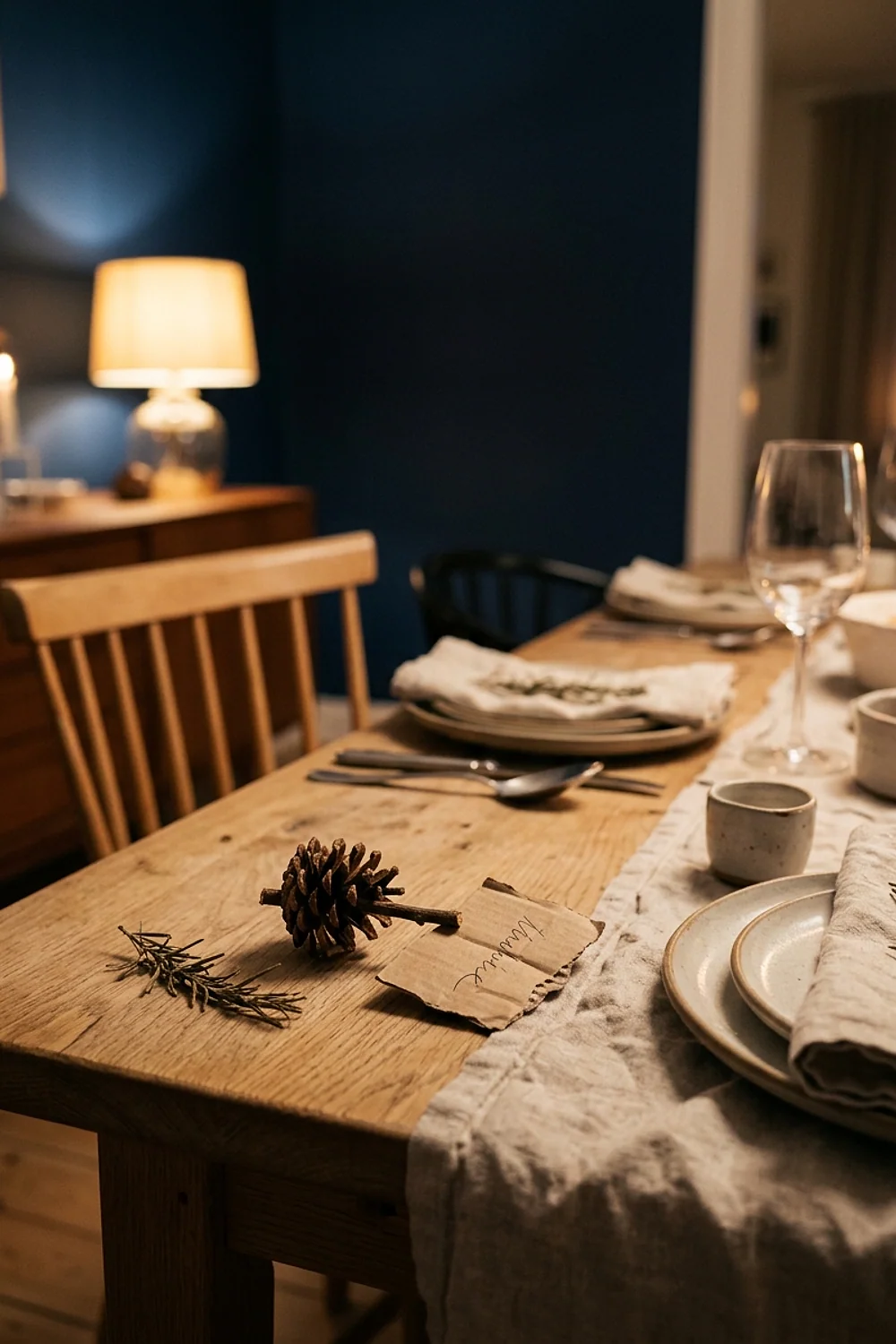
Tiny script on kraft paper, folded once, slides flat the moment someone brushes the table. Fold a 4×6 inch card into a tent about 2 inches tall, and print names at 24 points or larger.
Guests glance at these from three feet away in dim light, so legibility beats flourishes. Use dark ink on a pale card, and write a dot of color on the back if guests arrive from different groups.
A front-door wreath that fades by noon
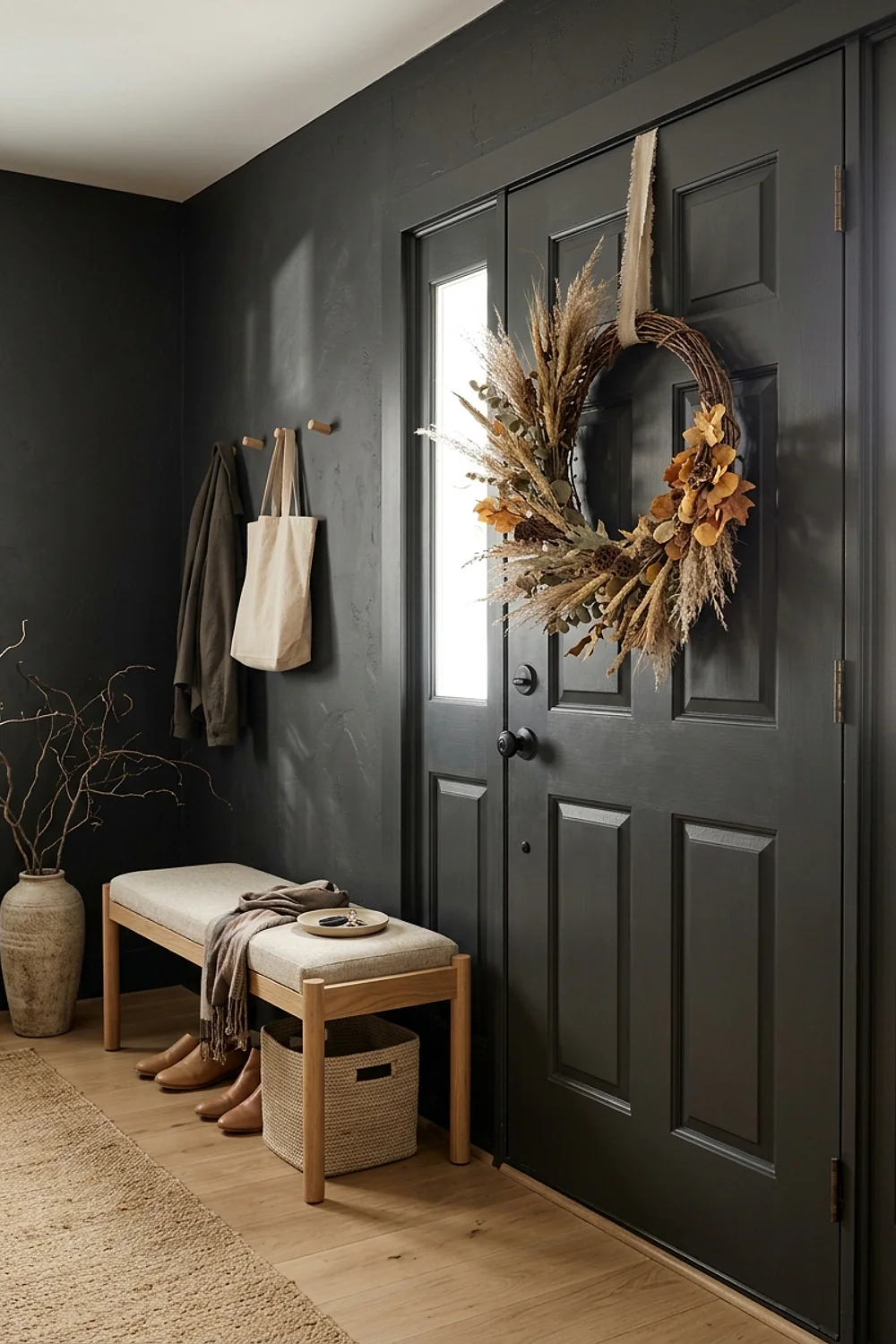
West-facing doors get hit by 4pm sun, which bleaches silk berries and dried hydrangea in a week. Use a hardy base, like a grapevine ring with rust-colored faux leaves labeled UV-resistant.
Hang it under a porch roof if you can, and expect to fluff it with a hand after wind. Real dried florals look better but need a spritz of clear matte sealant spray each November.
Scented candles fighting the food
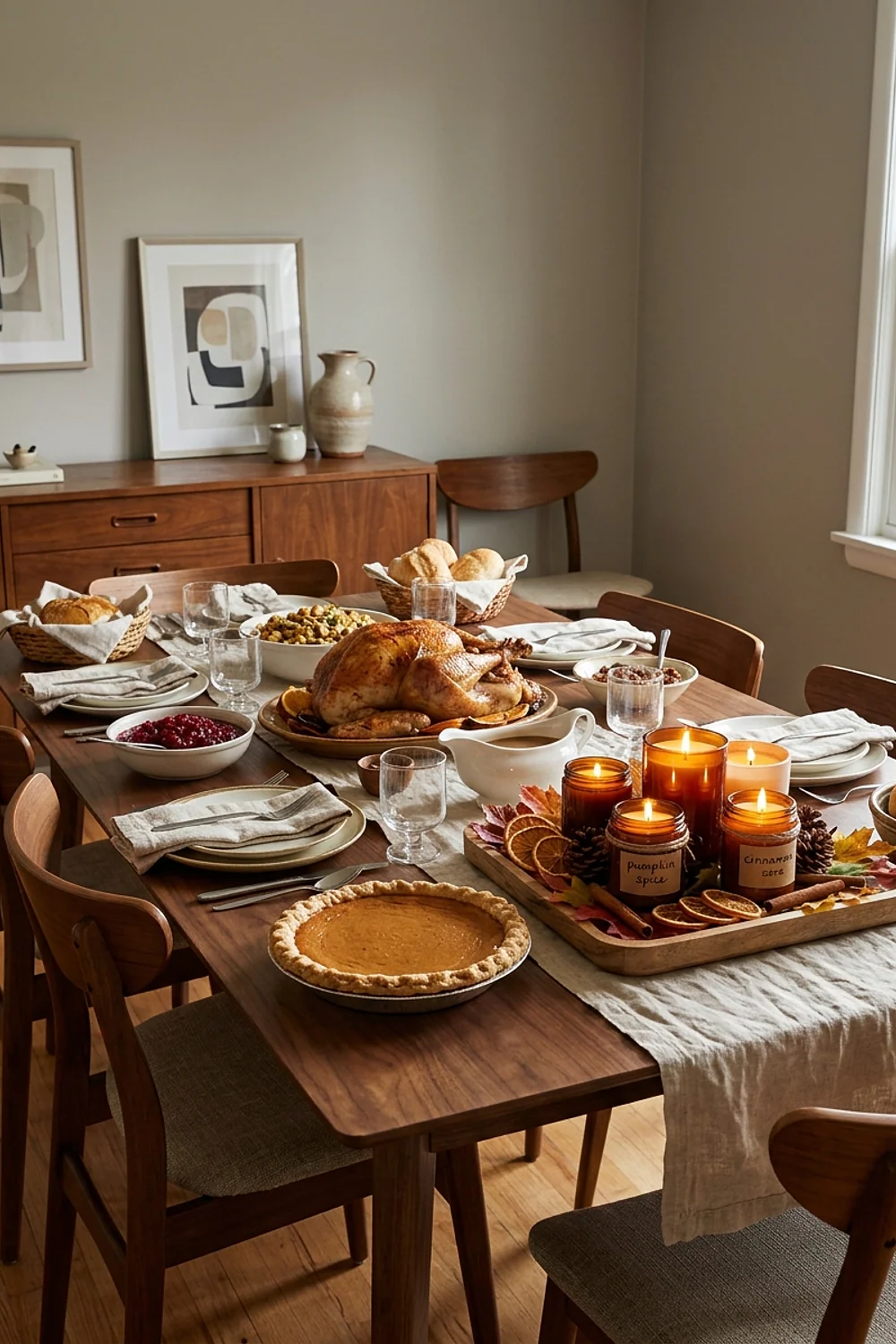
Cinnamon-pumpkin candles on the dining table compete with every dish and give guests headaches. Keep tapers on the table unscented, around $15 for a box of 12, and move fragrance to the entry.
A bowl of dried orange slices studded with cloves smells gentle and lasts three weeks. It suits small apartments where the kitchen and dining room share one open breath of air.
How it all comes together
The order you work in matters more than the products. Start with measurements, then color, then the small pieces, and the whole setup holds together.
- Measure the table, mantel, and door before buying anything.
- Choose one anchor color and one neutral, and stick to them.
- Test your lighting at 4pm, when the room is dimmest and candles matter most.
- Build or buy the largest piece first, then fill around it.
- Set the table fully, platters included, before adding any extra decor.
- Photograph the finished table from a seated position to check sight lines.
The seated photo is the step most people skip. It shows instantly whether something is too tall, too crowded, or too bare.
When to call a professional
Most diy thanksgiving decorations are safe weekend work, but a few jobs aren’t. Hardwired lighting over a mantel, new outlets, or a dimmer swap belongs to a licensed electrician.
Heavy garlands over 15 pounds hung from a brick or stone mantel may need proper anchors, so ask a carpenter or handyperson. Real greenery draped across a working fireplace is a fire risk, and a local fire marshal can confirm clearances.
- Electrician: new fixtures, wiring, or outdoor outlets.
- Florist: arrangements for more than 12 guests or custom installations.
- Carpenter: shelves or mantels that need reinforcing for heavy loads.
Everything else, from wreaths to place cards, can wait on your own steady hands.
Wrapping up
Good diy thanksgiving decorations are low enough to talk across, warm in color, comfortable to touch, and easy to pack away. Fix the biggest mistake on your list first, and the rest usually falls into place.
Save or pin this list so it’s on hand when the pumpkins come out, and measure your table’s center zone before buying a single stem.


4 Comments